Edmonton Holocaust Survivors Gather for Café Europa Luncheon to Preserve Memory
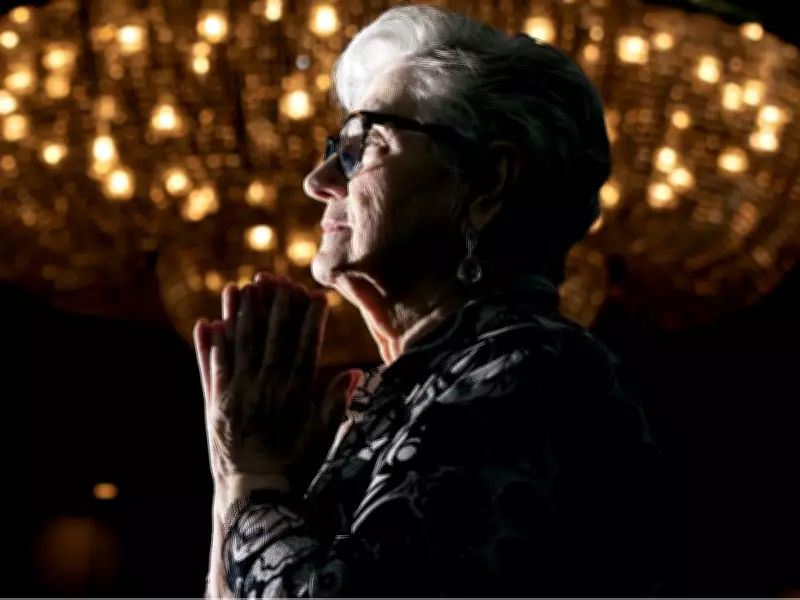
In a poignant gathering at Edmonton's Fantasyland Hotel, the last generation of Holocaust survivors came together for the Café Europa – Tu B'Shevat Luncheon on Tuesday, February 3, 2026. The event transformed a ballroom with Eastern European folk music and traditional cuisine, creating a space where survivors could share their harrowing experiences and sustaining friendships.
Preserving Truth Through Personal Stories
The event honored survivors whose strength and willingness to recount their experiences keep the truth of the Holocaust alive. As these men and women now in their 90s gathered, they brought memories of terrible distant times that continue to shape their lives decades later.
Nina Chernyevsky shared memories that have haunted her for many decades. Her grandparents were among the 33,771 Jews murdered by Nazi forces at Babi Yar in Kyiv during September 1941. "They just took old people, Jewish people, and walked with them to Babi Yar," she recalled. "They brought them all there and killed them there, terrible."

Family Tragedies and Survival
Irina Zhuravin recounted how her father, a school principal in Minsk, Belarus, initially escaped military service due to poor vision and his importance to education. However, when someone mentioned he was Jewish, he was taken to work and killed in the first fight. Her mother's entire family was also killed during the war.
"So it was in every family, you know, there wasn't a family that somebody wasn't killed," Zhuravin remembered. "The war didn't have mercy on anybody." What remained of her family evacuated to Uzbekistan to wait out the war before returning to Minsk.
"After the war, life was very hard, but neighbors helped each other," she explained. "You have to wait in line to get necessities, and people were very sympathetic to each other, because we went through such a horrible life."
Journey to Canada and Perspectives on Immigration
In 1979, Zhuravin thought about the future for her daughters and made the decision to immigrate to Canada. "I had two daughters, and started to think, what's expecting them when they grew up? No future, right? It was a good chance," she said.
As a former immigrant herself, Zhuravin believes immigration should be legal but orderly. "Every country needs immigrants. Here is slowing down, so we need people, but not just anybody should come. A country should protect its security," she noted. "We all can sympathize, but there are all kinds of people. A country should grow. And when there are legal immigrants, you know, and lots of people come, and they are happy to be here and their drive benefits the society."
Additional Survivor Testimonies
Lina Kichnevskaia shared her childhood experiences living in Podolski, across the river Dniester from what is now Moldova. Her grandfather was killed on the first day the war reached their area. Bombing made their small town unsafe, leading to their relocation to a ghetto and then to a concentration camp. Her father was taken to work on a road and, when the road was finished, he was killed.
The Café Europa event served as a powerful reminder of the importance of Holocaust education and the preservation of firsthand accounts. These survivors' willingness to share their painful memories ensures that future generations understand the atrocities of the past and work toward preventing such horrors from happening again.