Each weekday at 5 p.m., a profound stillness descends upon Calgary's core. The bustling Plus-15 skywalk network empties, office towers lock their doors, and the city's economic heart slows to a whisper. This silence is more than just the end of a workday; it's a symptom of a deep-seated urban malaise threatening the future of downtown.
The Diagnosis: More Than Empty Offices
Calgary's downtown is grappling with an existential crisis. The most visible sign is an office vacancy rate nearing 30%, the highest in Canada, accompanied by growing concerns over vibrancy and safety. While converting empty office spaces into residential units is a necessary and welcome step, it only treats a symptom. The fundamental question remains unanswered: what would compel people to choose to live and spend time in the core?
The real issue is not merely economic. It's a crisis of place and purpose. For decades, downtown Calgary was engineered to be a machine for efficient work. When the nature of that work changed irrevocably, the district lost its primary reason for being. The solution requires more than filling physical voids; it demands reinventing the area's social and spiritual purpose, fostering a sense of belonging and shared identity that goes beyond commerce.

The Prescription: A $1 Billion Cultural Infusion
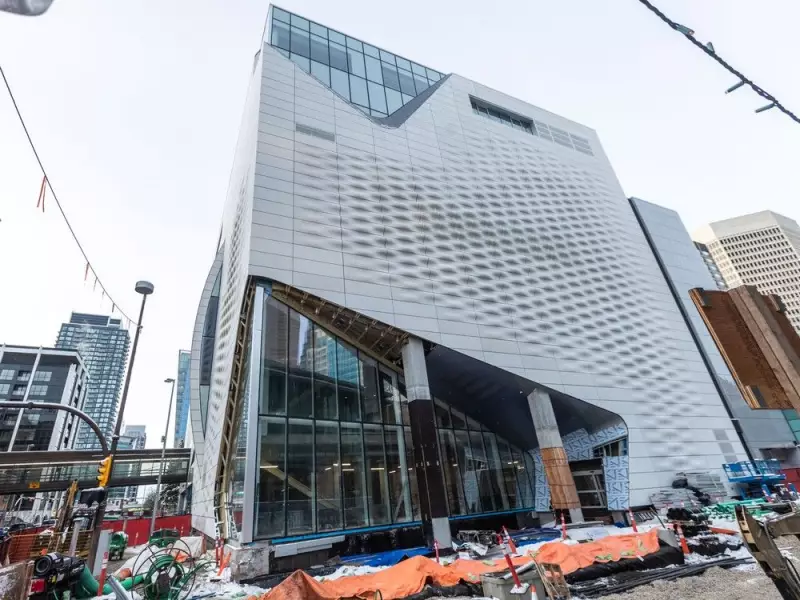
Amidst the debates over downtown's decline, a powerful counter-narrative is being physically constructed. The city is witnessing an unprecedented investment of nearly $1 billion into three cornerstone cultural institutions.
This monumental investment includes the $205-million Glenbow Reimagined project at the JR Shaw Centre for Arts and Culture, the massive $660-million Arts Commons Transformation, and the already-proven success story of the Central Library. These projects represent far more than new buildings; they are the surgical implantation of a new, vibrant cultural heart for the city centre.
From 'Nice to Have' to Essential Urban Engine
A critical shift in perspective is required to fully harness this momentum. Viewing these cultural projects as mere "nice additions" or luxuries for prosperous times is a dangerously short-sighted approach. In reality, institutions like the Glenbow and Arts Commons are not passive destinations. They are dynamic engines of human activity, generating the very thing downtown desperately lacks: compelling reasons to visit after business hours and on weekends.
These centres attract diverse crowds of all ages and backgrounds. This critical mass of people, in turn, creates the ecosystem that supports small businesses, innovative restaurants, and street-level vitality—the kind of life that statistics struggle to measure. This phenomenon mirrors the renowned "Bilbao Effect," where the Guggenheim Museum transformed a struggling industrial city into a global cultural destination.
The blueprint for renewal is already under construction, but it is not yet recognized as a cohesive strategy. Instead of seeing the new Glenbow, the revitalized Arts Commons, and the Central Library as isolated islands of excellence, they must be viewed as the interconnected pillars of a golden cultural triangle capable of redefining the entire downtown geography.
The city's strategy must focus on weaving these powerful focal points together. This means creating safe, well-lit, and animated pedestrian connections, programming active public squares with events, and implementing policies that encourage small, local businesses to thrive by serving the patrons of these cultural anchors. The future of downtown Calgary doesn't just depend on filling space; it depends on filling it with purpose, and that purpose is being built, one cultural institution at a time.