Pope Leo's First Easter Homily: A Powerful Plea for Hope in a World of Conflict
In a poignant and spiritually charged address, Pope Leo celebrated his inaugural Easter Mass as pontiff this Sunday, delivering a resonant call to exercise hope against what he termed "the violence of war that kills and destroys." Speaking from the iconic open-air altar in St. Peter's Square, the pope emphasized that "we need this song of hope today" as conflicts continue to spread across the globe, casting shadows over this sacred Christian holiday.
A Direct Condemnation of War and Injustice
With the U.S.-Israeli military engagement against Iran now entering its second month and Russia's relentless campaign in Ukraine persisting, Pope Leo has repeatedly advocated for an immediate cessation of hostilities. During his Easter homily, he specifically called out those who wage war, exploit the vulnerable, and prioritize financial gains over human dignity. The pontiff, who is the first U.S.-born pope in history, implored the faithful to maintain their hope even when confronted with death, which he described as lurking "in injustices, in partisan selfishness, in the oppression of the poor, in the lack of attention given to the most vulnerable."
He articulated a vivid depiction of global suffering, stating: "We see it in violence, in the wounds of the world, in the cry of pain that rises from every corner because of the abuses that crush the weakest among us, because of the idolatry of profit that plunders the earth's resources, because of the violence of war that kills and destroys."

Symbolism and Spiritual Resonance in St. Peter's Square
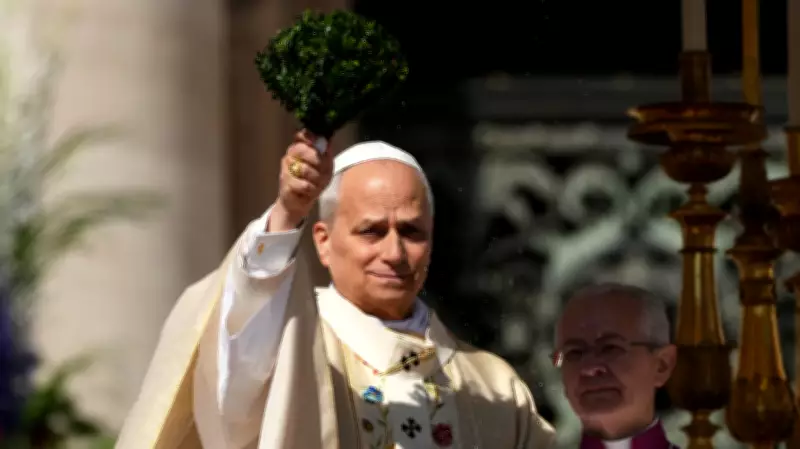
The visual backdrop of the Mass was deeply symbolic, with the altar flanked by vibrant white roses and the steps leading down to the piazza adorned with spring perennials. This floral arrangement poetically echoed the pope's central message of renewal and hope amidst darkness. Pope Leo XIV, presiding over the ceremony, sprinkled holy water using a traditional bunch of hyssop sprigs, a gesture rich with liturgical significance. The square was packed with devoted crowds, all gathered to witness this historic moment under the clear Vatican sky.
In his address, the pope quoted his predecessor, Pope Francis, warning against the dangers of falling into indifference when faced with "persistent injustice, evil, indifference and cruelty." He reminded attendees that "it is also true that in the midst of darkness, something new always springs to life and sooner or later produces fruit." Following the Mass, Pope Leo was scheduled to deliver the traditional "Urbi et Orbi" message, a Latin phrase meaning "to the city and the world," which further amplifies his Easter teachings to a global audience.
Subdued Easter Observances in the Holy Land Amid Security Concerns
Meanwhile, Christians in the Holy Land experienced a markedly subdued Easter celebration this year. Traditional ceremonies at the Church of the Holy Sepulchre, revered as the site of Jesus' crucifixion and resurrection, were significantly scaled back due to an agreement with Israeli police authorities. These restrictions, implemented because of ongoing missile attacks in the region, have limited the sizes of public gatherings, affecting not only Easter but also recent religious observances such as the Muslim holy month of Ramadan, the Eid al-Fitr holiday, and the current weeklong Jewish festival of Passover.
On Sunday, the Jewish priestly blessing at the Western Wall, which typically draws tens of thousands of participants, was restricted to just fifty people. These measures have strained relations between Israeli authorities and Christian leaders, exemplified by an incident last week where police prevented two top religious figures, including Latin Patriarch Pierbattista Pizzaballa, from celebrating Palm Sunday at the Church of the Holy Sepulchre. Earlier in the week, Pope Leo had expressed a hopeful wish that the war could conclude before Easter, underscoring his deep concern for peace in the region.
The Easter message from Pope Leo thus resonates not only within the sacred confines of the Vatican but also across conflict zones worldwide, serving as a spiritual beacon calling for compassion, justice, and an end to violence in these turbulent times.