In the winter darkness of Gatineau, Quebec, an extraordinary event unfolds annually within the walls of the Canadian Museum of History. Far from the quiet halls expected after hours, the ancient chants of the Christian divine liturgy resonate, creating a holy night at the museum.
A Church Within a Museum: St. Onuphrius
The magnificent museum, designed by Douglas Cardinal and opened in 1989, is home to its largest artifact: St. Onuphrius Church. This entire wooden church, the size of a one-room schoolhouse, was originally built by Ukrainian Catholic immigrants between 1915 and 1928 near Smoky Lake, northeast of Edmonton.
The museum meticulously dismantled, transported, and rebuilt it within its Canadian History Hall. A key condition from the Ukrainian Catholic Church in Canada was that it must remain a consecrated place of worship, not merely a static display. Honouring this, local Ukrainian Catholics gather each year on January 6—the Feast of Theophany or Epiphany—to celebrate the divine liturgy within its walls.

Ancient Rites in a Modern Setting
This year marked the thirtieth anniversary of the church's installation in the hall. For Ukrainian Catholics, January 6 focuses on the baptism of Jesus in the Jordan River. The liturgy is an act of making history present, a goal shared by museums seeking to bring the past to life.
Attendees, including the article's author Father Raymond J. de Souza who attended for the first time, experienced a service of formidable liturgical stamina. After approximately 90 minutes indoors, the congregation moved outside into the -10°C winter air for a 45-minute blessing of water ceremony—a Mediterranean tradition maintained admirably in the Canadian cold.
Father Peter Galadza, leading the service in a blend of Byzantine vestments and winter gear, prayed lines connecting the sacred to the land: “Today earth and sea share the joy of the world.” This echoes, as noted, an ancient form of land acknowledgement, recognizing God's dominion “from sea to sea”—the very phrase that inspired Canada's original name as a dominion and its national motto.
Context and Contemplation in the Grand Hall
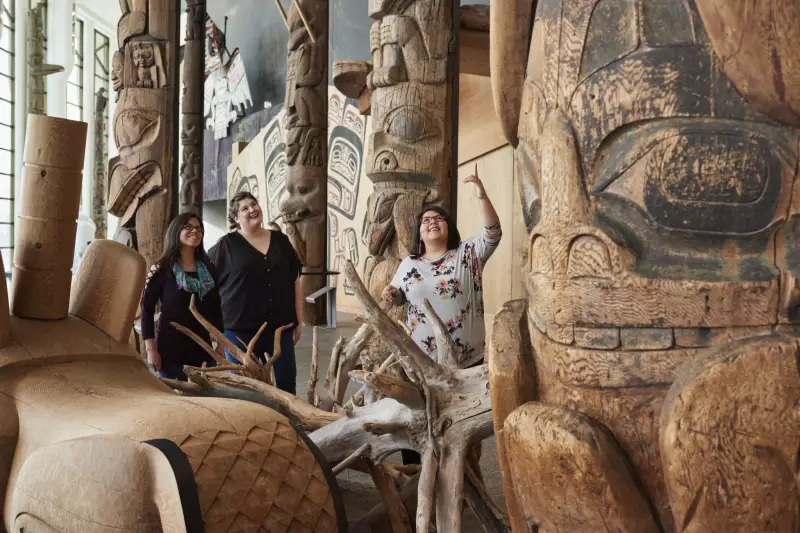
The museum has long emphasized Canada's Indigenous heritage, most notably in its soaring Grand Hall, home to West Coast totem poles. During his visit, de Souza also sought out the more recent Indian Residential School Memorial Monument, installed in 2024.
This monument, carved in the style of a totem pole, occupies its own space. The museum's website states its installation followed the announcement by the Tk’emlúps te Secwepemc Nation of the discovery of unmarked graves at the site of the former Kamloops Indian Residential School.
The experience of moving from the vibrant, living liturgy of the Ukrainian immigrant church to the solemn memorial dedicated to a painful chapter of Indigenous history provides a profound juxtaposition. It invites deep reflection on the multifaceted, often complex layers of Canadian history, faith, memory, and reconciliation, all housed under one iconic roof designed by Douglas Cardinal.
This annual holy night at the museum is more than a religious service; it is a powerful, living exhibit where prayer, heritage, and national narrative converge, offering a unique lens through which to ponder the Canadian story.