Vietnamese Refugees Excluded from Victims of Communism Memorial in Ottawa
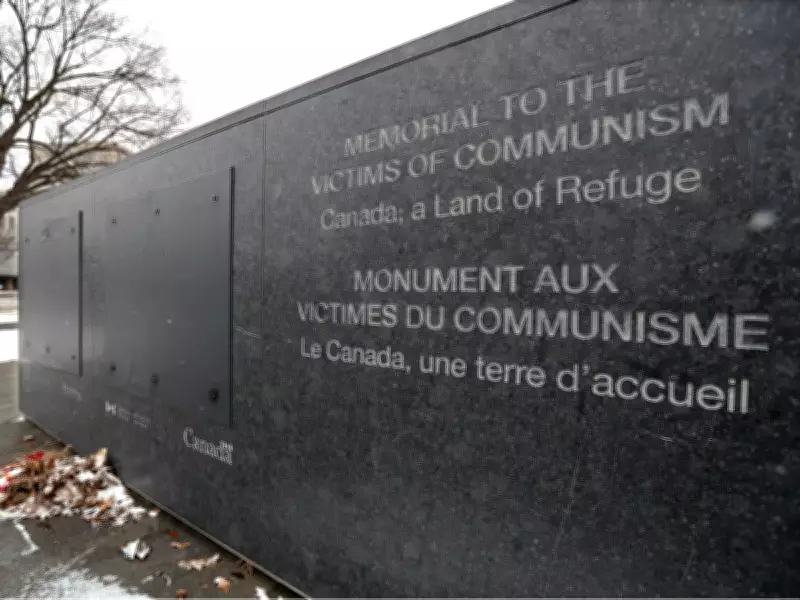
Federal government documents have revealed that the Memorial to the Victims of Communism in Ottawa will not include any reference to the arrival of nearly 200,000 refugees from Vietnam and Southeast Asia to Canada. Instead, the monument will highlight European historical events, including a 1920 battle in Poland and a failed 1953 uprising in East Germany.
Controversial Decisions and Diplomatic Concerns
The decision to exclude this significant chapter of Canadian history has emerged as the latest controversy surrounding the national monument, which is located near Wellington and Bay streets. According to documents obtained through an access to information request, the debate over whether to highlight refugees fleeing communist governments in Southeast Asia played out within the Department of Canadian Heritage and Global Affairs Canada.
In January 2024, concerns were raised by Canadian diplomats that emphasizing Vietnamese refugees could anger the current Vietnamese government, which remains communist. Vietnam serves as Canada's largest trading partner in the Association of Southeast Asian Nations and plays a crucial role in Canada's Indo-Pacific Strategy due to its status as one of the world's fastest-growing economies.

European Focus and Historical Events
As a result of these diplomatic considerations, the list of events to be featured on what is being called the Wall of Remembrance has been revised to focus predominantly on European history. The memorial will now commemorate:
- A 1920 victory by Polish forces over the Soviet Army
- A failed 1953 uprising in what was then East Germany
- Two additional events in Poland from 1940 and 1945
- The Holodomor in Ukraine
- Various events in Czechoslovakia, Hungary, and East Germany
- Two Korean War battles fought by Canadians
Historical Significance of Southeast Asian Refugees
This exclusion comes despite the fact that the arrival of refugees to Canada from Vietnam, Cambodia, and Laos was designated a national historic event in 2023. The Canadian government considers this period historically important as it demonstrated how Canada accepted nearly 200,000 refugees fleeing persecution after the end of the Vietnam War.
The memorial has already faced substantial criticism regarding cost overruns, construction delays, and concerns that it might whitewash the history of alleged Nazi collaborators from Eastern Europe who participated in the Holocaust. The latest revelation about the omission of Southeast Asian refugees adds another layer of controversy to the monument's troubled history.
Government Response and Memorial Details
When questioned about whether the monument would honour Vietnamese and Southeast Asian refugees, Canadian Heritage spokesperson Caroline Czajkowski responded via email that the "Wall of Remembrance will feature thematic content that conveys the broader commemorative and educational intent of the Memorial."
The Memorial to the Victims of Communism, which opened in late 2024, was originally intended to honour those who suffered under communist regimes and found refuge in Canada. However, the monument will no longer feature individual names, and maintenance costs have reportedly jumped to $1 million.
This development highlights ongoing tensions between diplomatic considerations and historical accuracy in national monuments, raising questions about whose stories are deemed worthy of commemoration in Canada's public memory.