The August heat in San Francisco felt like an oven inside SVN West, but the sweltering temperature couldn't deter the massive audience gathered for one of the year's most anticipated dance events. Despite the uncomfortable conditions, spectators remained captivated by the high-stakes competition unfolding on the circular stage—the Red Bull Dance Your Style National Final.
Beyond Competition: A Platform for Artistic Identity
This wasn't just another dance battle; it represented something far more significant. The event served as a powerful vehicle for artistry, cultural expression, and personal identity. As wristbands glowed in various hues to determine which dancers would advance, something extraordinary was happening beyond the typical competitive atmosphere.
In a scene traditionally dominated by male performers, women dancers were making their presence felt with undeniable force. They stomped across the stage in baggy clothing while showcasing waist-length braids, elaborate nail art, and meticulously applied lashes that refused to budge under the intense stage lighting. For these artists, style wasn't secondary to their movement—it became emblematic of the battle itself.

Emmy-nominated choreographer Charm La'Donna, who has worked with music icons including Kendrick Lamar, Beyoncé, and Dua Lipa, co-hosted the event with Sway Calloway. She set a tone of celebration and encouragement, appreciating what made each performer unique regardless of whether they fit neatly into specific genres.
"I love to see how people interpret music," La'Donna explained. "When you become truly engulfed in your own art, it's hard to define. It's just expression."
Meet the Dancers Breaking Boundaries
That spirit of authentic expression radiated from four remarkable female contenders who each showcased their unique blend of strength, vulnerability, masculinity, and femininity.
Jreamz: Beauty as Preparation
Seventeen-year-old Jossette 'Jreamz' Sanaphay from Phoenix brought a raw krump style to the stage that felt like an eruption of pure power. Having discovered krumping just a year earlier, she immediately connected with its intensity.
"It's not like any other genre," Jreamz noted. "When you're in that moment, in that community, it's very different from a regular battle."
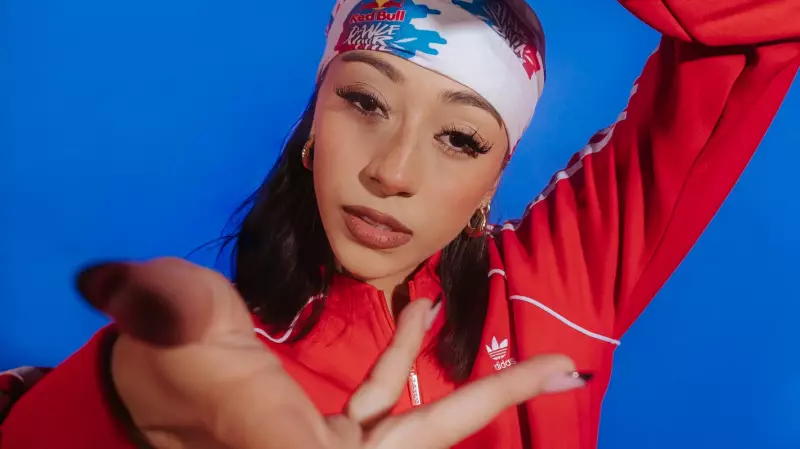
While she typically dances in sweatpants and a t-shirt, Jreamz never competes without her lashes and full makeup. "I'll put on baggy clothes, but I'll have my full makeup done 'cause that's what my style is," she explained, embracing what might seem like contradictions to others.
For Jreamz, beauty rituals represent preparation rather than conformity to external expectations. "I do my makeup before the battle so I can feel my best," she said. With her hair tied back, nude lip gloss applied, and sneakers securely laced, her pre-performance nerves transform into pure excitement.
Daisy 'VMZ' Vázquez: The Hometown Hero
If Jreamz represents the future of street dance, twenty-year-old Daisy 'VMZ' Vázquez embodies the hometown hero spirit. As a Bay Area native, she electrified the San Francisco stage with explosive flips and rapid-fire movements.
With classical training in ballet and jazz, Vázquez transitioned to hip-hop at fifteen and fell in love with "polyswagg"—a high-energy style that blends hip-hop, voguing, and sass. When she began entering battles, she immediately noticed the gender disparity. "There's not a lot of girls here," she observed.
Vázquez recalled critics dismissing her as "too much" for her aggressive facial expressions or for hitting moves with the same intensity as male competitors. Rather than toning down her performance, she used the criticism as motivation to intensify her approach.
Her stage look reflects this defiant attitude. She favors oversized jeans, graphic tees, and unexpectedly—Uggs, combined with full glam makeup. "I love dressing really baggy, but best believe my makeup will be beat, my nails will be done," she stated.

Marlee Hightower: Embracing Duality
Twenty-five-year-old Marlee Hightower has been immersed in street dance culture since age six. By ten, she and her Orlando-based crew were performing on America's Got Talent and touring twenty-six cities.
Hightower describes her movement as rooted in traditional hip-hop, incorporating its old-school, combat-like posturing into her performance style. "The genre is masculine in how you dress and carry yourself, but I love that. I always felt connected to that side of who I was," she explained.
At the battle, Hightower competed in loose-fitting sweats complemented by long, cascading braids that accentuated every movement. She believes the dance floor offers liberation that society doesn't always provide.
"I can be masculine and that doesn't take away from my femininity, and vice versa," she emphasized. "That's given me confidence where I don't have to conform to anything."
Ivy Mugler: Subverting Expectations
While Hightower embraces tradition, New York City-based vogue dancer Ivy Mugler pushes her genre in surprising new directions. Often performing in combat boots and goth-inspired costumes, Mugler expresses herself through "dramatic performance"—a style that serves as emotional release.
"I had a lot of rage from the life I was living," Mugler revealed. "Voguing became how I let it out."
In a world where impressive feats like 360 spins that pancake onto the floor, hair flips, and acrobatics are typically associated with male dancers, Mugler became known for her exceptional "hair control," treating her long hair like an extra limb. This year, however, she made the surprising decision to chop it all off—a move she describes as "subversive."
With her new short cut, Mugler feels liberated. "It emphasizes my line, it emphasizes my technique," she explained. "It took away the expectations that I have to be feminine in a certain way. Now I feel like I'm on the same playing field. People don't know what to do with me, and I love that."
The Lasting Impact Beyond the Finals
As the night progressed in San Francisco, the crowd's energy reached fever pitch during the final battles that squeezed every last ounce of energy from the dancers. Though none of the featured women advanced to the ultimate round—which came down to Sean Lew and SonLam—their impact on the event proved undeniable.
Each dancer left their distinctive mark on the stage, unapologetically embracing their authentic selves with every song and beat. As Charm La'Donna emphasized, what matters most isn't conforming to someone else's vision of dance but showcasing your unique perspective.
"It's just allowing the art and allowing yourself to be free in that space," she stressed. "And that is the most important thing: the confidence."
The Red Bull Dance Your Style National Final demonstrated that street dance represents more than competitive movement expression. It serves as an often-overlooked space for beauty and gender exploration, where lashes and braids carry as much significance as footwork and freezes. Through these women's performances, the event reminded everyone that power and femininity can manifest in whatever form the artist chooses.