Apple TV's 'Margo's Got Money Troubles' Delves into the Art of Storytelling and Identity
We are all the authors of our own lives, but the challenge lies in how we choose to narrate them. Do we paint ourselves as flawless heroes or as intricate beings whose decisions—both wise and flawed—shape our destinies? This profound exploration is at the heart of Rufi Thorpe's 2024 novel, "Margo's Got Money Troubles," which Apple TV+ has skillfully adapted into a compelling series. The first three episodes premiered this week, offering viewers a glimpse into the complex world of Margo, a 19-year-old navigating unexpected motherhood and financial struggles through an OnlyFans account.
A Fresh Take on Familiar Themes
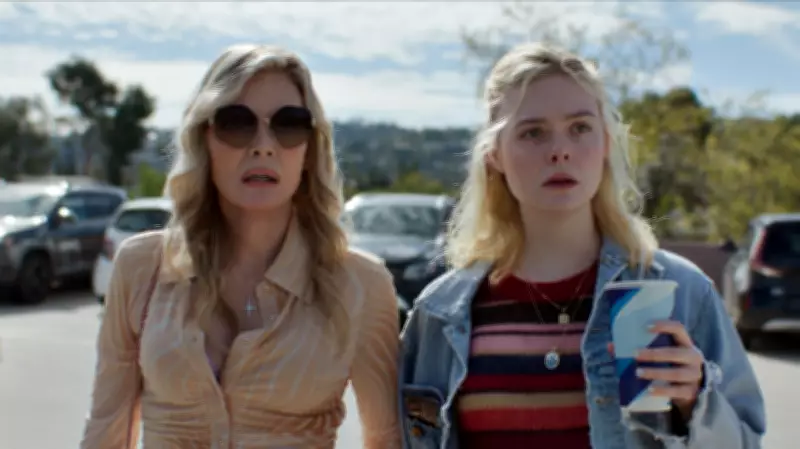
The series, starring Elle Fanning as Margo, Michelle Pfeiffer as her mother Shayanne, and Nick Offerman as her father Jinx, closely follows the source material. While it addresses well-worn topics like gender double standards in sex and parenthood, it feels revitalized through its unique narrative approach. By intertwining Margo's inner life as an aspiring writer with her external realities as a new mother and content creator, the show breathes new life into these discussions.
However, the reliance on Margo's perspective, though a strength, also reveals a key weakness. With eight episodes in total, the story sometimes struggles to maintain cohesion, as it leans heavily on her voice to connect disparate plotlines. The initial episodes, released together, flow smoothly, covering Margo's affair with her English professor Mark (played by Michael Angarano), her pregnancy, the birth of her son Bodhi, and the launch of her OnlyFans account. Yet, the subsequent five episodes, airing weekly until May 20, feel more fragmented, with subplots involving her parents taking center stage and disrupting the narrative balance.

Exploring Authenticity in a Digital Age
At its core, the series poses a critical question: How real can we be to others when everyone is performing a role? This theme resonates deeply with Margo, who is constantly judged for her identities as a lover, mother, and creator. Elle Fanning's performance captures this journey with nuance, from her analytical college days to her evolution into a confident content creator. Similarly, Michelle Pfeiffer shines as Shayanne, a character who adopts a caricatured persona to attract a love interest, while Nick Offerman's portrayal of Jinx, a former wrestler seeking redemption, adds layers of depth to the exploration of self-identity.
The show's accessibility is enhanced by its grounding in modern life, featuring elements like live-action role-playing, natural remedies for nursing pain, and Las Vegas escapades. These relatable moments make the complex themes feel approachable and engaging to watch.
Pacing Challenges in Streaming Content
Weak plotting and pacing issues are common in streaming originals, and "Margo's Got Money Troubles" is no exception. The shift in focus away from Margo in later episodes highlights the difficulty of maintaining a strong through line in weekly releases. The series would have benefited from more episodes to allow for deeper character development and slice-of-life storytelling, which it excels at in its quieter moments.
One standout scene exemplifies this duality: during childbirth, Margo's mother celebrates her achievement with affection, then subtly acknowledges the permanence of motherhood with a somber tone. Such exchanges illuminate gender roles and sexuality without preachiness, inviting viewers to reflect without providing easy answers.
Final Thoughts and Future Prospects
Overall, "Margo's Got Money Troubles" successfully preserves the novel's unique tone, making tired concepts feel fresh and relevant. It challenges audiences to consider how we construct our narratives in an era of digital personas. As Margo continues to figure out her story, there is hope for a second season to further explore her journey. The series is now streaming on Apple TV+, with new episodes releasing weekly until May 20.