In the realm of science fiction cinema, the discovery of extraterrestrial life typically follows two distinct paths. Some narratives envision encounters with microscopic organisms on distant planets like Mars or the moons of Jupiter. Others imagine first contact with intelligent species capable of communication. The new film Project Hail Mary, based closely on Andy Weir's acclaimed novel, masterfully combines both possibilities into a compelling interstellar adventure.
A Stellar Crisis and an Unlikely Alliance
The film presents a dire scenario where microscopic organisms are consuming the sun's energy, causing our star to cool at an alarming rate. Without intervention, Earth faces extinction within decades. Humanity's desperate response involves launching the spaceship Hail Mary to a star system twelve light-years away, the only nearby stellar body not suffering the same fate, in hopes of finding a solution.
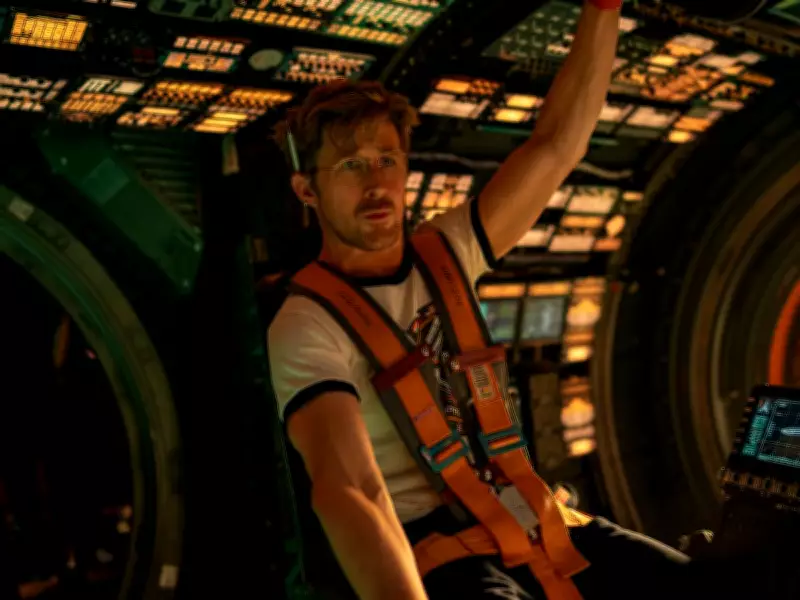
When the Hail Mary arrives at its destination, astronaut Ryland Grace, portrayed with remarkable depth by Ryan Gosling, discovers another vessel already present. This alien ship comes from a different solar system experiencing the same catastrophic phenomenon. Grace, who awakens from suspended animation with memory loss after his crewmates perish, finds himself humanity's sole representative facing an unprecedented challenge.

The Birth of an Unforgettable Friendship
Grace encounters Rocky, the lone crew member of the alien spacecraft who resembles a fascinating hybrid of cuttlefish and geological formations. Despite their profound biological differences and communication barriers, the two beings recognize their shared predicament and agree to collaborate. Gosling's performance opposite this computer-generated creature, which lacks a conventional face, creates some of the film's most emotionally resonant moments.
Project Hail Mary serves as a spiritual successor to 2015's The Martian, another adaptation of an Andy Weir novel directed by Drew Goddard. Both films feature solitary astronauts confronting seemingly insurmountable challenges through intellectual problem-solving rather than military might. Where Matt Damon's character in The Martian famously needed to "science the shit" out of his situation, Grace and Rocky must combine their scientific knowledge across species lines.
Directorial Vision and Musical Accompaniment
Co-directors Phil Lord and Christopher Miller, known for their work on 21 Jump Street and The Lego Movie, demonstrate remarkable pacing throughout the film's two-and-a-half-hour runtime. They skillfully interweave two narrative threads: the developing partnership between Grace and Rocky as they learn to communicate and collaborate, and flashbacks to Earth that reveal how Grace became part of the Hail Mary mission.
The film's musical elements deserve particular recognition. The soundtrack features perfectly selected needle drops including Kris Kristofferson's "Sunday Mornin' Comin' Down," Miriam Makeba's "Pata Pata," and The Beatles' "Two of Us" with its poignant line "We're on our way home." These musical choices enhance the emotional landscape of the interstellar journey.
A Return to Cerebral Science Fiction
In an era dominated by franchise filmmaking, Project Hail Mary represents a welcome return to thoughtful, character-driven science fiction. The studio undoubtedly hopes to replicate the success of The Martian, which earned over $600 million and ranked as the tenth-highest-grossing film of 2015 while standing apart from existing intellectual properties.
The film explores profound themes of cooperation across unimaginable divides, the human capacity for adaptation, and the universal drive for survival. Through Gosling's nuanced performance and the innovative creation of Rocky, Project Hail Mary delivers both intellectual stimulation and emotional depth, reminding audiences that sometimes our greatest allies might come from the most unexpected places in the cosmos.