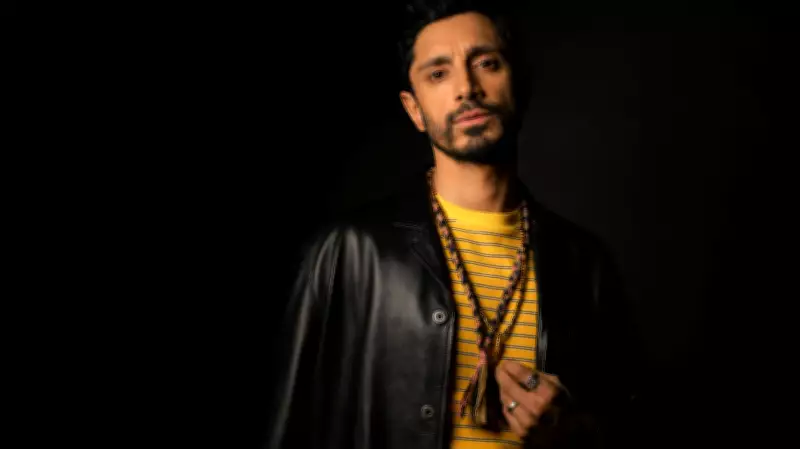
Riz Ahmed's 'Hamlet' Adaptation: A South Asian Reimagining of Grief and Mental Health
In the pivotal scene of the film "Hamlet," the title character, portrayed by the acclaimed Riz Ahmed, drifts into his deceased father's bedroom in a state of profound grief. Cloaked in his signature wistful contemplation, Ahmed's Hamlet has just learned that his recently widowed mother, Gertrude, played by Sheeba Chaddha, plans to marry his deceitful uncle Claudius, portrayed by Art Malik. In a symbolic act, Hamlet discovers his father's ring on a nightstand and slips it onto his own finger, setting the stage for a narrative where he becomes lawfully wedded to his sorrow and the psychological deterioration that ensues. To put it plainly, Hamlet crashes out in a powerful, emotional spiral that defines the film's core.
A Masterclass in Emotional Breakdowns
Riz Ahmed, with his classical training, excels at delivering intentional and powerful crash-outs—fits of spiraling, distressed rage that resonate deeply with audiences. He is a masterclass in surrendering to both narrative and craft, from pity-fueled breakdowns in "Bait" to psychological dissolution in "The Night Of." In "Hamlet," directed by Aneil Karia and released in U.S. theaters on April 10 for a limited run, Ahmed delivers what may be his most gutting and best emotional breakdown. The adaptation trades Danish royalty from the Middle Ages for modern-day London's South Asian elite, real estate tycoons with shady dealings, offering a fresh take that transforms a Western, Eurocentric canon into something meaningful for South Asians and BIPOC communities.
Reframing a Classic for Modern Audiences
Writer Michael Lesslie crafted the script directly from Shakespeare's play, cutting characters like Rosencrantz and Guildenstern while cherry-picking and consolidating dialogue for existing roles. The result is a loud, messy, and carnal expression of grief, complex family dynamics, and mental health that feels instinctively South Asian. From the opening scene, where lines from the Bhagavad Gita, an ancient Hindu text, are heard in the background, the film establishes its cultural roots. Ahmed explains, "We took the essence of the play and made it feel more real. This stuff only feels real in certain communities now. I hope ['Hamlet'] reframes it in that way for audiences—we're the ones who are going to keep it alive if we choose to."

Cultural Depth and Storytelling Traditions
Boiled down, this is a story about marriage restrictions, as Ahmed notes. It echoes the original text, where Ophelia, played by Morfydd Clark, cannot marry Hamlet due to her family, and Hamlet disapproves of Claudius and Gertrude's union. The film draws on practices like levirate marriages from ancient cultures across Asia, Africa, and the Middle East. Dialogue serves as a powerful device to foster familiarity with audiences of color, particularly South Asians. In a standout scene, the ghost of Hamlet's father reveals Claudius as the murderer in Hindi, a cinematic decision that pays homage to South Asian storytelling traditions, where poetry is often sung and recital is an art form.
Grief, Suppression, and Visceral Performance
Grief ignites Hamlet's crash-out, yet his sorrow is met with rejection, reflecting South Asian cultural taboos around expressing struggle. Hearing a brown Claudius berate Hamlet for his "unmanly grief" highlights how silence is often enforced as the default existence. Despite his wealth and privilege, Hamlet faces surveillance and gaslighting, a grimly familiar scenario where the perception of struggle is deemed worse than the struggle itself. This suppression ultimately explodes in a bloodbath, proving everyone wrong.
Ahmed emphasizes that the crash-out isn't only psychological—it lives in the body. He and director Aneil Karia aimed to make the experience visceral and raw, moving beyond intellectual analysis of Shakespeare. Ahmed brings a cinematic physical dimension to his performance, pairing soliloquies with jerky, jittery movements that visually cue Hamlet's worsening mental health. Filming with a newborn and minimal sleep added to the erratic energy, enhancing the portrayal.

Dismantling Myths and Building Tension
Through this movement and a constantly moving camera, Ahmed dismantles the myth that Hamlet is paralyzed by indecision. Instead, he shows Hamlet constantly strategizing under surveillance, paranoia, and insomnia. This pays off at Gertrude and Claudius' wedding, where Hamlet, wearing the same white kurta from his father's funeral, stumbles back after a "to be or not to be" soliloquy in a BMW. He confronts classical Indian dancers preparing a kathak performance and asks them to showcase his father's murder.
What follows is the film's boldest and most tense sequence. Hamlet borrows a beaded dupatta, smears pink lipstick, and throws himself into the ballroom, oscillating between performance and crash-out in front of everyone who dismissed him. His grief becomes loud and undeniable, affecting all attendees, including Ophelia, who gets caught in the crossfire. The kathak performance, set to the traditional Sufi qawwali "Mast Kalandar," transfers the crash-out to Claudius, who realizes art imitates life. In this moment, Hamlet becomes the stillest person in the room.
A Rich Dimension for New Audiences
Ahmed states, "I'm interested in the Hamlet that's the most under pressure and vulnerable in the room, not the most commanding and clever." This adaptation offers a rich dimension that may resonate with those who feel Shakespeare is not for them. After watching, many may find themselves picking up the text again, seeing familiar reflections in its themes. As Ahmed concludes, "We made this for people who feel like Shakespeare is not for them. And if you feel that way, give this a chance."