The Boys' Uncanny Timing: Homelander's God Complex Mirrors Trump's Christ Posts
Do the creators of Prime Video's hit series The Boys possess a crystal ball, or is their timing simply uncanny when it comes to mirroring real-world events? Fans of the superhero satire have long observed its sharp reflection of American politics through its charged narratives and morally compromised characters, particularly with the Donald Trump-esque antagonist Homelander, portrayed by Antony Starr. As the show's fifth and final season premiered earlier this month, Homelander tightens his authoritarian control over a superhero-dominated America, drawing stark parallels to recent political headlines.
Homelander's Divine Aspirations in Season 5
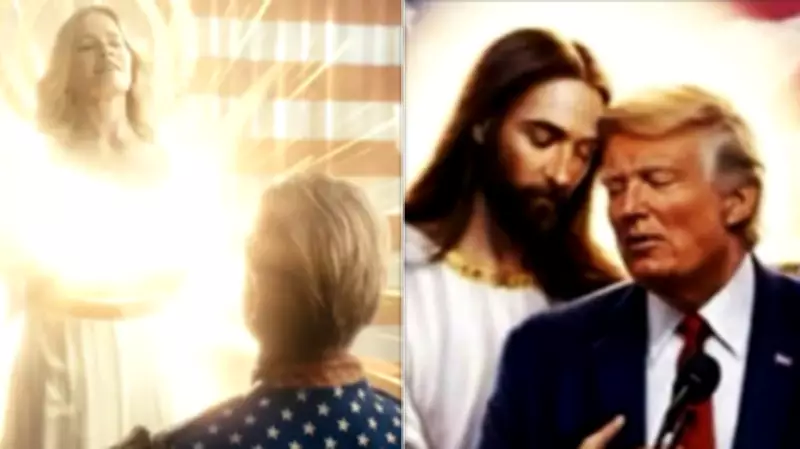
In Season 5, with full governmental power secured, Homelander descends further into unchecked authority. Episode 3 features a pivotal moment where he unravels completely upon a vision of the late Madelyn Stillwell, played by Elisabeth Shue. As Vought's former Senior VP of Hero Management, Stillwell had an unusually intimate bond with Homelander before his lethal actions in Season 1. Appearing as an angel against an American flag backdrop, she proclaims his destiny is not merely to become a god, but the one true god.
I know you think love is weak and human, she tells Homelander. But who is more loved than Jesus? And why should He have more love than you? This encouragement fuels Homelander's existing God complex, setting him on a path toward greater destruction and a public campaign to be worshipped as a deity.

Eerie Overlap with Trump's Recent Posts
The timing of this episode proved startlingly coincidental, airing just as former President Donald Trump shared another AI-generated image of himself alongside Jesus Christ on Truth Social. This followed prior controversy over similar posts depicting him in a Christ-like manner. Fans were quick to note the alignment, with social media reactions flooding in to highlight the surreal parallels between fiction and reality.
Series creator Eric Kripke addressed this overlap in an interview with TVLine, though he emphasized it was unintentional. We wrote this episode two years ago, even before the election, he explained. It just came from us talking about where Homelander was moving, and what his sort of final form would be, as he's been slowly losing his mind over the seasons.
Kripke initially feared the Homelander angel concept might seem too extreme, worrying viewers would find it cartoonish. My concern was that everyone would think Homelander had gone too far, he said. But the world keeps out-crazying us. I just want to be like, 'Yo, we're trying to do satire! Will you slow down for a minute and give us a chance to be crazier than the world?'
He added, It's honestly exhausting. I just wish the Trump administration would quit marketing the show for us. This sentiment underscores the challenge satirists face in a rapidly evolving political landscape where reality often surpasses fiction.
Fan Reactions and Cultural Impact
The convergence sparked widespread discussion online, with fans expressing amazement at the show's predictive quality. Tweets ranged from humorous observations about Trump's early-morning social media habits to genuine shock over the precise timing. One user noted, it is genuinely insane how their semi-Trump parody starts believing he's a divine being in the exact same week as the real Trump despite the episode being written a year and a half ago.
This incident highlights The Boys' enduring relevance as a cultural commentary, blending sharp satire with unsettling real-world echoes. As the series concludes, its legacy of reflecting America's political psyche through characters like Homelander remains a testament to its creators' foresight, whether planned or purely coincidental.