Goldie Boutilier has achieved stardom at 40, a rise unlike any other. The singer-songwriter from Cape Breton tapped into her troubled past to find her true voice and is now ready to take on the world.
A Unique Connection with Fans
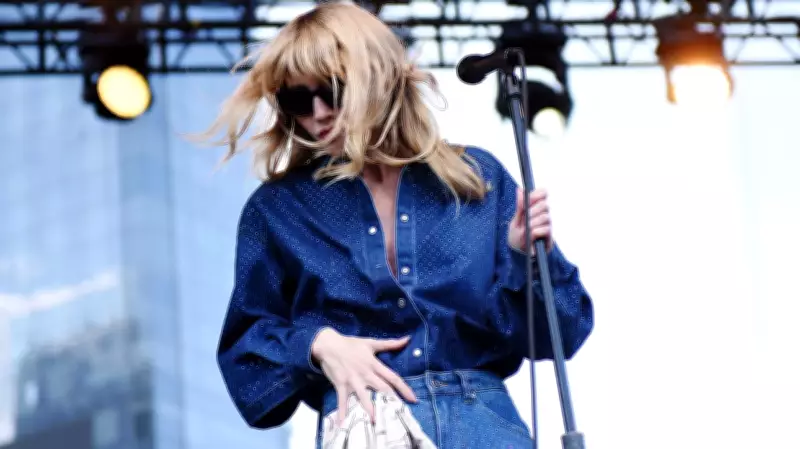
At her concert on March 26 at Vancouver's Hollywood Theatre, the enthusiastic crowd responded to her proclamations about healing from past traumas like they were at a rock 'n' roll revival. "Healed people heal people," the singer proclaimed, as Gen Xers and Gen Z fans alike responded with their own brands of "Amen." Fellow Cape Bretoners in the crowd were equally thrilled. "I discovered her last year," said Troy Macdonald from New Waterford. "Her sound is unique, but she's definitely got the Cape Breton spirit."
Donald Ross from Bedoc became a fan after seeing the documentary video for her song Emerald Year, about her journey from a small town to signing with a label in L.A. and eventually finding her true voice. "When you find your own voice, this is what you get," he said. "She's an amazing songwriter. She's honest — that's what we Cape Bretoners are known for."

Early Struggles and Reinvention
After signing her first record deal at age 21 and moving to L.A. from Reserve Mines, N.S., Goldie found herself "swallowed up by the cold-blooded chaos of the music business," according to her bio. She found a lifeline in the anti-heroes of her beloved films like Scarface and Casino. "Movies helped me create the character I became to deal with everything: a femme fatale who uses her femininity to claw her way to the top of a corrupt world," Goldie said. "Instead of waiting for someone to come along and save me, I became that character to save myself."
The 40-year-old singer-songwriter was nominated for breakthrough artist of the year at the Junos and in seven categories at the upcoming East Coast Music awards on May 21 in Sydney, N.S. She is fresh from sold-out shows on her North American King of Possibilities tour. Her new album, Goldie Boutilier Presents Goldie Montana, arrived on the heels of acclaimed EPs — 2022's Cowboy Gangster Politician, 2023's Emerald Year, and 2024's The Actress — and marks her most bravely confessional work to date.
Reaching more than 50 million total streams on Spotify, her sultry single King of Possibilities is the opening theme song of the hit Netflix series The Hunting Wives. In 2025, Goldie opened for Katy Perry on her Lifetimes Arena Tour in the U.K. and was named by Billboard Canada as one of its Artist Spotlights for Women in Music 2025. Her fans include Elton John and DJ Zane Lowe, and Kelly Clarkson has covered her song The Angel and the Saint.
Raw Authenticity and Glam-Rock Drama
Boutilier's unique appeal lies in her ability to combine raw authenticity with glam-rock drama. She channels characters that feel both imaginary and genuine, seemingly summoned from the void but also from her own history. Her current character is Goldie Montana, a Sharon Stone-inspired apparition "with the heart of a child and the mind of a sniper," she said.
On stage, she emerges like an alluring warrior to sing At the End of the War, an eerily apropos opening against the backdrop of the Iran war. The song's lyrics include: "At the end of the war / They put down their swords / And wiped off the blood / And shook off the mud / And held onto each other / And cried for their mothers / Till all you could see / Were men on their knees / Cause all of the scenes / Are still haunting me / I need ketamine / For the PTSD."
Growing Up in Reserve Mines
Boutilier grew up in working-class Reserve Mines, where her father, who dropped out of school in his teens to work in the mines, owned a junkyard. Born in 1985, she came of age as the mines and fisheries that sustained the local economy were shutting down. Music and theatre became a lifeline, and she left at age 17 to live in Victoria with her older sister. She was discovered by One Republic member Ryan Tedder and signed a recording contract with Interscope in L.A. Born Kristin Kathleen Boutilier and nicknamed "Goldie" as a child, she adopted the alias My Name is Kay and released a self-titled EP in 2011, followed by a debut album in 2013.

But commercial success belied inner turmoil. As she voiced in the Emerald Year video, "I spent years shelved. I didn't release music. I was shuffled around from person to person at the label. I remember walking in the front door at Interscope and they didn't even know I was an artist. Five years after moving to L.A., I found myself pretty far from my dreams."
She also experienced mental and sexual abuse as a teen by an older male mentor. Later, down and out in L.A., a producer suggested she make ends meet by meeting a man in a Denny's parking lot, leading to a van full of other girls going from bar to karaoke bar. She sings this story in her hit song K-Town: "I ain't in that small town anymore / Spillin' blood lines in the junkyard / But I know those parts are still a part of me / Can't catch me in K-Town anymore / Little tight dress in a karaoke bar / Almost brought me to my knees / They sold their bodies as I learned to sing / Now I know I'm strong enough for anything / If I ain't got no-one, I still got me / 'Cause I've been through a ring of fire / Been so lonesome I could die / I'm the daughter of a coal miner's daughter / And if I had the chance, I know I'd do it twice."
"K-Town is challenging for me to explain," she related, "because I'm still working through the shame around this chapter of my life. I wrote this song as a bit of an anthem to myself to acknowledge the hard times without victimizing me."
Disenchantment with L.A.
In an interview, she recalled her disenchantment with L.A. "This is the story of so many artists who get signed to major labels. There's a lot of excitement at the beginning, and then at some point, they're not getting traction. And then maybe someone else gets signed to the label and comes out with an album." In her case, that someone was Lady Gaga. "Suddenly, every single person at Interscope was focused on Lady Gaga because she was exploding into stardom." As a young kid still figuring out who she was, Boutilier got "lost in the shuffle." She was paired with 50 producers in a few years, churning out songs that the label was never satisfied with. "I was just so naive. I didn't realize that nobody was going to sit down with me and help me figure out what my direction was." She was told at 22 that she was "too old" to make it and was given speech training to get rid of her "uneducated" accent.
Now, Boutilier speaks in a vaguely transatlantic drawl. "But where I'm at now is such a rebellion against all of those things," she said. In the past, she thought she had to "gloss over" anything negative and be "perfect and cookie-cutter." It was the era of virginal Britney Spears clones, and "it was cemented in my mind that I had to be a good girl. It was a very confusing period to go through, just constantly feeling like who I was was not enough, and that I had to pretend to be so many things that I wasn't."
Finding Her Voice in Paris
Boutilier's move from L.A. to Paris in 2015 helped her find her voice. "There was a magic in me going to a foreign land," she said. She discovered that her early French immersion education wasn't a huge help, so she spent her first six months observing people in silence and watching body language. While working as a DJ and model in Paris, she crossed paths in 2018 with young Parisian musician Max Baby. Fresh from winning Composer of the Year in France, Baby recalled their first meeting at a dinner party in London didn't go well. "We were just really different back then, that's why I don't think we really hit it off at first. She was already flamboyant and glamorous, and I had more of an indie head, long-haired-hippie-rockish kind of vibe." A few months later, they worked on a music video together in Paris and creative sparks flew.
Baby co-wrote, played all the instruments, and produced the EPs Cowboy Gangster Politician, Emerald Year, and the track Favorite Fear on Goldie Montana. Their improv sessions were often inspired by watching old movies like Scarface and Casino. "Goldie and I just make up stories, sketches, mini plays, with characters, and we just understand each other and go with it. It's like playing a game. Like we have our own language," Baby said. Boutilier is a very visual person and sometimes gives directions like, "OK, imagine you're on the stage but there's a big pond of water in front of you full of dolphins jumping and breathing fire!"
The cinematic metaphor extends to her performances. "When she's singing Cowboy Gangster Politician, she is embodying those roles. She's the cowboy, she's the gangster or she's the rich man." Boutilier takes these very masculine archetypes and makes them her own. The intro to Cowboy Gangster Politician has a real Fleetwood Mac vibe, with lush production and a bass line like a heartbeat. Baby recalled, "We were in the studio, and I just started playing some chords and we hit record, and got into a kind of loop for 30 minutes and then she just started singing, 'Daddy, I'm in trouble,' and I knew just from the first line she sang, I knew it was a very good song." The song was completed in a few hours.
Similarly, Favorite Fear was made in a single studio session in one day. The song starts out with a synth sound reminiscent of Siouxsie and the Banshees, before heading into a wailing '70s rock guitar riff, and then back into a New Wave pop beat. Boutilier's vision was of a falling chandelier, and Baby took it from there. The song became about "the duality of being afraid of someone, but actually being addicted as well." This was the moment when Boutilier really became honest about her past in her songwriting. Baby remembered, "it was really empowering for her, and I really wanted her to go in that direction and own the song."
But perhaps the ultimate expression of Boutilier's resurrection is Emerald Year, released in 2023. The song is a spiritual homecoming of sorts — a final reckoning and peacemaking with the past. Musically, it's stripped down, an ambient country ballad. Baby remembered the moment of recording like the birth of something new. "It had to feel big, but without a lot of elements. It had to just grab your heart and not let you go." As Boutilier sang, Baby began sobbing with emotion at the end. If you listen closely, you can hear him. "This was Goldie's story, her voice. It was real."
Return to Cape Breton
Things got even more real when Boutilier headed back home to Reserve Mines in 2020. There, she met up with Lindsay Gillard, an old friend from high school. The two lost touch but found themselves back in Cape Breton to wait out the pandemic. Gillard remembered their first meeting vividly at a high school talent contest, where Boutilier sang a Céline Dion-inspired version of O Holy Night. Even then, "there was something special about her." The reunion resulted in Gillard becoming a part-time stylist for Boutilier. Her old friend encouraged her to return to her own teenage dream of being a singer-songwriter, and Gillard took on the stage name Linny Glimmerjean, even opening for one of Boutilier's shows in Toronto.
For Boutilier, Reserve Mines is a grounding place. "I've always been an extrovert and a performer," she said. "And you can see it in family photos. In every single photo, I was like, 'Tada!' doing these little jazz hands. I think I was just born with that personality." Her mother believes it's due to the fact that she fell ill with meningitis when she was 11 months old and almost didn't make it. "Every little thing I did — even walking — everyone was clapping, was excited, and I think that that did kind of build something into my personality."
Boutilier says that growing up in Cape Breton "gave me my grit and it gave me deep sarcasm, because people there have such interesting personalities. There's something about growing up on an island where manual labour was really what created the economy. It's very different than growing up in a big city. Everyone's a character. Everyone's a story. I get a lot of my little one-liners from my parents, my aunts and uncles, just stuff that I overheard them saying. And I just thought it was so normal. But then when I went out and travelled in the world, I realized, wow, this is actually really special and unique, and there's a poetry to it."
Opening her 2026 tour in nearby Glace Bay at the historic Savoy Theatre was "an intense experience," she said. "To perform around people that watched me grow up and know a bit of my life story, people that have had very similar upbringings to me, similar challenges, was bittersweet." Singing at the sold-out show in a small town felt like the "hero's journey" of overcoming obstacles and coming home. "It felt like I had a real connection with everyone in the room. Like everyone was rooting for me."