John Oliver Delivers Scathing Critique of Elon Musk's X Platform Transformation
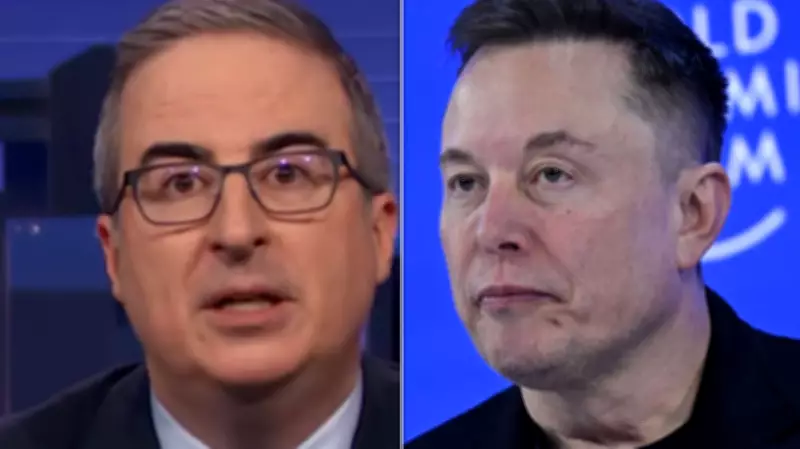
In a powerful and damning segment on his acclaimed show "Last Week Tonight," host John Oliver launched a comprehensive condemnation of the radical transformation of Twitter under the leadership of Elon Musk, the world's wealthiest individual and a prominent ally of former President Donald Trump. The social media platform, now rebranded as X, has undergone significant changes since Musk's high-profile acquisition in 2022, changes that Oliver argues have fundamentally degraded the platform's integrity and utility.
Acknowledging Pre-Existing Flaws Before Musk's Takeover
Oliver began his critique with a measured acknowledgment that Twitter was far from perfect prior to Musk's takeover. He noted that the platform had historically "helped platform a lot of ugliness," including what he pointedly referred to as "our first shit-poster president" Donald Trump. Oliver highlighted how Trump relentlessly utilized Twitter to amplify his public profile and messaging in the lead-up to his successful 2016 presidential campaign, leveraging the platform's reach in unprecedented ways.
However, Oliver was unequivocal in his assessment that the situation has deteriorated markedly under Musk's stewardship. "It is genuinely worse now," he asserted, setting the stage for a detailed examination of the specific issues plaguing the rebranded X platform.

Cataloging the Platform's Critical Failures and Shortcomings
The comedian and political commentator meticulously outlined several key areas where he believes X has failed under Musk's leadership. He pointed to the botched implementation of verification systems, which he argued have enabled a proliferation of spoof and impersonator accounts, undermining user trust and platform credibility.
Oliver also criticized the deep, substantial cuts to content moderation teams and resources, which he suggested have created an environment where harmful content can spread more freely. Furthermore, he highlighted the controversial restoration of previously banned users, including figures such as Donald Trump, conspiracy theorist Alex Jones, and far-right activist Tommy Robinson.
The cumulative effect of these changes, according to Oliver, is that X has devolved into "a sewer of misinformation" and become a fertile breeding ground for hate speech and coordinated disinformation campaigns. He expressed concern about the platform's role in amplifying false narratives and divisive rhetoric in the current digital landscape.
Offering Alternatives and Personal Platform Withdrawal
In response to these perceived failures, Oliver suggested that users consider migrating to alternative social media platforms that might offer better moderation and community standards. He revealed his own personal approach, stating that he now exclusively uses X for posting promotional clips related to his television show, effectively withdrawing from broader engagement on the platform as a form of protest against its current direction.
Mocking Musk's Symbolic Entrance and Memorable Phrase
Oliver also took aim at Musk's theatrical entrance to Twitter headquarters on his first day as owner, when the billionaire arrived carrying a sink and posted the pun "Let that sink in" on the platform. Oliver delivered a sarcastic swipe at the moment, quipping that it was "a joke so funny, I'm still laughing right now," highlighting what he viewed as the absurdity of the gesture in contrast to the serious issues facing the platform.
Returning to this theme at the conclusion of his segment, Oliver offered a poignant reflection on the platform's evolution. "The Twitter that was fun and occasionally useful is just well and truly gone," he stated, adding that "collectively, while it might be sad, it might be past time for all of us, too, if I may borrow a truly poisoned phrase, to 'let that sink in.'"
To drive home his point with visual humor, Oliver then held up an actual sink to his cheering studio audience, creating a memorable and symbolic conclusion to his critique of Musk's X and its transformation from what many once considered a vital digital public square to what Oliver now characterizes as a compromised and problematic platform.