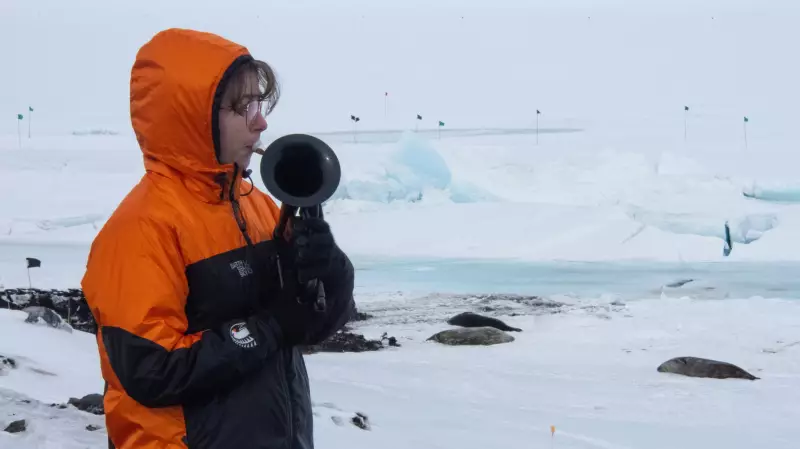
On the frozen frontier of Antarctica, a unique musical performance echoes across the ice. Natalie Paine, a French horn player with New Zealand's navy, has brought professional music to one of Earth's most remote locations through determination and innovative thinking.
From Australian Dreams to Antarctic Reality
Paine's journey to the ice began in the hot, dry climate of Adelaide, Australia, where she initially dreamed of visiting Antarctica as a scientist. Though she pursued music at university instead, her polar aspirations were rekindled years later when she learned that New Zealand military members could apply for Antarctic postings.
"My eyes lit up and I was like, what? Even a musician?" Paine recalled asking her instructor. The encouraging response: "Heck yeah, why not?" set her on a four-year application journey before she finally secured a position as a communications operator at Scott Base.

Creative Solutions for Extreme Conditions
Antarctica's hostile climate presented unique challenges for a brass musician. Paine needed an instrument that wouldn't freeze to her hands or face in temperatures that can plunge to minus 21 degrees Celsius (minus 6 Fahrenheit). Her solution came in the form of a jHorn - a plastic instrument originally designed as a beginner brass instrument for children.
"It was designed to be a beginner brass instrument for children," Paine explained. "So it was super compact, super light plastic, very durable, nowhere near as much maintenance required."
Her practice sessions occur in a historic hut built in 1957 under explorer Sir Edmund Hillary's leadership, where she watches seals on the ice while playing. "I'll sit there by the window and I will do my routine and play music in my time off, which is not very often," she told the Associated Press.
Bringing Live Music to the Frozen Continent
Paine's presence has transformed the acoustic landscape at Scott Base, where she provides live music for ceremonies like flag changes instead of the usual recorded tunes. Her performances require extreme measures - she's played with ski gloves, double layers, and hand warmers to protect against freezing temperatures.
The New Zealand navy doesn't have records of another military musician being posted to Antarctica, making Paine potentially the first. She finds the international cooperation on the continent reminiscent of musical harmony.
"Music is the universal language and it's something that reminds us that we're all connected," Paine reflected. "It brings that connection back to home, back to land and back to the people you're with as well."
Paine will continue her Antarctic posting until March, finding inspiration in what she describes as "wild, untamed beauty" that brings new musical motifs bubbling to the surface during her limited practice time between six-day work shifts.