From Rock Star to Silent Mom: A Journey Back to Self at a Taylor Swift Concert
I am seated between my two teenage daughters at a Taylor Swift concert, surrounded by screaming fans dressed in elaborate costumes from every era of the pop icon's career. From the outside, this appears to be the perfect mother-daughter moment—a shared experience at the show of a lifetime. But internally, a deep sense of dread washes over me as I watch the massive stage clock counting down to Taylor's arrival, feeling as if my survival is inexplicably tied to her appearance.
The uncomfortable truth is that I desperately did not want to attend this event. I had tried to arrange for a friend to take my children instead, but he insisted I go myself. What I couldn't explain—even to myself—was my conviction that something terrible would happen if I entered that stadium. When the clock finally struck zero and the crowd erupted in celebration, my daughters turned toward me with beaming smiles. I forced a smile back and nodded, pretending to share their excitement while a queasy cocktail of emotions exploded within me.
Hidden in Plain Sight
As everyone around me stood cheering, dancing, and singing along, I collapsed into my seat, hidden below the standing crowd. Peering through gaps between fans like a child searching for understanding, I finally glimpsed the giant screen where Taylor Swift appeared—bold, luminous, and moving as if riding a wave of 70,000 devoted Swifties. In that moment, a painful realization struck me: I can't believe I gave this all up.

My musical journey began unexpectedly at age 23 when a stranger in a San Diego karaoke bar declared, "You're a singer!" Those words felt like a revelation of purpose. Growing up in an abusive household, I had never felt safe enough to share my voice outside my childhood bedroom. Suddenly, I found myself returning to that bar nightly, selecting songs from the large binder and singing hidden in a dark corner beneath the stairs, quietly delighting in the sound of my own voice for the first time.
The Rise to Stardom
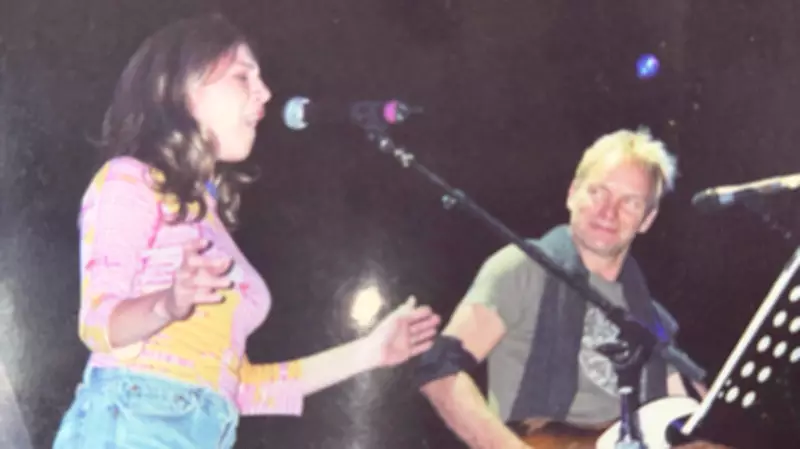
Regulars began to recognize me at the bar, their eyes lighting up when I entered—a sensation of being seen and wanted that was entirely new to me. This newfound love for performing gradually loosened my fears. Stepping out from the shadows, opportunities began appearing: an invitation to sing with Robin Le Mesurier (Rod Stewart's guitarist), followed by other professional engagements. Eventually, in 2002, I became the lead singer of the legendary alternative rock band 10,000 Maniacs.
Being on stage felt glorious and liberating. For the first time, my big voice and personality—attributes that had drawn criticism offstage as a woman—were celebrated rather than chastised. The band's music, originally written by Natalie Merchant, gave voice to important social issues including child abuse, addiction, alcoholism, and teenage pregnancy. After performances, fans would approach me with heartfelt comments like "You changed my life" and "It's as if you knew what I had gone through." I did know—when singing "What's the Matter Here," I felt empowered, as if calling out to my mother before thousands of people: "Look, Mom, you can't get me."
The Turning Point
Despite this professional success, the shame from my childhood experiences continued to haunt me. The year I joined 10,000 Maniacs was also when I met my future husband during a solo trip to Ireland. He was handsome but carried hurt and anger from a previous relationship, separated from his two children who lived in another country. We spent a summer together in his stone farmhouse built during the Irish Famine, and when he smiled with his dimple and called me "his girl," I melted completely.
One concerning comment emerged when he confessed he wouldn't be able to handle it if I became too successful or well-known. Although I had just joined a legendary rock band, I dismissed this warning—and my own worries—attributing it to his fear of not being enough for me. I chose him, and we married in 2004, moving to Dublin.

Motherhood and Sacrifice
Our first child arrived in 2005, bringing me immense joy. I had promised myself since age seven that my children would have a different childhood than mine. I became fiercely protective, keeping my daughter with me even during tours—a trusted friend would hold her on the side of the stage where she could watch me perform. In 2007, however, my mother convinced me to travel to Los Angeles for a gig without my daughter. Despite our troubled history, I desperately wanted to believe she had changed and could support my career.
Instead, she sat at my table praising my husband while criticizing my desire to bring my daughter on tour. I suddenly felt six years old again, cowering and convincing myself this was love. The morning after the Los Angeles show, I discovered I was pregnant with my second child. Faced with the logistical challenge of touring with two children and wanting them to have the stable family roots I never experienced, I made a heartbreaking decision: I quit the band.
The Silence Years
I stopped listening to music entirely and rarely spoke about my former life except when recognized or through accidental slips of the tongue. As an immigrant in Ireland, I was often told "We don't talk about those things here" when I attempted to discuss feelings or personal stories. I opened a children's clothing shop that became a secret sanctuary where women came for beautiful clothes but stayed for meaningful conversations—a place to be seen, heard, and feel safe enough to cry.
For years, I worked six days a week in the shop with my daughter beside me, returning home each night to cook and care for my family. I prided myself on appearing strong and resilient like the Irish mothers around me, but internally, a weakness I couldn't undo festered. During the birth of my second child, my leg slipped from its socket, causing searing pain that brought me to tears. "I'm sorry I'm not strong like the Irish women," I begged my husband for forgiveness.
Loss and Searching
Eight months later, I lost a pregnancy and collapsed inward, feeling ashamed of my emotions. Determined to recover, I took my children to Greece hoping the sun would heal me, but the strain in my marriage only deepened. In subsequent years, I became an energy healer, lost two more pregnancies, closed my shop, and moved across continents searching for something undefined that might fix me and my family.
We eventually settled in New York City, where my son was born during Hurricane Sandy on my birthday. I threw myself into building what appeared from the outside to be a perfect life—a home, energy healing business, and complete family—but we were like that old Irish farmhouse: built during a famine.
The Awakening
Following Donald Trump's election in November 2016, I began attending a meditation group seeking calm. After one session, a woman named Julie introduced herself as an actress. Annoyed by this random profession announcement, I retorted, "Hi, I'm Oskar, and I'm a musician." To my surprise, I found myself sharing details about my music career. Within minutes, Julie suggested I sing the national anthem at Madison Square Garden, claiming connections there.
Thinking she was joking, I eventually agreed to submit a recording, then promptly forgot about it. Weeks later, I received a call from the MSG talent booker: "The Rangers wanted you, but I had to tell them they were 30 seconds too late—The Knicks got you first." Shocked, I turned to a musician friend who gently guided me through the process, even helping me tell my children the secret I had never shared.
Reclaiming My Voice
Standing before 20,000 Knicks fans and my three children, I felt their pride as I basked in the light they had always seen around me. Taking the microphone felt like a genie escaping her bottle—my voice, suppressed for so long, now reverberated through the stadium, and I finally heard it again. Six months later, I left my husband. The messy ending brought up trauma from throughout my life, including childhood abuse, but I was determined to prioritize my children's wellbeing.
I reverted to silence until that Taylor Swift concert, where her voice awakened something within me. I now understand why I feared attending: I was terrified of witnessing someone living the life I had abandoned. Instead of disaster, the experience broke a spell as I watched the crowd react to Taylor's every movement. My truest self trembled beneath years of pain and fear.
A New Beginning
The next morning, my children circled around me and asked, "You're such a good mamma. Why not love yourself the way you love us?" Their question sparked a journey of confronting grief and misery I had avoided for decades. With their encouragement, I began digging into my past, praying for strength to feel everything I had numbed.
I started writing about my experiences and several months later performed a one-woman show, "Breaking Open," at the Edinburgh Fringe Festival. My children served as my production crew, proudly wearing t-shirts that read: Please come to my momma's show. Through this process, I've learned crucial lessons:
- Shrinking myself serves no one, but sharing my light does
- Family is defined by love and understanding, not outward appearance
- It's never too late to choose a new path, even when it feels frightening
As for music, I'm standing at the edge of another beginning. I've slowly started writing new songs and allowing myself to dream of musical adventures. I may never front another rock band, but whatever I do, I'll be using my voice. No one will ever take that away from me again.