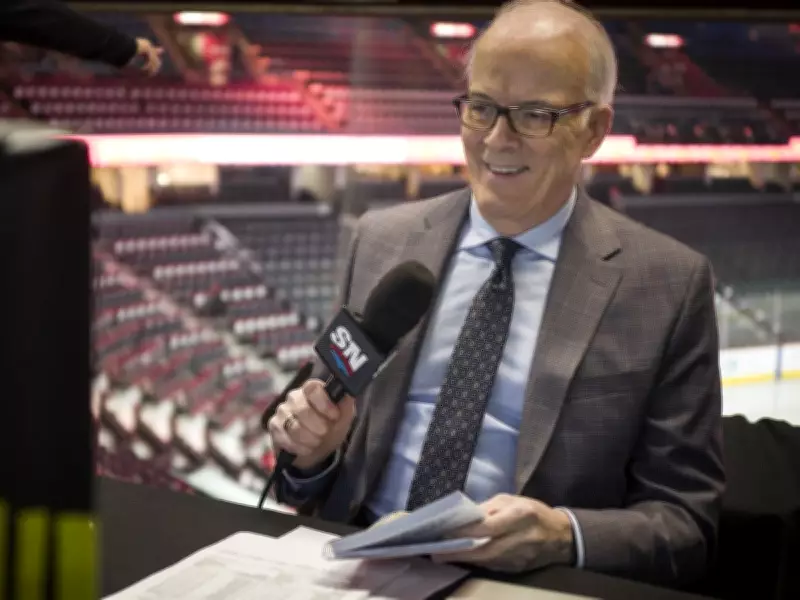
If Scott Oake had his way, his departure from the airwaves would have been a quiet, unannounced exit. The seasoned broadcaster intended to complete this season as usual, then inform Sportsnet executives over the summer that he was stepping away. However, when you are a prominent figure in a national institution like Hockey Night in Canada, such a discreet farewell is not an option.
A Distinguished Broadcasting Career
Oake has been a fixture on Hockey Night in Canada since the late 1980s, with a broadcasting career stretching back to the 1970s. For Vancouver sports enthusiasts, he has been a Saturday night staple across generations. Anyone who has watched hockey over the past four decades has likely seen him on screen most weekends.
His final assignment will be this Saturday, covering the Vancouver Canucks as they face the San Jose Sharks in San Jose. Following the game, Oake will host one last episode of After Hours, the acclaimed interview program that has run for over twenty years. The final guest will be Ryan Reaves of the Sharks, known as one of the most charismatic personalities in the sport.

Vancouver's Special Connection
Although Oake grew up in Cape Breton, attended university in Newfoundland, and eventually settled in Winnipeg, Vancouver holds a unique place in his heart. For more than thirty years, he hosted the late game on Hockey Night in Canada, frequently bringing him to the West Coast.
"I've always loved coming to Vancouver because when you live in Winnipeg, coming to the West Coast in the middle of the winter felt like visiting the beach," Oake remarked. Beyond the climate, the hockey itself was compelling. His role meant extensive coverage of memorable eras for the Canucks, featuring stars like Todd Bertuzzi, Marcus Naslund, the Sedin twins, Roberto Luongo, and Kevin Bieksa.
The Legacy of After Hours
After Hours became a regular Saturday feature about two decades ago, renowned for its engaging player interviews. Oake highlighted Kevin Bieksa as an ideal guest, noting his humor and playful banter. Bieksa has since evolved into a broadcast colleague and a standout on the show.
Oake also reflected on Roberto Luongo, whose initial public perception in Vancouver was somewhat reserved. "We had him on After Hours I think four times. And I dare say we helped change the perception of him. Plus his participation on social media as 'strombone,'" Oake explained. Despite shifts in media consumption and fragmented viewership, After Hours maintained its relevance, appealing even to players raised in a digital age.
"It was a show that was all about learning something about the player as a person, and I think the show generally succeeded on that level more often than not," Oake stated.
A New Chapter in Recovery Advocacy
Upon retirement, Oake will not be working with hockey players to help them open up, but he will be supporting individuals seeking to rebuild their lives and address personal struggles. He is shifting his focus to managing his family's passion projects: the Bruce Oake Recovery Centre and the upcoming Anne Oake Recovery Centre.
The Bruce Oake Recovery Centre, named in memory of his son who passed away in 2011 after battling addiction, has achieved significant success. A tradition in its gymnasium involves hanging Winnipeg Jets sweaters in the rafters to honor graduates after one year of sobriety, with updates for each additional year. "There are now more than 180 of those," Oake reported.
Construction is set to begin on the Anne Oake Recovery Centre, which will provide 75 beds for women in recovery, including accommodations for their children. While the men's centre has capacity for 50, the women's facility aims to address a critical need. "We always wanted to add that. And once we got funding for the Bruce Oake centre stabilized, we wanted to add a program for women," Oake emphasized.
As Oake prepares to sign off from Hockey Night in Canada one final time, his legacy in broadcasting is secure, and his future endeavors promise continued impact in the community.