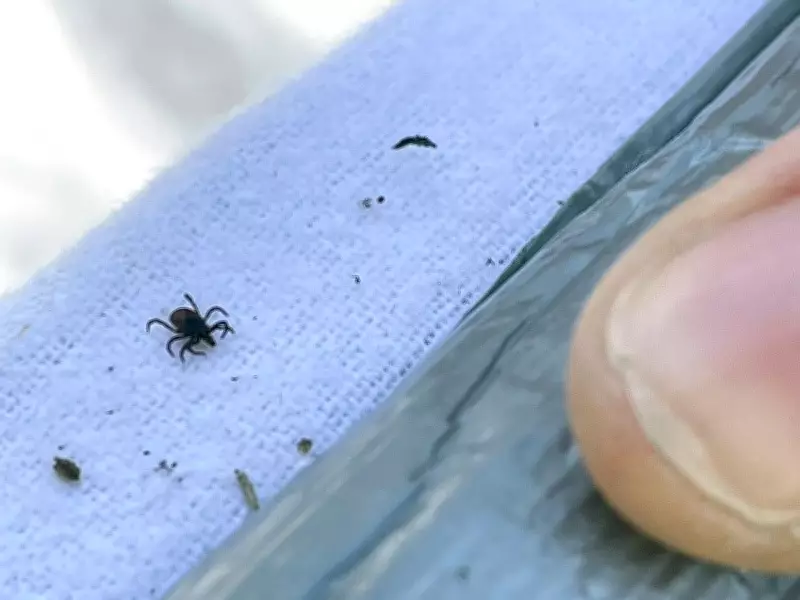
As the weather warms up in Toronto and people venture outside to enjoy what Mother Nature has to offer, tiny bugs called ticks should be on everyone's radar. Specifically, blacklegged ticks, which can carry a host of infectious diseases through their bites, including Lyme disease, anaplasmosis, babesiosis, and Powassan virus.
Understanding Lyme Disease
The most notable infection is Lyme disease, which can cause fever, rashes, chills, fatigue, headaches, swollen lymph nodes, and muscle and joint aches. The rash is a common way to spot the infection because it slowly grows to about five centimetres in diameter in a circular or oval shape over several days. It can also appear as a bull's eye but may go undetected on darker skin. Later signs of the disease include further rashes, dizziness, severe headaches, pain that spreads to joints, bones, tendons, and muscles, and arthritis in the knees, ankles, elbows, and wrists. It can also produce an inability to think clearly and memory loss.
When Is Tick Season?
Tick season in Ontario generally begins in April and ends in October. During this period, the bugs seek a blood meal from humans and animals, and their bites are usually painless. They range in size from smaller than a pinhead to mere millimetres in length. Risk areas for ticks not only include Toronto but also surrounding regions. Large swaths of Ontario, from Windsor to Ottawa, as well as the Niagara area, cottage country, and as far north as Thunder Bay, have been established as breeding grounds.

As of May 17, the province has reported 152 total cases of Lyme disease this year. However, more than half of those infections were reported by Southeast Public Health in Eastern Ontario, with 80 confirmed cases. Closer to home, Toronto Public Health has so far documented eight infections in 2026, while six people have tested positive for the disease in the rest of the Greater Toronto Area.
Tracking Tick Presence
The city has been tracking the bug's presence since 2013 through a process called tick dragging. This occurs in the fall when adult ticks are active, with areas selected based on habitat or previous findings. Researchers have tested for ticks at the Toronto Islands and various parks and conservation areas. "It is important to know that blacklegged ticks may still be present in very low numbers at a site where none were found by tick dragging efforts," the health unit warns. They also say the bugs may be present in other areas of the city that haven't been tested. "As tick populations are expanding, it is possible that blacklegged ticks could be present outside the areas identified by Toronto Public Health," the agency said. "In addition, ticks can travel or migrate on the bodies of animals such as birds and therefore can be present in an area for a year in very low numbers and then disappear."
Protection and Prevention
May is Lyme disease awareness month, and people who spend time outdoors, including spaces with tall grasses and wooded or brushy areas with lots of leaves, should carefully check for ticks on their body after coming indoors. "It is important to check from head to toe, focusing on warm, moist, and hidden areas," says Lyme Ontario, an Ancaster-based non-profit organization dedicated to increasing awareness, education, and information on the disease. "Key spots include the scalp/hair, in and around the ears, under the arms, inside the belly button, around the waist, between the legs, and behind the knees." The charity also suggests tossing your clothes in the dryer on high heat for at least 10 minutes and taking a shower. "Make sure to use a good tick repellant," the group advises. "The ones that come recommended contain at least 20% of Icaridin (Picaridin)."
Apart from avoiding tick bites, people who venture to grassy or wooded areas should wear long pants with the legs tucked into socks, shoes, and long-sleeved shirts. Wearing lighter colours will also make it easier to spot ticks. Ticks use a process called "questing," whereby the bugs climb onto tall grass, brush, or shrub and wait with their legs out to grab a person or animal passing by. "They do not jump or fly, but climb up from low-lying vegetation onto shoes or legs, often crawling up to find a warm, dark, and protected area to bite," Lyme Ontario said.

There is currently no vaccine to prevent Lyme disease. However, it is treated with oral antibiotics after the diagnosis is confirmed.