Emergency Cofferdams Installed Along Muskoka Roads as Floodwaters Surge
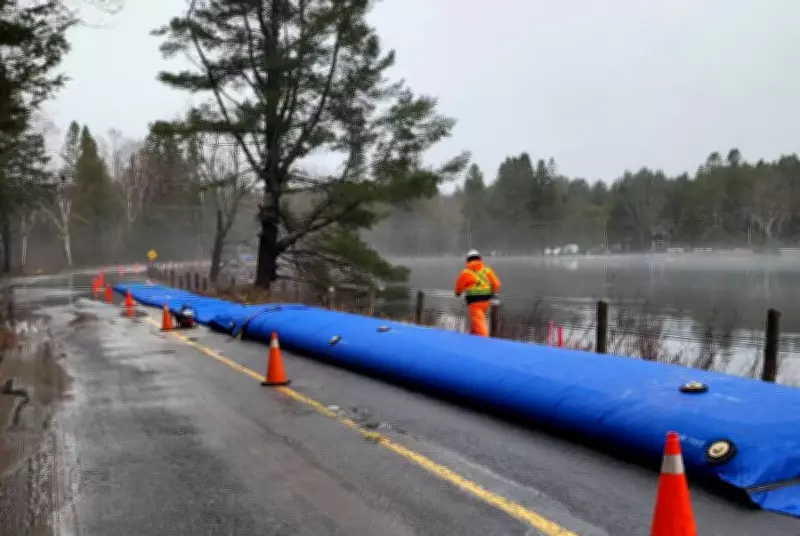
The District of Muskoka has taken urgent action to address escalating flood conditions by installing emergency cofferdams along Muskoka Road 14 in Fraserburg. This critical infrastructure intervention comes as persistent rainfall and snowmelt have caused water levels to rise dramatically across the region, posing significant threats to roadways and public safety.
Immediate Response to Flooding Crisis
On April 15, 2026, municipal crews worked tirelessly to deploy the temporary flood barriers along the affected roadway. Cofferdams are engineered structures designed to create a dry work area by holding back water, allowing for essential repairs and protection of vulnerable infrastructure. The installation represents a proactive measure to prevent further damage to Muskoka Road 14, which serves as a vital transportation artery for local residents and emergency services.
The flooding situation has been developing over several days, with meteorological conditions contributing to swollen rivers and saturated ground throughout Muskoka. District officials have been monitoring water levels closely, implementing their emergency response plan when it became clear that traditional drainage systems were overwhelmed.

Regional Impact and Ongoing Concerns
This flooding event is not isolated to Fraserburg alone. Multiple communities across the District of Muskoka are experiencing similar challenges with rising waters inundating low-lying areas. The installation of cofferdams along Muskoka Road 14 serves as both a practical solution and a visible indicator of the severity of the current hydrological situation.
Emergency management personnel emphasize that residents should remain vigilant and avoid unnecessary travel through affected areas. The cofferdam installation is part of a broader strategy that includes continuous monitoring of water levels, assessment of infrastructure integrity, and preparation for potential evacuation scenarios if conditions deteriorate further.
Historical Context and Climate Considerations
Spring flooding has become an increasingly regular occurrence in Muskoka and surrounding regions, with climate scientists noting a pattern of more intense precipitation events in recent years. The District has been investing in flood mitigation infrastructure, but extreme weather events continue to test the resilience of existing systems.
The current cofferdam deployment follows established emergency protocols developed after previous flood events. These temporary barriers can be rapidly deployed and are particularly effective for protecting specific sections of roadway that are vulnerable to washouts or structural compromise from sustained water pressure.
Municipal authorities continue to work in coordination with provincial emergency services and environmental agencies to manage the flooding situation. Updates on road conditions and safety advisories are being disseminated through official channels as the District navigates this challenging period of elevated water levels across Muskoka.