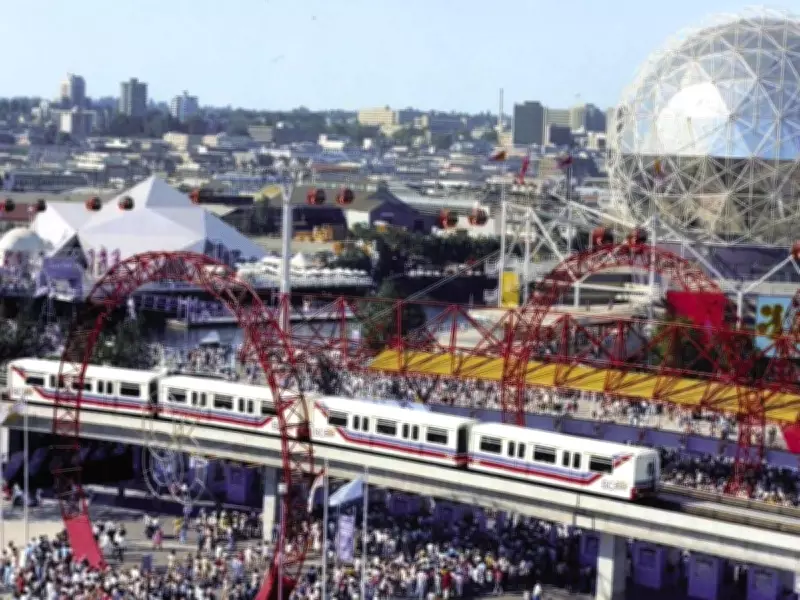
The electric train car whizzing overhead, the glowing lights of the downtown stadium and nearby geodesic dome, the white sails of the harbourside convention centre, the waterfront skyscrapers that gave Vancouver its 'city of glass' moniker. So many of the most recognizably Vancouver features of the city in 2026 can be linked back to Expo 86, the world's fair that opened on May 2, 1986.
Legacy of '86: Expo Helped Shape Our Little Coastal Town Into a Global City, but at What Expense?
Vancouver welcomed the world in 1986, and the world showed up. Those who were there weigh in on its impact. Expo ran for five months, welcomed 22 million visitors to Vancouver, and had a major impact on the city. Looking back now, 40 years later, there is some disagreement among those who were there at the time over just what the fair's legacy represents.
The Influx of People and Money
The influx of people and money boosted British Columbia's economy and transformed a relatively small coastal city into a metropolis with a global profile. But debate persists about whether that rising tide lifted all boats, or if it contributed to the inequality and affordability challenges confronting Vancouver now.

From Skeptic to Booster
In 1980, when Vancouver city councillor Mike Harcourt decided to make his first run for mayor, he was a strident critic of the B.C. government's plans for a 1986 fair to coincide with the 100th anniversary of Vancouver's incorporation. Harcourt even wrote a letter to the Bureau of International Expositions in Paris, in 1980, asking the governing body to reject the B.C. government's application. He was criticized by many, including then mayor Jack Volrich and provincial government leaders, for attempting to sabotage a once-in-a-lifetime opportunity for Vancouver and B.C. But, he says, he could not support a splashy international event that could leave the city in debt without a real plan for a major transit project to benefit the region and permanent housing on the False Creek North property after the fair ended.
'Housing, transit, and livability are priorities which leave no room for multi-million-dollar birthday bashes,' Harcourt was quoted saying in The Province in October 1980, just weeks before the election in which he upset Volrich. Harcourt went on to become an enthusiastic booster of Expo. He served as mayor for the six years leading up to Expo, and said he visited the fair 80 times with his wife and young son. Looking back now, Harcourt says he was happy with the legacy projects Expo brought to the region — without saddling the city with massive debt, he emphasized — including the convention centre, B.C. Place stadium, SkyTrain, Science World, and the neighbourhood developed on the Expo lands on False Creek's northern foreshore.
Expo 86 remains a pivotal moment in Vancouver's history, sparking ongoing conversations about growth, development, and the trade-offs of global recognition.