Foothills County landowners and residents are celebrating after a provincial regulator rejected a proposal for a battery storage facility near High River. The decision marks the third time a proposed use of the site near environmentally sensitive Frank Lake has been denied.
Proposal Details and Community Concerns
Calgary-based Enfinite submitted a plan in 2024 to build a 100-megawatt, four-hour duration battery storage facility on land near Frank Lake, east of High River. The facility would have covered four hectares and housed lithium-phosphate batteries in 105 sea cans, intended to supplement Alberta's energy supply during peak demand.
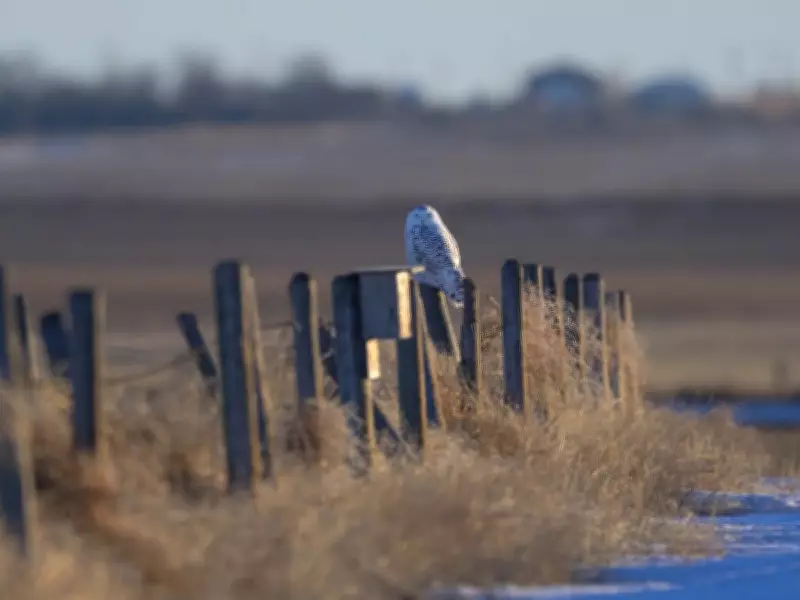
The proposal sparked immediate opposition from local landowners. Jasona Rondeau, head of the group opposing the project, noted that the area is already "very congested for electrical infrastructure." Concerns also centered on the facility's proximity to Frank Lake, a vital habitat for hundreds of bird species and one of Canada's 597 Important Bird Areas. The lake supplies water to 22 counties to the south.

"There was no way that we could guarantee that contamination would not get into the water supply," Rondeau said.
AUC Decision and Reasoning
After a two-year review, the Alberta Utilities Commission (AUC) denied the proposal on April 30. In an email, the AUC stated that the project's "non-compliance with municipal planning documents and land use policies is material and has the potential to significantly and negatively impact environmental, social, economic and other community objectives for the municipality."
Foothills County and local stakeholders had recommended that the project be built in an industrial corridor, which offers full-time firefighting coverage, reliable year-round piped water for firefighting, proximity to major power infrastructure, and appropriate zoning. Enfinite acknowledged considering the industrial corridor but chose alternative sites, prioritizing "minimizing the transmission infrastructure required to connect the energy storage project to the system over compliance with municipal planning documents and land use policy," according to the AUC.
Rondeau emphasized emergency response concerns: "There was not enough attention given to the emergency response if there was ever to be a catastrophic fire from the event, given that it's located approximately between seven and eight kilometres from High River. The ability for Foothills County to respond to an event, should there ever be one, was inadequate."
Had the project proceeded, Enfinite planned to use Tesla lithium batteries, which they argued could be hard-coded down to 40% operational capacity to comply with noise regulations.
Reaction from Landowners
Landowners reacted with relief and joy upon hearing the decision. "There were tears, there was disbelief," Rondeau recalled. "The reaction was just incredible." The Calgary Herald reached out to Enfinite for comment but received no response.
This victory for local residents underscores ongoing tensions between renewable energy development and environmental protection in the region.