Humpback Whale 'Timmy' Faces Peril in Shallow German Waters
A humpback whale, affectionately nicknamed "Timmy" by local observers, is currently struggling to navigate the dangerously shallow waters of Wismar Bay off the northern coast of Germany. The massive marine mammal, estimated to be around 40 feet in length, became stranded in the bay on Sunday, March 29, 2026, drawing immediate concern from marine biologists and wildlife rescue teams.
Dramatic Scene Unfolds in Wismar Bay
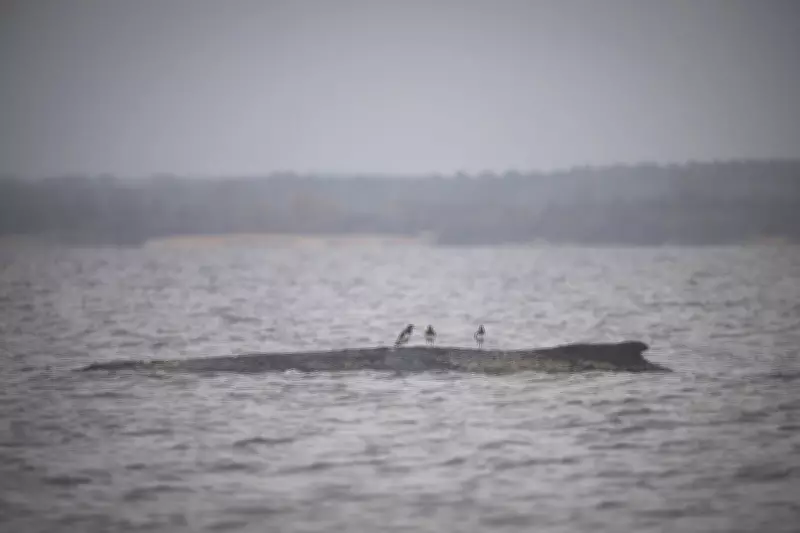
Photographs from the scene depict a surreal and concerning sight: three water birds perched calmly on the whale's back as it languished in the shallow bay. The images, captured by photographer Philip Dulian and distributed via the German Press Agency (dpa), highlight the whale's precarious situation. Timmy appears to be in a state of distress, with experts noting that humpback whales typically inhabit deeper oceanic waters and are ill-equipped to handle prolonged exposure to shallow coastal areas.
Marine rescue authorities have been mobilized to assess the situation and formulate a potential rescue plan. The shallow depth of Wismar Bay, combined with the whale's immense size, presents significant logistical challenges for any intervention. Wildlife officials are closely monitoring Timmy's condition, expressing concern over the risk of dehydration, injury from the seabed, or stranding as tides fluctuate.

Potential Causes and Rescue Efforts
While the exact reason for Timmy's entry into the bay remains unclear, marine biologists speculate several possibilities. The whale may have been following prey, become disoriented due to illness or injury, or been affected by underwater noise pollution disrupting its navigation. Humpback whales are known for their long migratory routes, and such incidents, while rare, can occur when they stray off course.
Local environmental agencies and marine mammal specialists are coordinating a response. Options under consideration include:
- Attempting to gently guide the whale back toward deeper waters using boats.
- Monitoring tidal patterns to see if natural movement will aid its escape.
- Providing supportive care if the whale becomes beached or shows signs of severe distress.
The public has been advised to keep a safe distance to avoid causing further stress to the animal. This incident underscores the delicate balance between human activity and marine wildlife, serving as a poignant reminder of the challenges faced by ocean giants in an increasingly crowded world.