Ice Pancakes: The Rare Natural Phenomenon Explained
As frigid temperatures continue to grip regions like Port Severn, a fascinating natural occurrence is taking shape on the water's surface. Known as "ice pancakes" or "pancake ice," these round, floating disks are capturing the attention of observers and scientists alike. This phenomenon offers a unique glimpse into the intricate processes of winter weather and water dynamics.
What Are Ice Pancakes?
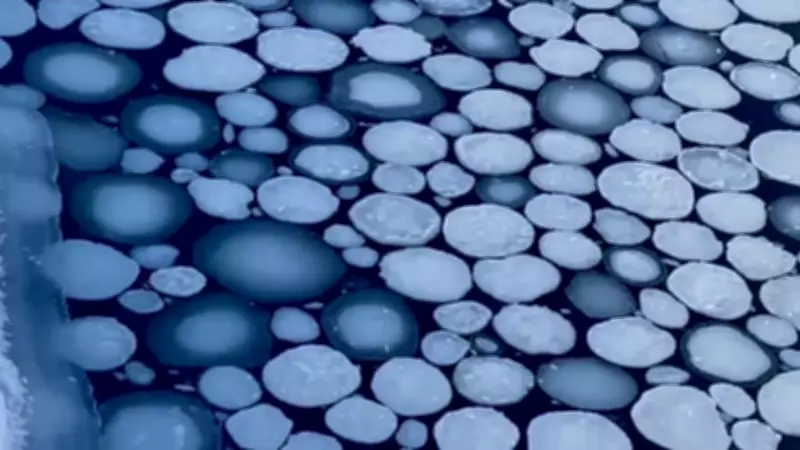
Ice pancakes are circular formations of ice that develop on rivers, lakes, or oceans during extremely cold conditions. They are created when tiny ice crystals, known as frazil ice, are pushed together by wave action. As these crystals collide and accumulate, they form into distinct, pancake-like shapes with raised edges, often resembling lily pads or large coins floating on the water.
The process begins when the water temperature drops sufficiently for ice to start forming. Waves and currents then agitate the surface, causing the frazil ice to consolidate into these characteristic disks. The edges of the pancakes are typically slightly upturned due to repeated collisions with other ice pieces, giving them their distinctive appearance.

Where and When Do They Occur?
Port Severn, located in Ontario, Canada, is currently experiencing conditions ideal for ice pancake formation. This phenomenon is most common in areas with:
- Consistently frigid temperatures below freezing
- Moderate wave action or current movement
- Open water that hasn't completely frozen over
- Specific salinity levels in marine environments
While Port Severn is currently showcasing this phenomenon, ice pancakes can occur in various cold-water environments worldwide, including the Great Lakes, Arctic regions, and certain coastal areas during winter months.
The Science Behind the Formation
The creation of ice pancakes involves several physical processes working in concert. First, supercooled water—water that remains liquid below its normal freezing point—begins to form frazil ice crystals. These tiny, needle-like crystals then:
- Accumulate on the water surface
- Are pushed together by wave motion
- Begin to freeze together at their edges
- Form increasingly larger circular shapes
Environmental factors play a crucial role in this process. The specific temperature, wind patterns, and water movement all contribute to whether ice pancakes will form and how large they will grow. In some cases, these formations can reach diameters of several feet, though most remain in the range of a few inches to a foot across.
Significance and Observation
Beyond their visual appeal, ice pancakes serve as indicators of specific environmental conditions. They represent a transitional phase between open water and complete ice cover, often appearing before a body of water freezes over completely. For scientists and weather observers, the presence of pancake ice can provide valuable information about:
- Water temperature trends
- Current and wave patterns
- Approaching freeze-up conditions
- Climate patterns in cold regions
For residents and visitors in areas like Port Severn, witnessing ice pancake formation offers a rare opportunity to observe nature's intricate processes firsthand. The phenomenon typically lasts only as long as conditions remain favorable—once temperatures drop further or calm completely, the pancakes may freeze together into solid ice sheets or break apart if conditions change.
As winter continues across Canada, those near suitable water bodies might keep an eye out for this remarkable natural display. While beautiful to observe, it's important to remember that ice conditions can be unpredictable, and caution should always be exercised near frozen or partially frozen water.