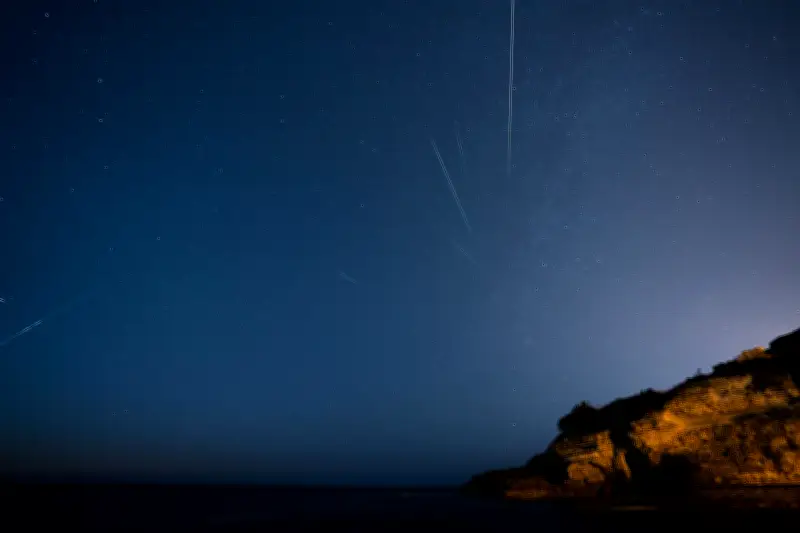
The June Bootids meteor shower, active from June 22 to July 2, 2026, is one of the most unpredictable meteor displays of the year. Unlike major showers such as the Perseids or Geminids, the June Bootids can vary dramatically from year to year, sometimes producing no visible meteors and other times delivering outbursts of up to 100 meteors per hour.
What Are the June Bootids?
The June Bootids originate from debris left by Comet 7P/Pons-Winnecke, a periodic comet that orbits the Sun every 6.37 years. The shower's radiant point lies in the constellation Bootes, near the bright star Arcturus. The meteors are typically slow-moving, entering Earth's atmosphere at about 14 km/s (31,000 mph), and often leave persistent trains.
According to the American Meteor Society, the June Bootids have a history of unexpected outbursts. Notable events occurred in 1916, 1921, and 1998, when rates exceeded 50 meteors per hour. The 1998 outburst surprised astronomers with rates of 50–100 meteors per hour, making it one of the most active displays of the decade.

When and Where to Watch
The shower runs from June 22 to July 2, with the peak expected on the night of June 27–28, 2026. The best viewing time is after midnight when the radiant is highest in the sky. Observers in the Northern Hemisphere have the best view, as Bootes is circumpolar at high latitudes.
For optimal viewing, find a dark location away from city lights. No special equipment is needed; just lie back and look up. The Moon will be in its waxing gibbous phase around the peak, which may wash out fainter meteors, but bright fireballs could still be visible.
Why So Unpredictable?
The unpredictability stems from the comet's orbit and the debris stream's evolution. Comet 7P/Pons-Winnecke has a relatively short period and its orbit is influenced by Jupiter's gravity, causing the debris trail to shift. Earth may pass through dense clumps of particles only when orbital conditions align, leading to sporadic outbursts.
Dr. Peter Jenniskens, a meteor astronomer at the SETI Institute, notes: "The June Bootids are a classic example of a meteor shower that can surprise us. Their outbursts are tied to the comet's recent perihelion passages, but predicting exactly when Earth will hit a dense filament is challenging."
Historical Outbursts
Besides 1998, significant outbursts occurred in 1916 (up to 100 meteors per hour) and 1921 (estimated 50 per hour). No major outbursts have been recorded since 1998, but astronomers continue to monitor the shower. The 2026 peak offers a chance for a surprise, though forecasts suggest typical rates of 1–2 meteors per hour under normal conditions.
Viewing Tips
- Timing: Best after midnight on June 27–28, but check local moonrise times.
- Location: Dark sky sites away from light pollution.
- Comfort: Bring a reclining chair or blanket, and warm clothing.
- Patience: Meteors can appear sporadically; allow at least 30 minutes for your eyes to adapt.
Scientific Significance
Studying the June Bootids helps astronomers understand comet debris evolution and planetary perturbations. Radar and video observations during outbursts provide data on meteoroid size distribution and orbital dynamics. The shower is also a reminder that even minor showers can offer spectacular displays without warning.