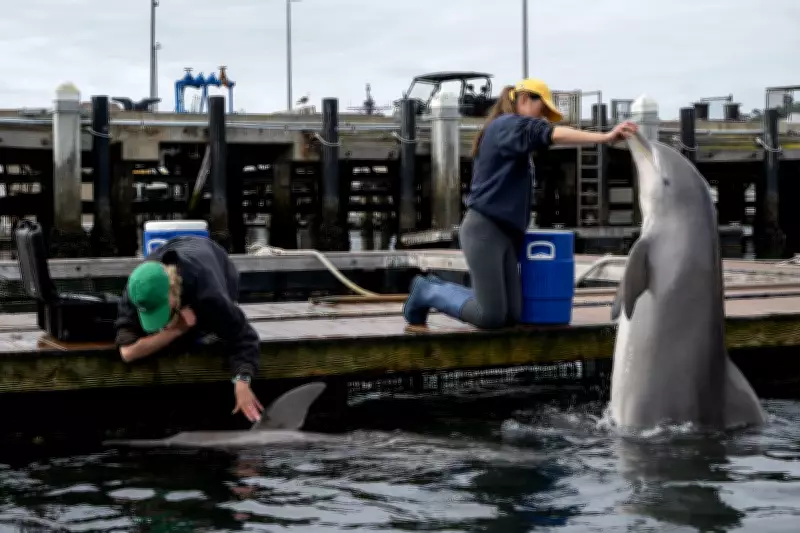
Rumors have been circulating about the presence of military dolphins in the Strait of Hormuz, a critical waterway for global oil shipments. While these claims remain unconfirmed, the U.S. Navy has indeed employed marine mammals for various tasks for decades.
Decades of Service
The U.S. Navy Marine Mammal Program (MMP) has trained dolphins and sea lions since the 1960s. These animals are used for tasks such as mine detection, object recovery, and port security. Dolphins, with their advanced sonar capabilities, are particularly effective in locating underwater mines and enemy divers.
Training and Care
At the Naval Information Warfare Center (NIWC) Pacific in San Diego, interns like Sadie Steinheimer and Tristan Smith care for these dolphins. The program emphasizes animal welfare, with rigorous training that relies on positive reinforcement.

Strategic Importance
The Strait of Hormuz is a chokepoint for about 20% of the world's oil. Any military presence, including marine mammals, would be significant. However, the Navy has not officially confirmed using dolphins there. Speculation often arises from historical deployments, such as during the Iraq War, when dolphins were used to clear mines in the port of Umm Qasr.
Effectiveness and Limitations
While dolphins are highly capable, they are not invulnerable. Critics argue that reliance on animals poses ethical and logistical challenges. Nevertheless, the MMP continues to evolve, incorporating new technologies alongside its biological assets.
Conclusion
Whether or not dolphins are currently in the Strait of Hormuz, their role in naval operations remains a fascinating blend of biology and military strategy. The U.S. Navy's commitment to these programs underscores their value in modern warfare.