Red Tide Event Devastates Marine Life Along South African Coast
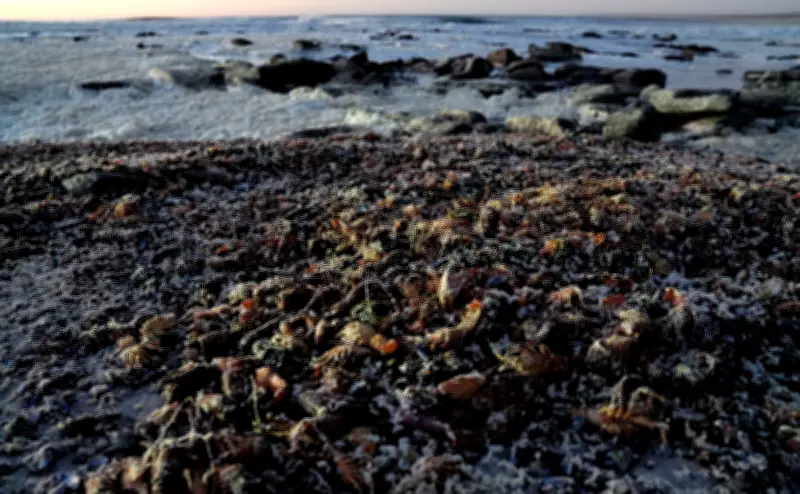
A severe and widespread red tide event is currently unfolding along the western coastline of South Africa, leading to catastrophic consequences for local marine ecosystems. The harmful algal bloom has triggered a mass mortality event among rock lobsters, commonly known as crayfish, with thousands of dead crustaceans washing ashore.
Scene of Ecological Disaster in Elands Bay
The coastal community of Elands Bay, located approximately 220 kilometers (137 miles) north of Cape Town, has become the epicenter of this environmental crisis. Photographic evidence from Thursday, February 26, 2026, depicts a grim scene along the shoreline, where beaches are littered with deceased rock lobsters. The scale of the die-off is substantial, indicating a significant impact on the local crayfish population and the broader marine food web.
Red tides, scientifically referred to as harmful algal blooms (HABs), occur when colonies of algae grow out of control. While some red tides are merely a natural phenomenon, others produce potent toxins that can be deadly to marine life. The current bloom in South African waters is believed to be depleting oxygen levels in the water or releasing harmful substances, leading to the suffocation and poisoning of the crayfish.

Potential Causes and Wider Environmental Concerns
Marine biologists and environmental scientists are investigating the specific triggers for this severe red tide event. Potential contributing factors under examination include:
- Unusual water temperature fluctuations linked to broader climate patterns.
- Changes in ocean currents and upwelling systems that bring nutrients to the surface.
- Possible nutrient runoff from agricultural or other land-based sources, though this is less common in the region.
Such events pose a dual threat, causing immediate ecological damage and potentially long-term harm to fisheries and coastal economies that depend on species like rock lobster. The South African rock lobster fishery is an important commercial and subsistence resource, making this die-off a significant economic as well as environmental blow.
Monitoring and Response Efforts
Local authorities and environmental agencies are monitoring the situation closely. Public health advisories may be issued if the algal bloom is found to produce toxins that could affect human health through contaminated seafood or airborne irritants. Clean-up operations on affected beaches are likely necessary to prevent secondary environmental issues from the decomposing biomass.
This incident underscores the vulnerability of marine ecosystems to sudden environmental changes and highlights the need for robust monitoring systems for harmful algal blooms. As climate change continues to influence ocean conditions, scientists warn that the frequency and intensity of such red tide events could increase in various parts of the world, requiring greater preparedness and research into mitigation strategies.