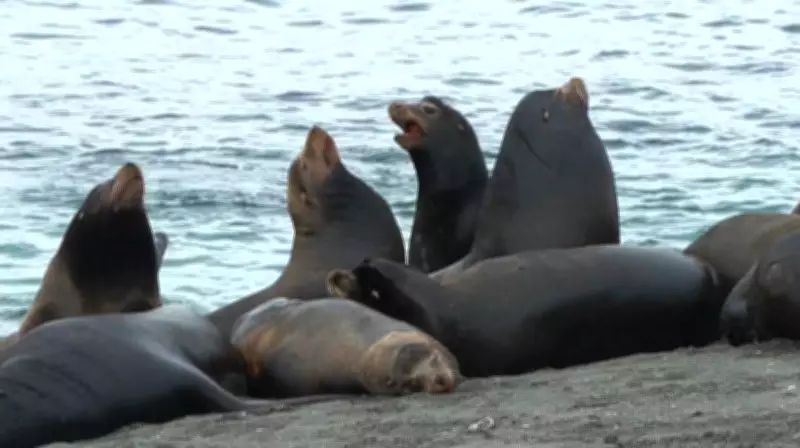
Sea Lions Descend on Vancouver Island Beach in Massive Herring Feeding Frenzy
In a remarkable display of marine life behavior, hundreds of California sea lions have taken over a small beach in Deep Bay, British Columbia, creating a scene that has been vividly described by observers as "like a biker gang." The massive gathering represents a significant wildlife event on Vancouver Island, drawing attention to the region's rich marine ecosystem and the seasonal patterns of its inhabitants.
A Dramatic Coastal Spectacle
The sea lions have hauled themselves onto the beach in impressive numbers, transforming the shoreline into a bustling hub of activity. This congregation is primarily driven by the abundant presence of herring, which serves as a crucial food source for these marine mammals. The timing of this event aligns with the herring spawning season, when these small fish gather in large schools near coastal areas, creating ideal feeding conditions for predators.
Witnesses to the spectacle have noted the organized yet chaotic nature of the sea lions' arrival, with groups moving in coordinated patterns that reminded onlookers of motorcycle gangs converging on a location. The comparison highlights both the social structure of sea lion groups and the sheer force of their collective presence when food resources are concentrated in specific areas.

Ecological Significance and Seasonal Patterns
California sea lions (Zalophus californianus) are known for their intelligence, social complexity, and adaptability. While they typically inhabit coastal waters from British Columbia to Mexico, such concentrated gatherings on specific beaches are noteworthy events that reflect both the health of local fish populations and the animals' feeding strategies.
The herring feast represents more than just a feeding opportunity—it demonstrates the intricate connections within marine food webs. Herring serve as a foundational species in coastal ecosystems, supporting not only sea lions but also numerous other predators including birds, larger fish, and marine mammals. The sea lions' ability to locate and capitalize on these seasonal abundances showcases their sophisticated foraging behaviors and environmental awareness.
Conservation Context and Human Interaction
While the sea lion gathering is a natural phenomenon, it occurs within a context of ongoing conservation efforts and human-wildlife interactions. British Columbia's coastal waters have seen various management approaches to protect both fish stocks and marine mammals, with herring fisheries being particularly regulated to maintain sustainable populations.
Local authorities and marine biologists typically monitor such large gatherings to ensure both animal welfare and public safety. While sea lions are generally not aggressive toward humans unless provoked, their size and strength warrant respectful observation distances. The event provides valuable opportunities for researchers to study sea lion behavior, population dynamics, and feeding ecology in natural settings.
For residents and visitors to Vancouver Island, the sea lion spectacle offers a rare glimpse into the vibrant marine life that inhabits the region's coastal waters. Such events underscore the importance of preserving healthy marine ecosystems that can support both wildlife populations and sustainable human activities.
The Deep Bay gathering serves as a powerful reminder of nature's rhythms and the spectacular displays that occur when environmental conditions align to support concentrated wildlife activity along Canada's Pacific coast.