In the small town of Big River, an electrician loads up his vehicle with boxes and hauls them hundreds of kilometres north to Buffalo Narrows. At Witchekan Lake, a social worker arrives in his own truck stuffed to the brim with boxes.
For Denesuline First Nation communities in the remote Athabasca Basin, boxes are unloaded from cargo planes that were packed in Prince Albert. More cargo planes leave Winnipeg to deliver boxes to northern settlements in other provinces.
Inside are sewing supplies — fabric, furs, sometimes whole sewing machines.

Building a Network for Sewing Supplies
“I’ve got a little bit of a network,” Jenny Ambrose put it mildly, “for getting boxes around.”
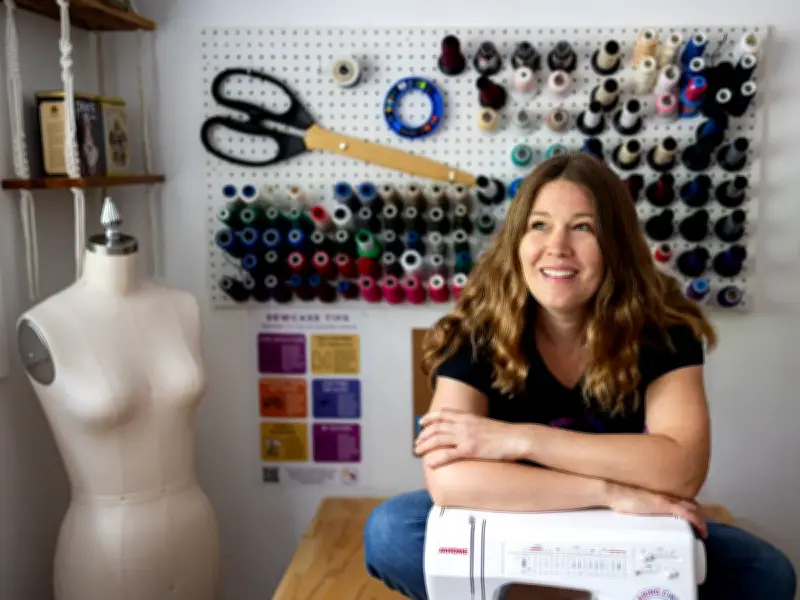
From her home studio and storage unit in Saskatoon, Ambrose runs Sewcase, one of several programs founded by the charity Soaring Circle. It empowers Indigenous youth through education, career and entrepreneurship opportunities.
Ambrose, who spools from a long thread of sewists (she and her mother appeared in a 1982 StarPhoenix sewing story), joined Soaring Circle in 2023. At the time, the organization was launching a sewing lab at Ahtahkakoop Cree Nation, about 150 km north of Saskatoon.
Ambrose had returned to the area following fashion design stints in B.C. and England, so the initiative hit close to home and heart. After meeting with Soaring Circle’s co-founder, Ambrose became coordinator of the new sewing program, later named Sewcase.
From Classroom to Runway
Over the past three years, Sewcase’s intrepid boxes of swag have turned moths into butterflies — isolated youths now flaunting their fashion on runways and stages from Wollaston Lake to Toronto.
“Meant to be” is how Keenan Tsannie described wandering into a classroom at his Wollaston Lake high school a few years back. Sewcase was there, led by Ambrose who had travelled to the Athabasca Basin community to help set up the lab.
“She saw the spark in me,” Tsannie said. “She’s just been my mentor, and (it’s been) a good sponsorship ever since.”
Thanks to mentorship from Ambrose and inspiration from his grandmother, whom he remembers sewing with various hand-stitching techniques, Tsannie mastered the machine and incorporated unique materials like recycled packaging and pop can tabs.
Not long after, Tsannie and others modelled his designs at Saskatchewan Fashion Week in Saskatoon. Then it was off to Toronto for the Skills Canada National Competition, where Tsannie created ribbon skirts that blended traditional Indigenous design with modern flair.
“He had never travelled outside of Saskatchewan or Alberta before,” said Ambrose, who accompanied Tsannie to Toronto, “and it was a really phenomenal experience, and seeing things kind of through his eyes as well was really great.”