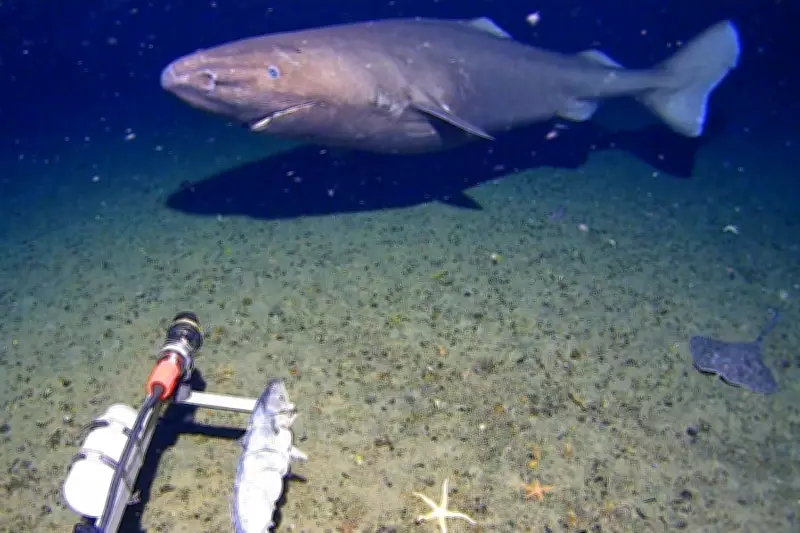
Surprise Shark Captured on Camera for First Time in Antarctica's Near-Freezing Deep
In a groundbreaking discovery, scientists have successfully captured the first-ever footage of a shark swimming in the near-freezing deep waters of Antarctica. This unprecedented sighting, recorded in February 2026, provides new insights into marine life adaptations in extreme polar environments.
Unveiling a Hidden Marine World
The shark was observed in the frigid depths of the Antarctic Ocean, where temperatures hover just above freezing. This region, known for its harsh conditions, has long been studied for its unique ecosystems, but the presence of sharks at such depths was previously undocumented. The footage reveals the shark navigating through dark, icy waters, showcasing its ability to survive in one of the planet's most inhospitable habitats.
This discovery challenges existing assumptions about shark distribution and resilience. Researchers are now analyzing the footage to identify the shark species and understand its behavioral patterns. Preliminary observations suggest it may be a species adapted to cold environments, possibly related to deep-sea sharks found in other parts of the world.

Implications for Climate and Environmental Science
The sighting has significant implications for climate change research and marine biology. As global temperatures rise, polar regions are experiencing rapid environmental shifts. Studying how species like this shark thrive in near-freezing waters can help scientists predict how marine life might adapt to changing ocean conditions.
- Enhanced understanding of biodiversity in polar ecosystems.
- Insights into evolutionary adaptations to extreme cold.
- Potential impacts of climate change on deep-sea species.
This discovery underscores the importance of continued exploration and monitoring of Antarctica's marine environments. With advanced technology, such as underwater cameras and remote-operated vehicles, scientists can uncover more about these hidden worlds and their inhabitants.
Future Research Directions
Following this initial footage, research teams plan to conduct further studies to gather more data on the shark and its habitat. Key areas of focus include:
- Conducting genetic analysis to determine the shark's species and evolutionary history.
- Monitoring the shark's movements and feeding habits in the deep sea.
- Assessing the health of the Antarctic marine ecosystem in relation to climate variables.
This finding not only adds to the scientific knowledge of Antarctica but also highlights the need for conservation efforts in these vulnerable regions. Protecting such unique species is crucial for maintaining biodiversity and understanding our planet's complex ecological systems.