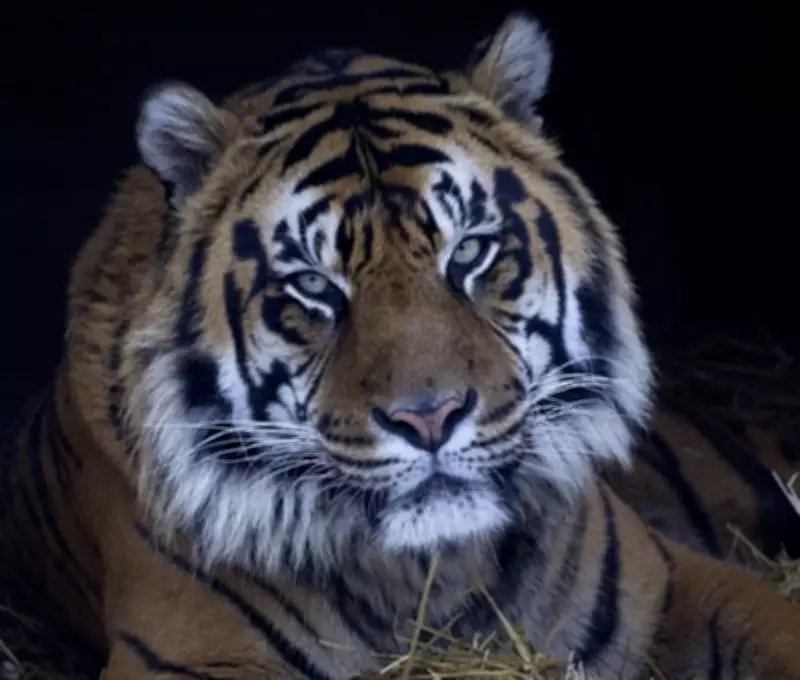
In a somber announcement this week, the Toronto Zoo revealed the euthanasia of Hari, a 17-year-old critically endangered Sumatran tiger, due to kidney failure. The elderly tiger had resided at the east-end zoo since 2011 as part of an international captive breeding initiative aimed at preserving this rare species.
A Compassionate End for a Geriatric Tiger
Zoo officials described Hari as a geriatric tiger, having surpassed the average 15-year lifespan typical of wild Sumatran tigers. He had been under intensive veterinary care after his kidney function began to deteriorate. Despite dedicated efforts and supportive treatments from the Wildlife Health and Care teams, his condition continued to worsen, leading to a decline in energy, appetite, and overall organ function.
Following a comprehensive quality of life assessment, the zoo made the compassionate decision to proceed with euthanasia, framing it as a final medical act of kindness to prevent unnecessary suffering. In social media posts, the zoo emphasized that kidney failure is particularly challenging to manage in large cats, especially those of advanced age.

Hari's Legacy and the Breeding Program
Hari arrived at the Toronto Zoo in 2011 from the San Diego Zoo, intended as a breeding partner for the female tiger Brytne. Tragically, shortly after his arrival, Hari killed Brytne by crushing her larynx during a fight. Brytne had previously sired two litters of cubs with another mate.
Despite this incident, the zoo remembered Hari fondly for his laid-back demeanor, deep love of food, and affection for barrels. His presence as an ambassador for his wild counterparts helped inspire awareness, action, and support for the protection of Sumatran tigers and their forest habitats, the zoo stated.
The Plight of Sumatran Tigers
Sumatran tigers are indigenous to Indonesia and are classified as critically endangered. According to conservation estimates, there are only a few hundred in captivity worldwide and between 500 to 600 remaining in the wild. The Toronto Zoo currently houses one other Sumatran tiger, a female named Kemala, who is also advanced in age.
This loss highlights the ongoing challenges in conserving endangered species through captive breeding programs. The zoo's efforts are part of a global strategy to bolster populations and educate the public about wildlife preservation.
Recent Animal Deaths at the Toronto Zoo
Hari's death marks the second animal to die at the Toronto Zoo this year. On January 1, a 13-year-old Masai giraffe named Kiko died after becoming trapped in a gap in an automatic door while being moved between habitats. These incidents underscore the complexities and risks involved in managing zoo animals, even with stringent care protocols.
The Toronto Zoo continues to focus on its mission of wildlife conservation, education, and research, striving to protect vulnerable species like the Sumatran tiger for future generations.