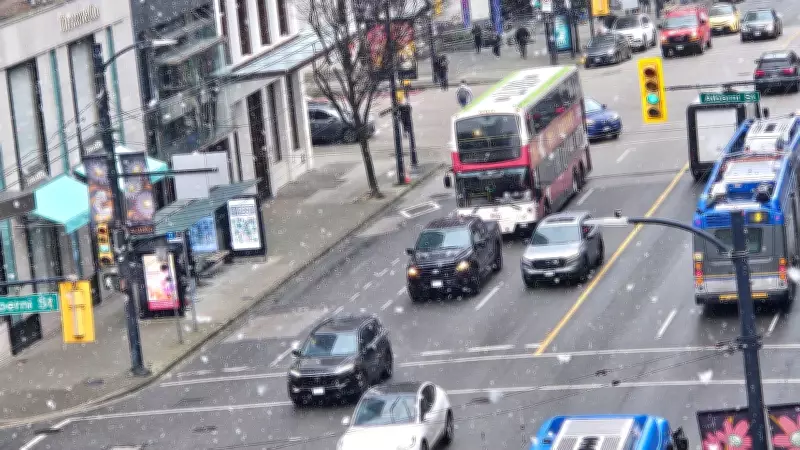
Environment and Climate Change Canada (ECCC) has issued a clarification regarding recent weather events in Vancouver, stating that the flurries observed on February 18, 2026, do not constitute the city's first official snowfall of the season. This announcement comes despite numerous reports and video evidence of snowflakes falling in downtown Vancouver on that date.
Defining Official Snowfall
According to ECCC meteorologists, an official snowfall requires specific measurable criteria that were not met during the recent flurries. The agency emphasizes that their records are based on standardized measurements taken at designated weather stations, not casual observations from the public.
Public Perception Versus Meteorological Reality
The discrepancy between what residents witnessed and what gets recorded officially highlights the technical nature of weather documentation. While many Vancouverites took to social media to share images and videos of falling snow, ECCC maintains that these flurries did not meet the threshold for official snowfall classification.

"We understand the excitement when people see snow in Vancouver," said an ECCC spokesperson. "However, our official records follow strict measurement protocols that ensure consistency across all weather reporting."
Vancouver's Snowfall Patterns
Vancouver typically experiences minimal snowfall compared to other Canadian cities, making any winter precipitation noteworthy to residents. The city's coastal location and temperate climate mean that measurable snow events are relatively rare occurrences.
ECCC data shows that Vancouver's first official snowfall of the 2025-2026 season actually occurred earlier in the winter, though the exact date and details were not specified in their recent statement. The agency encourages residents to consult their official weather records for accurate historical data.
Why the Distinction Matters
Accurate snowfall records serve multiple important purposes:
- Historical climate tracking and trend analysis
- Infrastructure planning and winter preparedness
- Agricultural and environmental impact assessments
- Tourism and economic considerations
While the recent flurries may have felt like the season's first snow to many Vancouver residents, ECCC's clarification underscores the importance of standardized measurement in meteorological science. The agency continues to monitor weather patterns across British Columbia and will update official records as necessary throughout the winter season.