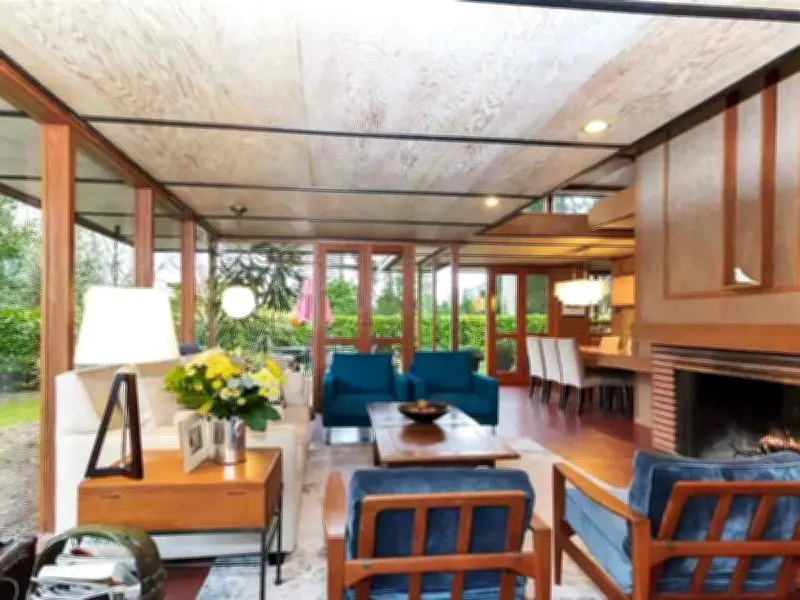
Perhaps no residential architectural style has undergone a greater shift in public perception over the past century than West Coast Modernism. Once dismissed as "shacks in the woods," these wood-and-glass homes are now among British Columbia's most coveted properties.
"There's definitely been a pendulum shift," says Trent Rodney, co-founder of West Coast Modern. "It's growing every single year, beyond my wildest imagination. Ten years ago, people made fun of us. They'd say, 'Those guys are selling shacks in the woods.'"
From Derision to Desire
Today, interest in West Coast Modern homes is surging, particularly among what Rodney calls "the creative class." Buyers are seeking something distinct from conventional luxury properties. "The people acquiring a Hollingsworth, an Erickson, or homes by architects working today, they don't want your cookie-cutter mansion. They can easily buy those. They want something connected to nature and connected to the cultural fabric of the city."

Pioneered by Fred Hollingsworth, Arthur Erickson, Ron Thom, Barry Downs, and Ned Pratt, West Coast Modern architecture emerged in the 1940s. Characterized by extensive use of wood and glass and a strong connection to the landscape, it became one of British Columbia's defining architectural movements. The style flourished for three decades but fell out of fashion in the 1980s and 1990s as tastes shifted toward larger postmodern and neo-traditional homes, and rising land values made many older modernist houses vulnerable to redevelopment.
Survival and Revival
During the movement's fallow years, architect Peter Cardew continued to champion its principles of simplicity, craftsmanship, and connection to place. Today, firms such as Patkau Architects, BattersbyHowat Architects, McLeod Bovell Modern Houses, Frits de Vries, D'Arcy Jones Architects, and Measured Architecture are carrying the tradition forward while embracing the same nature-first philosophy.
Rodney's own interest in the movement began in the 2010s while working in luxury real estate. To preserve and sell the homes he admired, he co-founded West Coast Modern. His first project was Fred Hollingsworth's own house. Working alongside Hollingsworth's son Russell, he helped save it from demolition. "It was incredibly at risk, definitely demo-bait. Most of the time it would have been torn down."
Preserving a Legacy
Over the past decade, West Coast Modern has "represented hundreds of West Coast Modern homes without any sales resulting in a demolition," Rodney says. That doesn't mean the battle is over. He estimates that as many as 50 per cent of architecturally significant West Coast Modern homes sold through the conventional real estate market are eventually demolished. "We're seeing demolitions every month."
"Why do people move to Vancouver?" Rodney asks. "Ask anyone and one of the first things they say is nature. And the best way to enjoy our natural environment is the West Coast Modern home." West Coast Modern homes can be found throughout the province, but the highest concentration is on the North Shore.