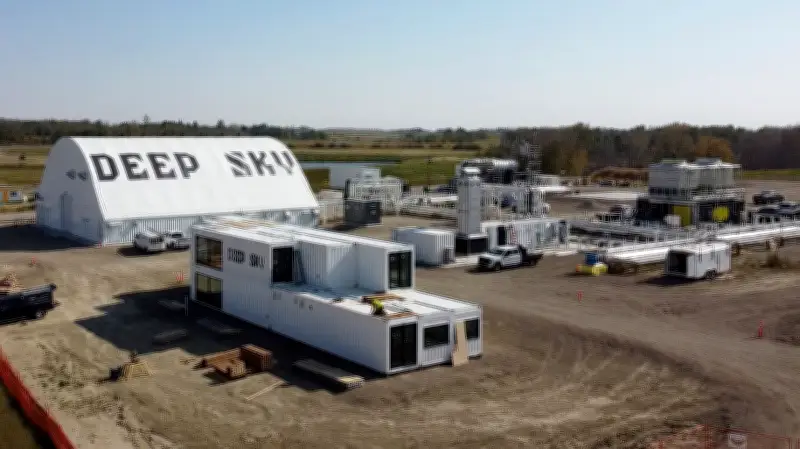
A Canadian company has achieved a milestone by delivering North America's first carbon credits generated through direct air capture (DAC) technology. The development marks a significant step in scaling up carbon removal solutions to combat climate change.
First-of-its-kind delivery in North America
The company, whose name has not been disclosed in the initial report, successfully delivered the credits to buyers after capturing carbon dioxide directly from the atmosphere. This is the first time such credits have been delivered in North America, according to Reuters.
Direct air capture technology uses chemical processes to extract CO2 from ambient air. The captured carbon can then be stored underground or used in products like synthetic fuels or building materials. The credits represent verified tons of CO2 removed from the atmosphere.

Significance for carbon markets
The delivery provides proof that DAC can generate tradable carbon credits, which are purchased by companies and governments to offset emissions. The market for carbon removal credits is growing as organizations seek to meet net-zero targets.
“This is a major step forward for the carbon removal industry,” said a spokesperson for the company, as reported by Reuters. “It shows that direct air capture can deliver real, verifiable climate benefits.”
Context of climate policy
The announcement comes amid broader climate policy developments in Canada. The federal government and Alberta recently reached a carbon price agreement, which is seen as a step toward aligning provincial and national climate goals. However, experts caution that implementation details will determine its effectiveness.
Michael Bernstein, CEO of Clean Prosperity, commented on the agreement, saying it is a positive move but that “what happens next will make all the difference.” He emphasized the need for clear regulations to drive investment in clean technologies like DAC.
Challenges and potential
Direct air capture remains expensive, with costs currently ranging from hundreds to over a thousand dollars per ton of CO2. Scaling up the technology and reducing costs are critical for its widespread adoption. The delivery of these first credits is a proof point that the technology can work at a commercial scale.
The company’s achievement could help attract more investment and policy support for DAC. As carbon removal becomes an increasingly important tool in climate strategies, such milestones build confidence in the sector’s viability.