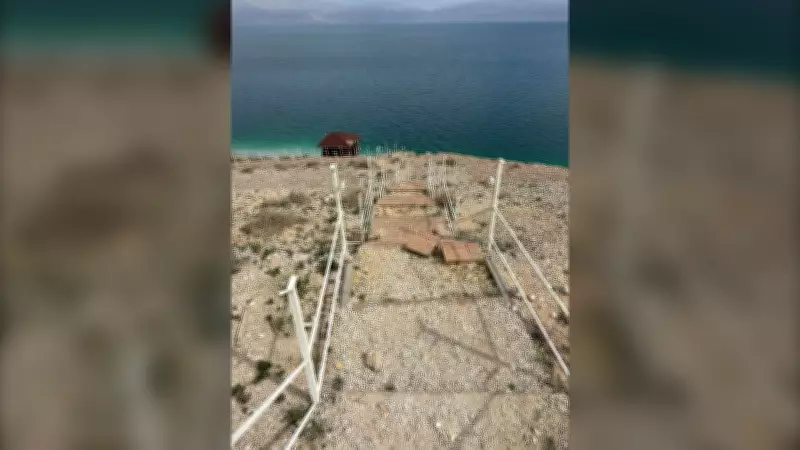
In the lowest place on Earth, a sea is rapidly dying — and no one can agree how to save it. The Dead Sea, nestled between Israel and Jordan, has been shrinking for decades, its surface dropping by more than a meter each year. This environmental catastrophe threatens ecosystems, tourism, and regional stability.
The Crisis Unfolds
The Dead Sea's decline stems from a combination of factors: diversion of water from the Jordan River for agriculture and drinking, mineral extraction by potash companies, and climate change. As the water recedes, sinkholes have proliferated, swallowing roads and threatening buildings. The once-thriving tourist industry now faces a stark reality: the sea is disappearing.
Conflicting Solutions
Proposals to save the Dead Sea range from ambitious engineering projects to more modest conservation measures. One plan involves building a canal from the Red Sea to the Dead Sea, known as the Red Sea-Dead Sea Conveyance. However, this multibillion-dollar project faces environmental and political hurdles. Critics argue it could disrupt marine ecosystems and may not be economically viable.

Others advocate for reducing water withdrawals from the Jordan River, increasing wastewater recycling, and promoting sustainable tourism. Yet, these measures require cooperation between Israel, Jordan, and the Palestinian Authority — a challenging prospect given the region's political tensions.
Stakeholders at Odds
Environmental groups push for immediate action, warning that inaction will lead to irreversible damage. Local communities, reliant on tourism and agriculture, fear economic collapse. Governments prioritize water security and economic development, often at odds with conservation goals. The result is a stalemate: everyone agrees the Dead Sea is dying, but no one can agree on how to save it.
As the water level continues to drop, time is running out. The Dead Sea's unique ecosystem, including its hypersaline waters and mineral-rich mud, faces an uncertain future. Without a unified approach, this natural wonder may vanish, leaving behind a scarred landscape and a legacy of missed opportunities.