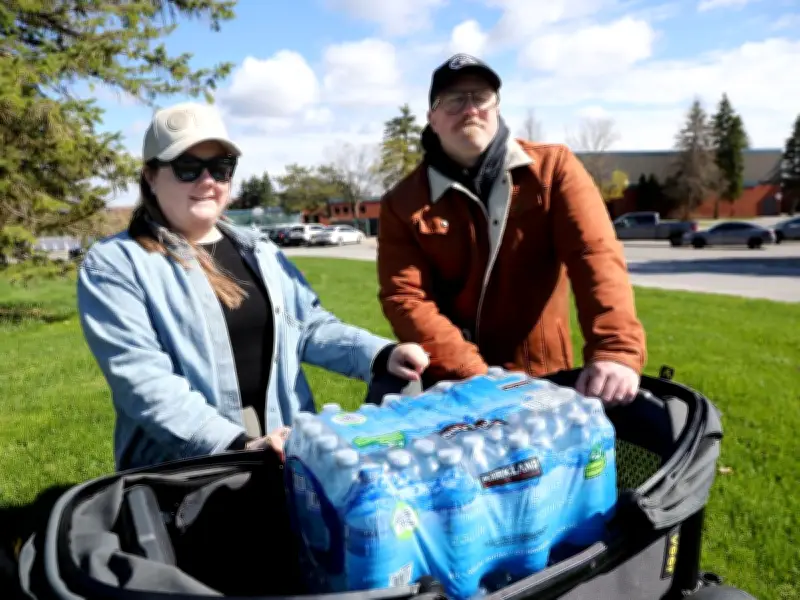
Parents take action as lead contaminates school water
Every two weeks, Crystal Mask and Garrett Hansen, along with other parents, deliver cases of bottled water to their child's kindergarten classroom at Fallingbrook Elementary School in Orleans. Since March 2026, they have dropped off eight cases of water to ensure their daughter has lead-free drinking water. The couple, who live a two-minute walk from the school, now incorporate the water delivery into their morning routine.
Mask learned about the lead issue through a March 2026 report by the Canadian Environmental Law Association (CELA), which ranked schools and boards across Canada based on tests exceeding allowable lead levels. The report highlighted that Ontario's limit for lead in drinking water remains at 10 parts per billion (ppb), while Health Canada recommends a stricter 5 ppb. Only Ontario and Saskatchewan have not adopted the federal guideline.
OCDSB leads in exceedances
According to CELA's analysis, the Ottawa-Carleton District School Board (OCDSB) had the highest number of exceedances among Ontario boards. In the 2024-2025 school year, out of more than 1,300 tests, 104 water fountains and taps at OCDSB schools exceeded Ontario's 10 ppb limit. Lead enters tap water mainly through corrosion of plumbing systems containing lead, as noted by Health Canada.

Health Canada's 2017 scientific review states that lead exposure can cause reduced cognition, increased blood pressure, renal dysfunction in adults, and adverse neurodevelopmental and behavioural effects in children. Although lead has been reduced in consumer products like paint and gasoline over the past 40 years, food and water are now the primary sources of exposure for most Canadians.
Parents demand transparency
Mask and Hansen are part of a growing wave of parental concern over water quality in Ottawa schools. They and other parents now chip in to supply bottled water, as they cannot trust the tap water. The couple began their deliveries after reading about the CELA report in the Ottawa Citizen. They continue to demand greater transparency from school boards regarding water testing results and remediation efforts.