New data from the United States' National Aeronautics and Space Administration (NASA) has confirmed that the year 2025 ranked as the third warmest year ever recorded globally. The agency's latest climate report, released on January 14, 2026, highlights a continuing trend of planetary heating, a phenomenon with direct and tangible consequences for communities across Canada.
Local Records Shattered in Western Canada
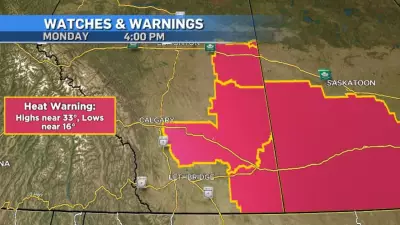
The global trend manifested starkly in Canada during the same reporting period. The city of Calgary experienced unprecedented January warmth, setting new temperature records as a powerful chinook wind dramatically reshaped typical winter routines. Similarly, Wednesday, January 14, 2026, was recorded as one of the warmest January days in Edmonton's history. These localized events provide a clear snapshot of how broader climatic shifts are altering seasonal norms and impacting daily life in Canadian regions.
A Pattern of Climate-Driven Extremes
The record-breaking warmth in Western Canada aligns with other climate-influenced events noted across the nation. The report's context includes a slowdown in Quebec's population growth linked to a temporary reduction in immigration, a factor often influenced by environmental and economic stability. Furthermore, incidents such as a bus becoming stuck in snow for hours in Edmonton, prompting calls for better communication policies, underscore the increasing volatility and unpredictability of weather systems. These interconnected stories paint a picture of a country grappling with the practical realities of a changing environment, from disrupted infrastructure to shifting demographic patterns.

The Broader Environmental Context
While the NASA report focused on temperature data, the surrounding news landscape reveals a nation deeply engaged with environmental issues. From debates on environmental regulations and wildlife management—such as crews halting active searches for wolves after livestock attacks—to discussions on sustainable agriculture and urban ecology, climate and environment remain at the forefront of Canadian discourse. The record heat serves as a potent data point in an ongoing conversation about resilience, policy, and adaptation in the face of global environmental change.
The confirmation of 2025's extreme global temperature reinforces the scientific consensus on planetary warming. For Canadians, the data is not an abstract figure but a reality reflected in unseasonably warm prairie winters and the increasing frequency of extreme weather events, challenging communities and policymakers to adapt to a new climatic normal.