Alberta and British Columbia frequently clash over a proposed oil pipeline to the Pacific coast, but on natural gas they are united. Both provinces, along with the federal government, are pushing to expand Canada's liquefied natural gas (LNG) sector. Two major final investment decisions loom: the second phase of LNG Canada and the Ksi Lisims LNG project. This momentum is building in 2026 as global demand for diversified gas supply grows.
Global Demand Driving Canadian LNG
Conflicts in the Middle East and disruptions in the Strait of Hormuz, through which about one-fifth of global LNG supply passes, have made customers seek alternative sources. Canada's large natural gas reserves and shorter shipping times to Asia from British Columbia give it a competitive edge over U.S. Gulf Coast terminals. Ian Archer, associate director at S&P Global Energy, emphasized that Canada must act quickly to capitalize on this opportunity. He noted that the country is not the only player in the LNG game, but the current window is favorable for establishing itself as an energy superpower.
LNG Canada Expansion and Ksi Lisims
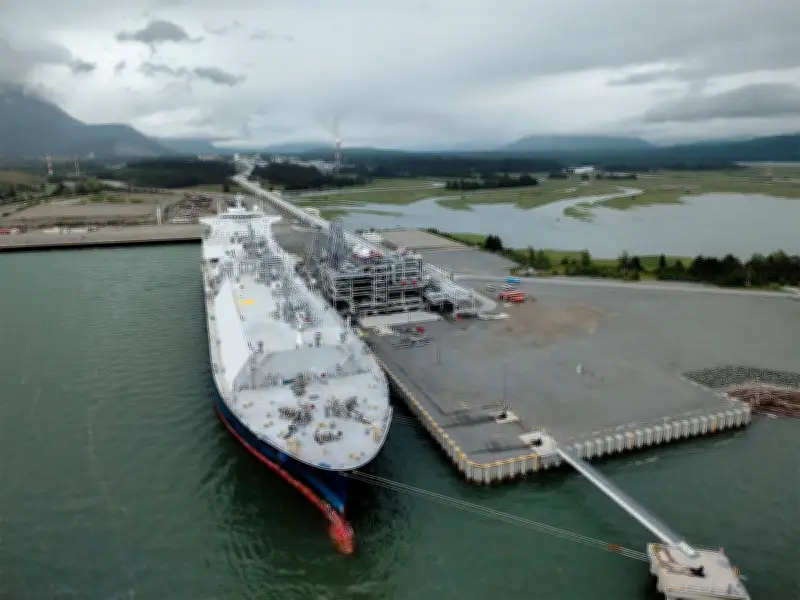
The Shell-led LNG Canada facility began operations last summer, shipping nearly 100 cargoes to Asia in its first year. Shell Canada president Stastia West highlighted this as a tangible connection of Canadian energy to global markets. Partners are now evaluating an expansion to double capacity, with a potential final investment decision in 2026. Meanwhile, the proposed Ksi Lisims LNG project also awaits a green light. Ryan Hickman, Shell's global gas fundamentals manager, noted that LNG demand is expected to rise by over 50% by the end of the next decade, requiring new liquefaction investments worldwide.

Key factors supporting Canadian LNG:
- Large natural gas reserves
- Shorter shipping routes to Asia
- Growing global demand for diversified supply
- Existing infrastructure from LNG Canada
Both projects face environmental scrutiny and regulatory hurdles, but the alignment of provincial and federal governments signals a concerted effort to advance them. The push comes as Canada seeks to reduce reliance on the U.S. market and tap into Asian demand.