Automated machines are increasingly becoming part of the city's operations, but city officials insist that the rise of robots will not lead to layoffs of human employees. Instead, automation is intended to help staff manage growing workloads without ballooning payroll.
Automation as a Supplement, Not a Replacement
Fleet and facility services branch manager Arjan Sharma emphasized that automation and full-time employees are not interchangeable. “In custodial work and parks maintenance, employees offer judgment, attention to detail and the ability to respond to changing conditions, which automation cannot replace,” he said. “Our focus with automation is on improving service quality and standards, including allowing full-time employees to focus on other work such as detailed cleaning and mowing.”
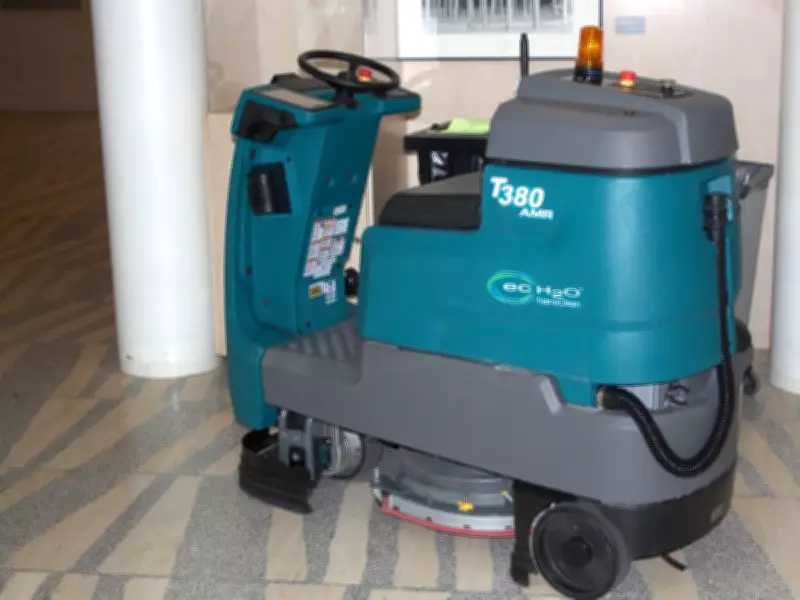
Visitors to city hall may notice a self-driving floor cleaner, one of several technologies being tested. The city is exploring automated floor scrubbers, sweepers, and vacuums for various facilities. Manual mop scrubbers cost around $20,000 each to install, while fully automatic self-driving models range from $40,000 to $90,000.

Managing Growth and Costs
During a deep dive into city operations in March, council was informed that the fleet and facility services department has a $119.6 million reserve for vehicle and equipment replacement. Over the past four years, the city replaced more than 1,100 units, including two small automated mowers trialled at Coronation Park from 2019 to 2021.
Parks and roads services branch manager Caitlin Zerebeski noted that the city is considering additional automated mowing machines for Hawrelak Park. An autonomous line-marking robot is already being used on some sports fields; this battery-powered machine uses GPS to mark lines, reducing fuel costs.
Part of the motivation for increased automation is to help the city meet its climate-change targets and reduce infrastructure impact. With 3,000 to 4,000 kilometres of road added in recent years, Edmonton’s street network has grown dramatically faster than its maintenance fleet. Officials are seeking ways to get more out of existing assets.
Mayor's Perspective
Mayor Andrew Knack stated that anything the city can do to improve service at low cost is worth pursuing. “We clearly can’t downsize, but if we’re looking at trying to keep up with the pace of growth — are we looking at more automated mowers, automated snow blowers, automated things that can’t help address the significant growth of our inventory?” he asked. “As much as we want to scale up everything, I want to have everything with a person, but based on how quick we’ve grown we might need more automated things to help supplement the growth and the actual people we need, too.”
Automation extends beyond robots; transit users are familiar with the Arc card system for automatic payment tracking, and parking enforcement has also been automated.