A recent sighting of the invasive spotted lanternfly, considered a significant threat to native hardwood and fruit trees, has been reported in St. Catharines, Ontario. The Canadian Food Inspection Agency (CFIA) confirmed that the detection occurred in March 2026, when a nursery worker found dead adult insects in a shipment of empty planting pots from Pennsylvania, an area known to be infested with the pest.
Discovery and Response
Ontario resident Aidan Dagg, employed at a nursery, discovered the insects and promptly contacted the CFIA. He photographed the invasive hitchhikers and uploaded the images to iNaturalist, noting that they were found on March 12. Inspectors collected twelve dead adult spotted lanternflies from the shipment. Although no established populations have been confirmed in Canada, experts warn that this sap-sucking pest could devastate local grape and fruit crops if it becomes established.
Threat to Agriculture and Forestry
The spotted lanternfly is a plant stressor due to its feeding habits and excretion of waste, according to the Invasive Species Centre. The non-profit organization warns that if the species spreads to Canada, it could pose a formidable threat to various industries, particularly horticulture and forestry. The insect is native to Southeastern Asia and was first detected in North America over a decade ago, with its first known establishment in Berks County, Pennsylvania, in September 2014.

Spread in the United States
In the United States, the planthoppers have been spreading across the East Coast and into the Midwest in recent years. The threat is so significant that U.S. agricultural officials have urged Americans to squash, stomp, and smash them on sight. The pests have been intercepted multiple times at Canadian borders, with previous reports primarily in Ontario and Quebec, as well as two in New Brunswick and Nova Scotia, and one in Manitoba. The most recent interception of a live spotted lanternfly occurred in Fort Erie in October 2025.
Identification and Reporting
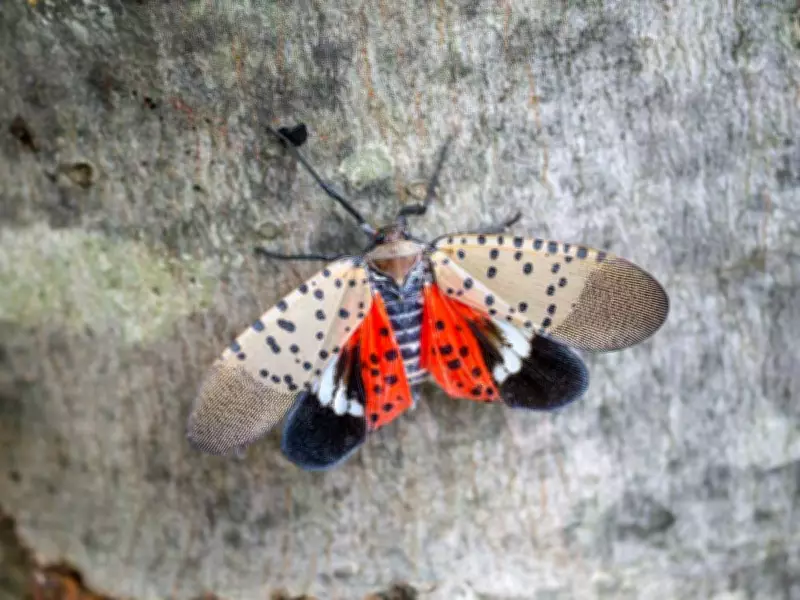
The Invasive Species Centre advises the public to be on the lookout for spotted lanternfly nymphs in spring and summer, while adults may appear as early as mid-summer and remain until late fall or early winter. Egg masses can be found year-round. The eggs are brown, seed-like, and covered in a grey, muddy-looking secretion arranged vertically. Nymphs are black with white spots and flightless, while adults are about an inch long with pinkish-grey forewings featuring black spots and black veins at the tips. When the forewings are open, bright red underwings become visible.
Individuals who spot the invasive pests are encouraged to take a picture, capture the insect in a sealed bag or container, and report the sighting to the CFIA. For egg masses, they should be scraped into a sealed plastic bag or container before reporting.