Barrie and Central Ontario Submerged by Torrential Spring Rains
Residents of Barrie and the broader Central Ontario region are facing a severe flooding crisis following an intense bout of spring rainfall. The situation has escalated rapidly, with numerous roads inundated and local authorities declaring states of emergency to manage the escalating water levels.
Widespread Flooding Triggers Emergency Measures
One of the hardest-hit areas is Minden Hills, which has officially declared a state of emergency due to the flooding conditions. This declaration enables the mobilization of additional resources and emergency response teams to assist affected communities. The flooding has not been isolated to rural regions; urban centers like Barrie are also experiencing significant disruptions, with key transportation routes becoming impassable.
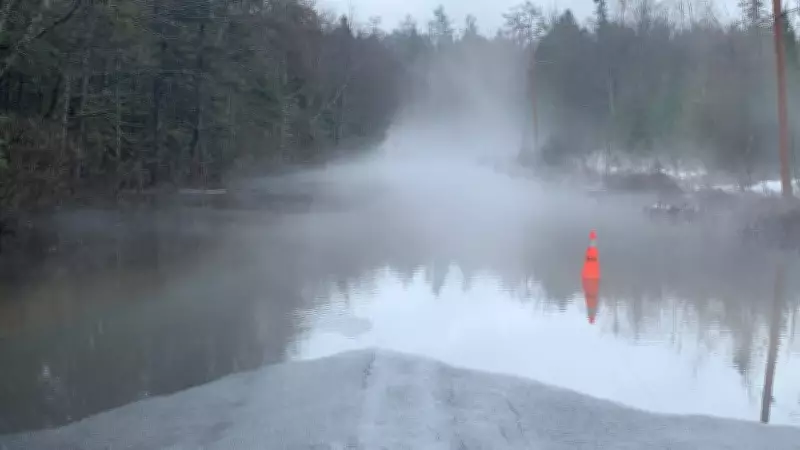
Photographic evidence from CTV News Barrie, captured by Rob Cooper, shows one of many flooded roads in the Central Ontario region, illustrating the severity of the situation. The images depict vehicles struggling to navigate through deep water, highlighting the immediate dangers posed by the rising floodwaters.

Road Closures and Safety Concerns
The flooding has led to the closure of several major highways, including Highway 11, where more than a dozen people have been charged with driving on the closed roadway. This reckless behavior underscores the safety risks associated with attempting to traverse flooded areas. Emergency crews have been deployed across the region, responding to incidents such as an SUV smashing into a business on Wharncliffe Road, likely exacerbated by the hazardous driving conditions.
In addition to road safety, there are concerns about other infrastructure. For instance, an overnight sinkhole triggered a full closure at a busy intersection in London, further complicating travel and emergency access. These events collectively paint a picture of a region under siege from water, with communities scrambling to adapt and respond.
Broader Environmental Context
This flooding event occurs amidst a backdrop of broader environmental challenges. In Manitoba, a First Nation is actively preparing for spring floods, indicating that such weather patterns are not unique to Ontario. Climate experts warn that extreme weather events, including heavy rainfall and flooding, are becoming more frequent due to climate change, posing ongoing risks to communities across Canada.
The phrase "it never rains but it pours" aptly describes the current situation, as the region deals with multiple weather-related incidents simultaneously. From flooded roads to emergency declarations, the impact of these spring storms is far-reaching, affecting daily life, transportation, and public safety.
Community and Government Response
Local governments and emergency services are working tirelessly to mitigate the effects of the flooding. This includes implementing lane reductions on roads like Banwell Road for planned repairs and responding to incidents such as a child being rescued after falling into a creek in Manitoba. The coordination between various agencies is crucial in managing the crisis and ensuring the safety of residents.
Moreover, the flooding has intersected with other regional issues, such as a teen from Barrie being charged in connection with an Oakville shooting, though this appears unrelated to the weather events. Nonetheless, it adds to the complex challenges facing law enforcement and community leaders during this period.
As the situation evolves, residents are urged to stay informed through local news sources and heed warnings from authorities. The coming days will be critical in assessing the full extent of the damage and beginning recovery efforts in Barrie and Central Ontario.