Hawaii Grapples with Worst Flooding in Over Two Decades
HONOLULU (AP) — Hawaii is reeling from its most severe flooding event in more than 20 years, as torrential rains pounded soil already saturated by a winter storm just a week prior. Officials issued warnings on Friday, cautioning that additional rainfall is forecasted for the weekend, exacerbating an already dire situation.
Catastrophic Damage and Evacuations
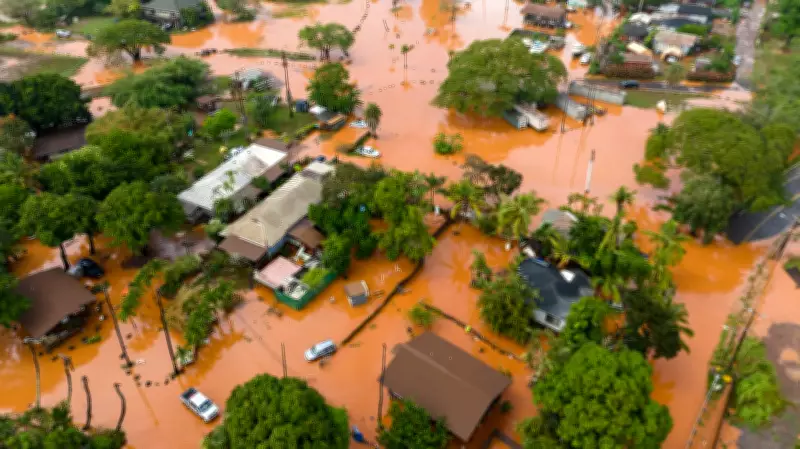
Muddy floodwaters have engulfed extensive areas of Oahu's North Shore, a globally famous destination for big-wave surfing. Raging waters lifted homes and vehicles, leading to evacuation orders for approximately 5,500 residents north of Honolulu. Authorities have raised alarms about the potential failure of a 120-year-old dam, adding to the crisis.
Governor Josh Green projected that the storm's financial toll could exceed $1 billion, encompassing damage to critical infrastructure such as airports, schools, roads, private residences, and a hospital in Kula, Maui. "This is going to have a very serious consequence for us as a state," Green emphasized during a news conference.

Most of Hawaii remains under a flood watch, with specific flash flood warnings in effect for Haleiwa and Waialua in northern Oahu, according to the National Weather Service. Governor Green confirmed that federal support has been assured following discussions with the White House.
Rescue Efforts and Historical Context
No fatalities have been reported, and all individuals are accounted for, though about 10 people were hospitalized with hypothermia. Rescue operations, conducted by air and water, were hindered by private drones flown to capture images of the flooding, as noted by Honolulu spokesperson Ian Scheuring.
In a coordinated effort, the National Guard and Honolulu Fire Department airlifted 72 children and adults from a spring break youth camp at Our Lady of Kea'au on Oahu's west coast. Although the camp is situated on high ground, authorities opted for evacuation as a precautionary measure.
Governor Green highlighted that this flooding event is the state's most serious since the 2004 Manoa floods, which inundated homes and a University of Hawaii library. Honolulu Mayor Rick Blangiardi reported that dozens, if not hundreds, of homes have sustained damage, with full assessments pending. "There's no question that the damage done thus far has been catastrophic," he stated.
Rainfall and Climate Factors
Officials attribute the devastation to intense rainfall over a short duration on already saturated land. Parts of Oahu received 8 to 12 inches (20 to 30 cm) of rain overnight, while Kaala, the island's highest peak, recorded nearly 16 inches (40 cm) in the past day. Mayor Blangiardi warned that an additional 6 to 8 inches (15 to 20 cm) of rain is expected on Oahu in the coming days.
The deluges are linked to winter storm systems known as "Kona lows," characterized by southerly or southwesterly winds that transport moisture-laden air. Experts note that the intensity and frequency of heavy rains in Hawaii have increased due to human-caused global warming.
Concerns Over Aging Dam Infrastructure
Attention is focused on the Wahiawa dam, which officials have deemed "at risk of imminent failure." Water levels in the dam receded by late Friday but could rise again with more rainfall. Overnight, levels increased from 79 feet to 84 feet (24 to 25.6 meters), just 6 feet (1.8 meters) below its capacity.
Waialua resident Kathleen Pahinui expressed ongoing concerns about the dam during evacuation preparations, telling The Associated Press, "Just pray for us. We understand there's more rain coming." The state has classified the Wahiawa dam as having "high hazard potential," with a failure likely resulting in loss of life.

Built in 1906 to boost sugar production, the earthen dam was reconstructed after a collapse in 1921. Since 2009, the state has issued four deficiency notices to Dole Food Company, which owns the dam, and fined the company $20,000 five years ago for delayed safety improvements. Legislation passed in 2023 authorized the dam's acquisition and allocated funds for repairs, but the transfer remains incomplete, with a state board vote scheduled for next week. Dole maintains that the dam "continues to operate as designed with no indications of damage."
Hawaii regulates 132 dams, many originally built for the sugar cane industry, underscoring the broader infrastructure challenges highlighted in a 2019 report by the American Society of Civil Engineers.