Major Winter Storm Paralyzes U.S. Travel and Threatens Infrastructure
A powerful winter storm system is wreaking havoc across the United States, leading to the cancellation of more than 9,000 flights scheduled for the weekend and threatening prolonged power outages for millions of Americans. The massive weather event, which has prompted winter storm warnings affecting roughly 140 million people from New Mexico to New England, is delivering a dangerous mix of heavy snow and catastrophic ice accumulation.
Widespread Disruptions and Dangerous Conditions
The National Weather Service has issued dire forecasts, warning that damage in areas hardest hit by ice could rival that of a hurricane. A band of severe ice stretching from east Texas to North Carolina poses particular risks to power lines and trees. As of Saturday morning, approximately 68,000 power outages were reported nationwide, with Texas accounting for about 27,600 of those disruptions.
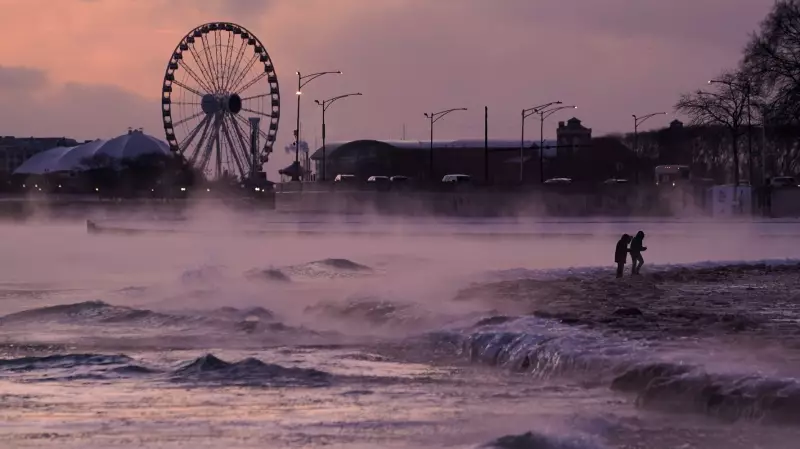
Dangerously cold temperatures are compounding the situation, with wind chills plunging as low as minus 40 degrees Fahrenheit (minus 40 Celsius) in the Midwest. The National Weather Service in Fort Worth warned that "dangerously cold temperatures and wind chills are spreading into the area and will remain in place into Monday," with wind chills potentially reaching minus 12 degrees Fahrenheit (minus 24 Celsius).

Transportation Chaos and Government Response
The travel industry is experiencing significant disruptions, with FlightAware reporting more than 3,300 flights delayed or canceled on Saturday alone, and nearly 6,000 cancellations anticipated for Sunday. Angela Exstrom, whose Houston flight to Omaha was canceled, expressed the frustration of many travelers: "If you live in the Midwest and travel in the winter, stuff can happen."
Governors in more than a dozen states have declared emergencies or urged residents to stay home. Texas Governor Greg Abbott advised via social media that the state Department of Transportation was pretreating roads and told residents, "Stay home if possible."
The federal government has mobilized substantial resources in preparation for the storm's impact. Federal Emergency Management Agency officials have placed nearly 30 search and rescue teams on standby, along with more than 7 million meals, 600,000 blankets, and 300 generators throughout the affected region.
Community Impacts and Historical Context
The storm's effects are being felt across communities and institutions. Churches have moved Sunday services online, the Grand Ole Opry in Nashville decided to hold its Saturday performance without fans, and Carnival parades in Louisiana were canceled or rescheduled. Educational institutions from Philadelphia to Southern universities have canceled classes for Monday.
Utility companies are particularly concerned about ice accumulation, which can add hundreds of pounds to power lines and branches, making them more susceptible to snapping. This threat is especially significant in Southern states from Texas to Virginia, where a majority of homes are heated by electricity according to U.S. Census Bureau data.
The current situation evokes memories of a severe cold snap five years ago that crippled Texas's power grid, leaving millions without power for days and resulting in hundreds of deaths. Governor Abbott has vowed that such a scenario will not repeat itself, with utility companies bringing in thousands of additional employees to maintain service.
As the storm continues its path toward the Northeast, forecasters predict approximately a foot (30 centimeters) of snow from Washington through New York and Boston. With temperatures already reaching minus 29 Fahrenheit (minus 34 Celsius) in parts of upstate New York, and the potential for ice to continue causing damage long after the storm passes, Americans across much of the country are bracing for a prolonged period of challenging winter conditions.