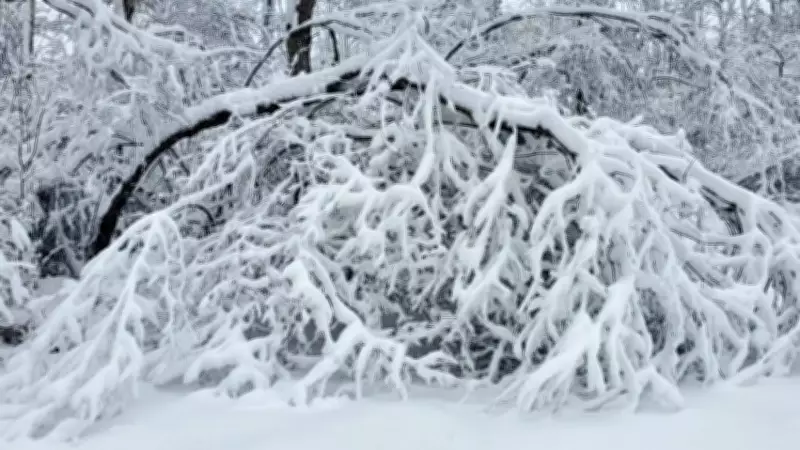
A powerful winter storm has unleashed its fury across northeastern Ontario, blanketing the region with heavy snowfall and battering it with intense winds, leading to hazardous conditions and significant disruptions. The storm, which intensified rapidly, has prompted urgent weather alerts and is testing the resilience of local infrastructure and emergency services.
Widespread Impacts and Emergency Response
Authorities report that the storm has resulted in nearly 200 weather-related crashes over a 24-hour period, as roads became treacherous with accumulating snow and reduced visibility. The Ontario Provincial Police (OPP) responded to more than 3,000 calls during this timeframe, highlighting the scale of the emergency. In a particularly concerning incident, a jackknifed tractor-trailer blocked the express lanes of Highway 401 near DVP, causing major traffic delays and underscoring the dangers posed by the severe weather.
Infrastructure and Safety Concerns
Beyond transportation woes, the storm has raised broader safety issues. Flood advisories have been extended across the Simcoe Muskoka region, with officials warning that this melt season could be the "worst" on record, compounding the effects of the snowfall. Residents are advised to prepare for potential flooding as temperatures fluctuate. Meanwhile, in a separate but related context, advocates have condemned the closing of London’s supervised consumption site after provincial funding was pulled, citing it as a "giant step backwards" for public health during such challenging times.

Weather Alert Systems and Public Preparedness
As the storm rages, attention has turned to Canada’s new colour-coded weather alert system, designed to provide clearer warnings to the public. This system aims to enhance preparedness by categorizing threats based on severity, helping communities like those in northeastern Ontario better anticipate and respond to extreme weather events. However, the transition has not been seamless, with some noting that Weatheradio is going off the air as Environment Canada shifts its emphasis to online platforms and apps, potentially leaving some residents without reliable alerts.
Regional Comparisons and Broader Context
While northeastern Ontario grapples with this winter onslaught, other parts of Canada are facing their own weather-related challenges. For instance, flood warnings are maintained in parts of the Grand River watershed due to expected rain, and a windstorm recently swept through Windsor-Essex, causing damage. These events highlight the varied and often severe weather patterns affecting the country, from snowstorms in the north to floods and winds elsewhere, underscoring the importance of robust emergency management and climate adaptation strategies.
As the storm continues, residents are urged to stay indoors if possible, avoid unnecessary travel, and monitor official updates for the latest information on conditions and safety advisories. The full impact of this winter blast will become clearer in the coming days as cleanup efforts begin and assessments are made.