University of Saskatchewan Researcher Pioneers Frost-Free Heat Pump Technology
When the polar vortex descends upon Saskatchewan and temperatures plunge into negative double digits, heating systems across the province work overtime to keep homes warm. While modern natural gas furnaces represent an improvement over older models, they still rely on burning fossil fuels and fall short of more sustainable alternatives like air-source heat pumps.
The Frost Problem in Cold Climate Heating
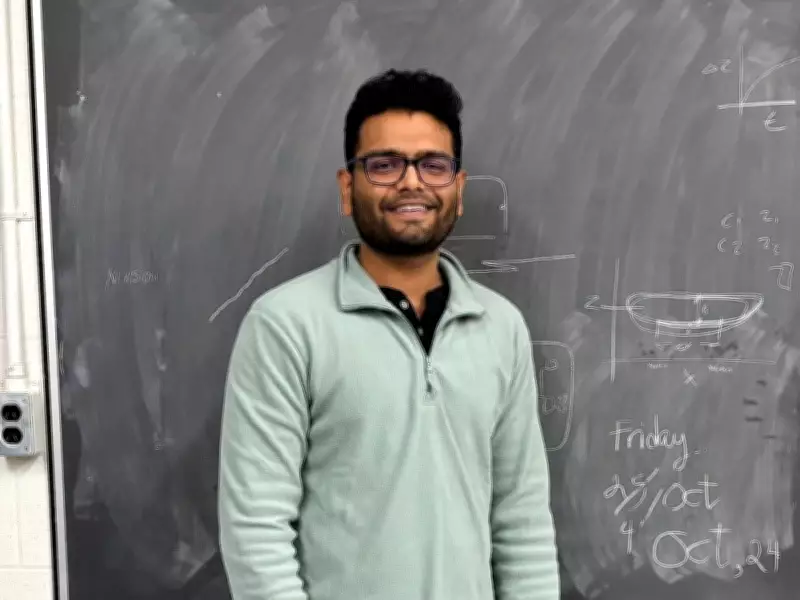
Siddhartha Gollamudi, a PhD student in the College of Engineering at the University of Saskatchewan, is leading computational research to solve a critical limitation of current air-source heat pump technology. "Most buildings in Saskatchewan, and over half of the buildings in Canada, are heated by burning fuels like natural gas," Gollamudi explained.
"Air source heat pumps are electric devices that can both heat and cool a home without burning fuel, which makes them cleaner, but they don't hold up in cold weather due to a frosting problem that occurs when moisture freezes in the air between -6°C and -15°C."

Developing the LAMEE Heat Pump System
Gollamudi's research builds upon a liquid-to-air membrane energy exchanger (LAMEE) originally developed at the University of Saskatchewan by his supervisor Dr. Carey Simonson and his team. Working closely with graduate student Amirreza Mahmoudi, Gollamudi has helped demonstrate that this system can operate effectively in cold conditions while simultaneously reducing emissions and saving money.
The resulting frost-free system, known as a LAMEE Heat Pump (LAMEE-HP), represents a significant advancement in sustainable heating technology. "To combat this, our research team is developing frost-free ASHPs," Gollamudi stated.
Computational Modeling and Breakthrough Results
Gollamudi has spearheaded the project's computational programming, running countless scenarios through sophisticated models to identify methods for preventing heat pumps from freezing in cold weather. "I ran the newly developed LAMEE-HP system through all kinds of winter conditions on the computer to see what would keep it frost-free," he said.
"And between a lot of long days and many wrong turns and more coffee breaks than I am willing to admit, I learned how to work with frost."
The computational design and simulations have yielded promising results. Gollamudi's initial findings indicate that LAMEE-HPs can successfully heat buildings without frosting, even in Saskatchewan's notoriously harsh climate. Most impressively, the team has observed "on average a 50 per cent increase in heating efficiency compared to the current ASHPs on the market."
Patent Applications and Future Implications
The research team has already filed two provisional patents on their innovative design, signaling the commercial potential of their breakthrough. Frost-free air-source heat pumps would enable a more reliable and efficient heating method in cold climates, potentially transforming how buildings across Canada and similar regions are heated.
This technology could significantly reduce reliance on fossil fuels for heating while providing superior performance in extreme winter conditions. As climate concerns continue to drive innovation in sustainable technologies, Gollamudi's work at the University of Saskatchewan represents a promising step toward more environmentally friendly heating solutions for cold climate regions worldwide.