Calgary's Population Surge: Reader Perspectives on Urban Challenges
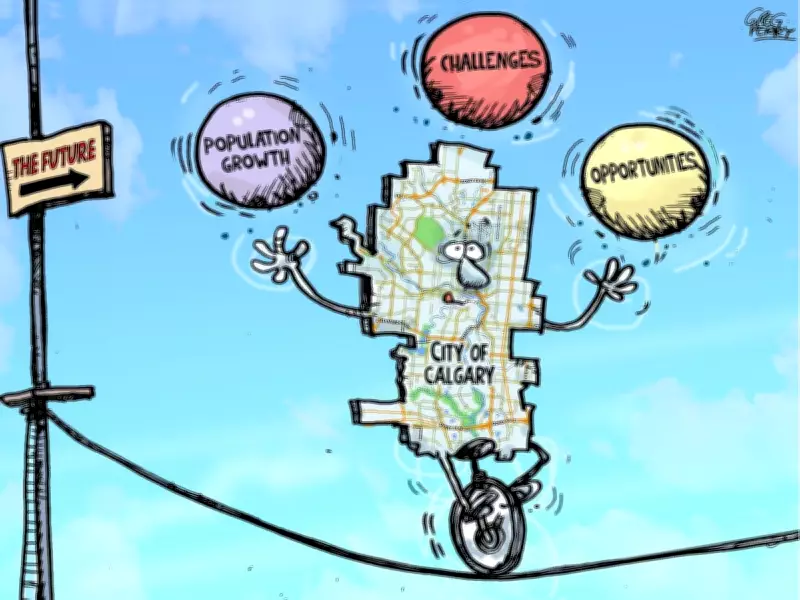
In response to recent coverage on population and housing growth in Calgary, readers have contributed a wealth of insights, highlighting critical issues as the city races toward a projected population of 2 million. The discussion spans efficient land use, water supply concerns, political representation, and transportation infrastructure, offering a multifaceted view of Calgary's future.
Efficient Land Use and Housing Mix
Tim Creelman, a retired city planner involved in Calgary's major land annexation from 2001 to 2007, reflects on past projections. "The City of Calgary's early 2000s forecast of 1.5 million residents by 2035 has proven inadequate," he notes, pointing to the current population and planning for 2 million. In 2007, Calgary added approximately 50 square miles for suburban growth, initially deemed sufficient for 33 to 35 years, assuming minimal infill development.
Creelman expresses approval for the City's new strategy: "I am impressed with the City's approach to achieve a 50-50 mix of housing options in new suburbs and added density in existing neighbourhoods." He emphasizes that using land supply more efficiently through diverse housing and affordability options will foster sustainable growth, addressing historical high demand for single-detached homes in new suburbs.

Water Supply and Delivery Concerns
Antonia Lyons-Mindzak raises a pressing question: "Where will the water come from for so many more people, not to mention all the delivery problems we already have dealing with one million-plus now?" This comment underscores the urgency of managing water resources amid rapid population expansion, highlighting existing infrastructure challenges that could intensify.
Political Influence and Seat Count
Lee McCallum queries the political ramifications of growth: "When is the political influence that goes along with all these citizens going to be reflected in the seat count across Alberta?" This points to broader issues of representation and governance as Calgary's population swells, suggesting a need for updated political structures to match demographic shifts.
Infrastructure and Light Rapid Transit Needs
A reader focusing on infrastructure challenges notes that Calgary is currently rated among top Canadian cities for commuter efficiency, largely due to its car-oriented design. However, with an expected addition of 250,000 people, traffic congestion is a growing concern. "We must avoid the serious traffic congestion that now chokes cities like Toronto, Montreal, and Vancouver," the reader warns.
The solution proposed involves enhanced public transit: "Going forward, we must put more effort into establishing light rapid transit systems linking surrounding municipalities." Specific recommendations include a rapid rail link from Airdrie connecting the international airport and Calgary downtown, addressing daily congestion. The reader also advocates for subsequent lines to Cochrane and Okotoks, noting Calgary's lack of a direct rail link from downtown to the airport compared to other major Canadian cities.
These reader comments collectively paint a picture of a city at a crossroads, balancing growth with sustainability, resource management, and infrastructure development. As Calgary evolves, these insights from residents and experts alike will be crucial in shaping a resilient and livable urban future.