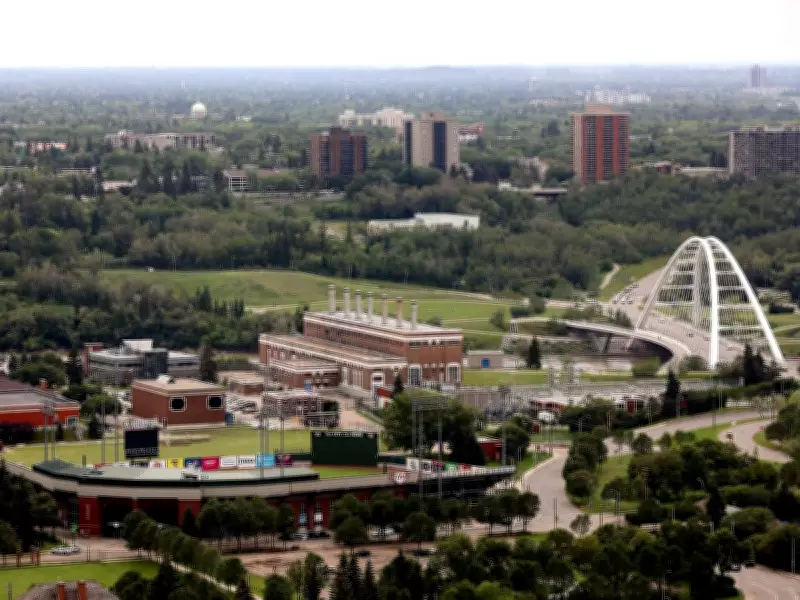
Edmonton's city council is poised to make a critical decision regarding the future of Rossdale, with a significant land sale proposal on the March agenda. The city is preparing to sell river valley land, starting with a 3.7-acre parcel currently used as parking for RE/MAX Field. Council members are being asked to approve a $15-million expenditure for roads and utilities to support future mid- and high-rise buildings on this prime location.
The River Crossing Plan and Its Implications
This initial sale represents just Phase 1 of the city's broader River Crossing initiative, which aims to sell additional river valley land in Rossdale and introduce approximately 2,500 housing units to an area celebrated for its natural beauty and historical importance. The proposal has ignited discussions about balancing urban development with preservation of green spaces that serve Edmonton's growing population.
A Land Rich with Historical Significance
The 3.7-acre parcel in question has remarkably never hosted a permanent structure, despite its long history of human use. First Nations communities originally utilized the area, leaving behind numerous signs of their presence. When Fort Edmonton was established in the early 1800s, the land served as a campsite for Indigenous nations trading furs for European goods, and potentially as a garden where fort residents cultivated potatoes and barley.

Throughout subsequent decades, the land transformed into a recreation ground for Hudson's Bay Company employees, a speed skating oval in the 1930s, and eventually tennis courts. The city formally acquired the property in 1954, adding another layer to its complex historical narrative.
Historical Warnings About Land Disposal
As early as 1910, city commissioners expressed reservations about disposing of river valley land. One commissioner specifically questioned whether the city should ever sell property so close to what would inevitably become "a very congested part of the city." When Edmonton Concrete Ltd. approached the city about purchasing the land, commissioners opposed the sale, suggesting the property might be needed for "park purposes" in the future. Today, that land hosts a ball diamond, illustrating how previous visions for the area have evolved.
Modern Urban Challenges and Recreational Needs
Central Edmonton has indeed become congested, with the 2021 census revealing 13,000 residents in the downtown core. Notably, 55 percent of these residents are between 25 and 39 years old—a demographic that particularly values recreational opportunities and access to green spaces.
Downtown apartment dwellers currently face limited options for outdoor recreation. The most heavily used river valley trail in Edmonton runs between Rossdale and the Groat Bridge, where runners, walkers, cyclists, and inline skaters must navigate space alongside approximately 50,000 automobiles daily. The ballpark remains fenced, and portions of the old exhibition lands now form part of the water treatment plant, further limiting accessible green space.
The Case for a Central River Valley Park
Advocates argue that the 3.7-acre parcel and other city-owned Rossdale lands could address this recreational deficit for downtown residents. With thoughtful planning, Rossdale could potentially house a central river valley park that would serve the growing urban population. Young professionals are frequently observed after work hours, walking from downtown toward the river, crossing busy roads in search of open space for relaxation and exercise.
Beyond recreational needs, the city requires these Rossdale lands to properly explore and honor Edmonton's historical significance. Rossdale represents a crucial node in the formation of Alberta's Métis Nation, whose members staffed Fort Edmonton in the 1800s. The area is also recognized as the birthplace of modern Edmonton, making its preservation and appropriate development matters of both historical and contemporary importance.
The debate surrounding Rossdale's future highlights fundamental questions about urban planning priorities: whether to prioritize housing development in prime locations or preserve and enhance green spaces that serve community wellness and historical preservation. As Edmonton continues to grow, decisions about river valley land use will shape the city's character for generations to come.