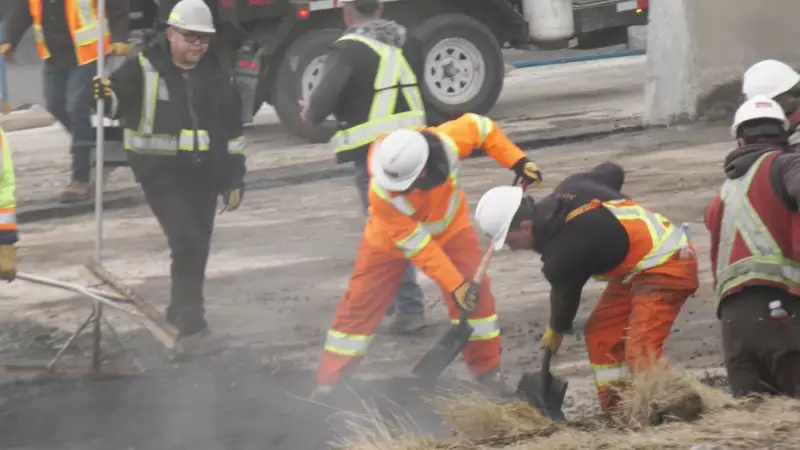
Residents of Calgary have resumed using water at rates the city cannot sustain, posing a significant setback to the recovery of municipal reservoirs. This concerning trend emerges shortly after the successful repair and burial of the critical Bearspaw South feeder main.
A Critical Setback After Major Repairs
Crews have completed the fix on the vital water main and are now focused on restoring full services to affected communities. However, public compliance with conservation pleas has waned. Data shows daily water consumption has climbed back above the crucial threshold of 480 million litres, a level that strains the system and slows the replenishment of the Glenmore and Bearspaw reservoirs.
The city had previously celebrated a milestone when usage dropped below 500 million litres per day, allowing stored water volumes to begin recovering. The recent reversal threatens to erase that progress. Officials stress that while the pipe is fixed, the overall system remains vulnerable until reservoirs return to normal levels.

The Ongoing Need for Vigilance
Calgary's water supply is not yet out of the woods. The repair was a major step, but the infrastructure requires stable, lower demand to regain its operational buffer. The city continues to ask residents and businesses to limit non-essential water use, including:
- Reducing shower times and turning off taps when not in use.
- Delaying laundry and dishwasher loads until they are full.
- Refraining from watering lawns, washing vehicles, or filling pools.
The situation underscores the fragility of urban water systems. A single major pipe failure can have prolonged repercussions, requiring sustained community effort to resolve. The city is monitoring consumption closely and may need to consider additional measures if the upward trend continues.
Looking Ahead for Calgary's Water Security
The incident with the Bearspaw feeder main has sparked broader conversations about aging infrastructure and climate resilience. As Calgary grows, ensuring a reliable water supply becomes increasingly complex. This event serves as a stark reminder that conservation is not just a short-term crisis response but a crucial component of long-term municipal planning.
Officials hope that with renewed public awareness and cooperation, water use can be brought back down to sustainable levels, allowing the city's reservoirs to safely refill and the water system to return to full stability.