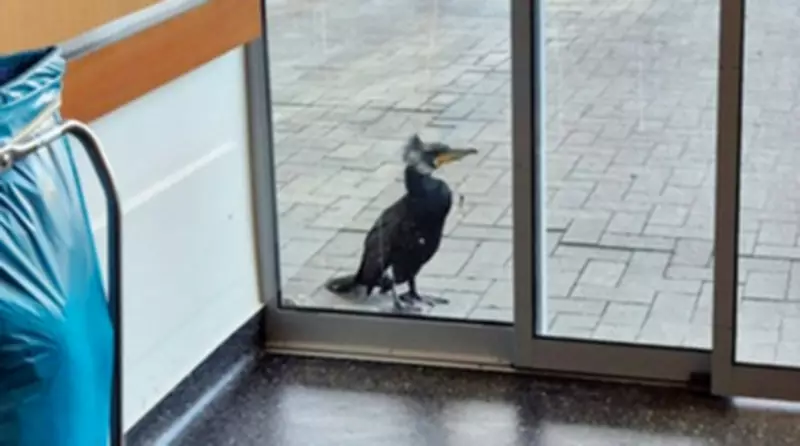
In a remarkable display of animal behavior, an injured seabird sought human assistance by pecking persistently at the glass door of an emergency room at a hospital in Germany. The incident occurred on Sunday, February 15, 2026, at the Klinikum Links der Weser hospital in the northern city of Bremen, capturing the attention of medical staff and leading to a coordinated rescue effort.
Emergency Response for an Avian Patient
The bird, identified as a cormorant, a large, shiny black waterbird known for its long neck, wedge-shaped head, and distinctive sharp beak with a hooked tip, had a triple fishing hook lodged in its beak. This injury posed severe risks, including potential infections, significant pain, and even starvation, as noted by the Bremen firefighter department in a statement. The department emphasized that when such a bird approaches humans, it typically indicates extreme distress and a loss of natural shyness.
Collaborative Rescue and Treatment
Upon noticing the cormorant at the emergency room entrance, hospital staff immediately alerted firefighters. In a joint operation, the medical team and firefighters worked together to carefully remove the fishhook and treat the wound. The successful intervention highlights the importance of cross-sector cooperation in wildlife emergencies.

After receiving medical care, the cormorant was released back into nature on the grounds of the hospital park, allowing it to return to its natural habitat. This outcome underscores the effectiveness of prompt human intervention in mitigating wildlife suffering.
Implications for Wildlife Conservation
This event serves as a poignant reminder of the dangers posed by human activities, such as fishing, to wildlife. It also showcases the resilience of animals in seeking help when in dire need. The Bremen firefighter department's statement reinforces that such incidents are rare but critical, urging increased awareness and protective measures for vulnerable species.
Overall, the story of the cormorant's rescue not only highlights a heartwarming human-animal interaction but also raises awareness about the broader issues of wildlife conservation and the impact of environmental hazards on animal populations.