Western Lake Erie Regional Conservation Authority Scaled Down in Updated Provincial Plan
The newly established Western Lake Erie Regional Conservation Authority will be significantly smaller than initially proposed, following updated boundaries released by the Ontario provincial government this week. This revision comes after extensive feedback from communities and conservation groups across the region.
Revised Boundaries Create More Manageable Authority
Under the updated plan, the WLERCA will incorporate four former conservation authorities: Essex, Lower Thames Valley, St. Clair Region, and Upper Thames River. This represents a substantial reduction from the original proposal that would have merged eight authorities into a single entity stretching from Windsor to Guelph and north of Orangeville.
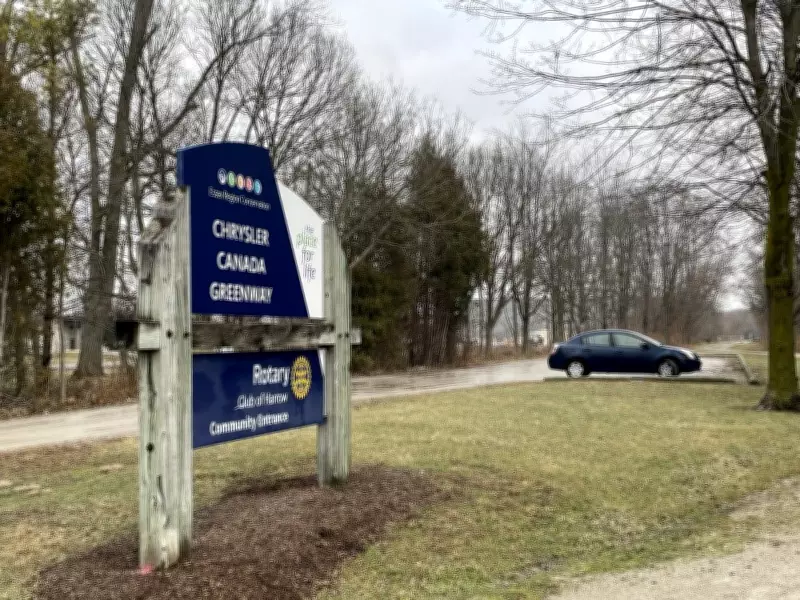
"It's definitely more manageable than what they originally proposed," said Molly Allaire, chair of the Essex Region Conservation Authority. "We're happy to hear that they said they're going to maintain local governance and that we can maintain our trails and all of our areas that we protect."

Provincial Rationale for Consolidation
The Ontario Ministry of the Environment, Conservation and Parks decided to reduce the number of conservation authorities across the province from 36 to nine, rather than the seven included in its original announcement last October. This adjustment follows months of consultation and public feedback.
The ministry maintains that significant duplication exists among the current 36 conservation authorities, resulting in delays in issuing permits for new development. According to their official statement, consolidating authorities to nine will "reduce administrative duplication, redirect resources to front-line conservation and modernize permitting to help the province deliver on its plan to protect Ontario by cutting red tape."
Local Concerns and Compromises
Allaire expressed mixed emotions about the changes, noting her initial disappointment at the end of ERCA as an independent entity, but appreciation for the provincial reconsideration. "Happy that the province made a little bit of a reconsideration as to their initial proposal," she said, "and we'll have to work with them and hopefully making it the best transition that can be."
Local concerns had focused on several key issues:
- Loss of local control over decision-making regarding regional lands
- Potential lack of familiarity with local environmental issues such as flooding patterns
- Possible job losses among the 42 ERCA staff members
- Risk to local donors of lands and funds
- Potential discontinuation of non-mandatory programming, including the John R. Park Homestead
Strategic Advocacy and Outcome
In January, Allaire revealed that efforts had shifted from opposing consolidation entirely to convincing Environment Minister Todd McCarthy to reduce the boundaries of the new authority. This strategic approach appears to have yielded results with the updated boundaries creating two authorities in what would have been a single, massive coverage area.
The provincial decision to maintain more localized governance structures within the consolidated framework represents a compromise between efficiency goals and community preservation. The ministry emphasized that the updated boundaries reflect careful consideration of feedback from Ontarians and conservation authorities throughout the consultation process.
This development marks a significant moment in Ontario's environmental governance, balancing provincial consolidation objectives with local conservation priorities. The Western Lake Erie Regional Conservation Authority now faces the challenge of integrating four previously independent organizations while maintaining the specialized knowledge and community relationships that made each effective in their respective regions.