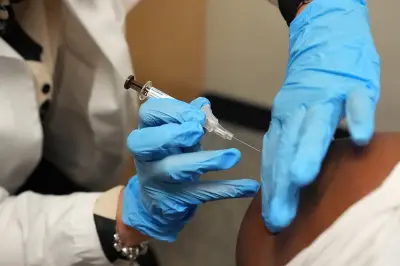
At the Spanish Congress of Deputies, the European Academy of Allergy and Clinical Immunology (EAACI), together with AEPNAA, SEAIC, and SEICAP, presented a joint manifesto calling for urgent measures to protect children at risk of anaphylaxis in schools. The initiative emphasizes the need for standardized protocols, mandatory staff training, and immediate access to life-saving adrenaline auto-injectors.
Every Minute Counts: The Call for Action
EAACI President María José Torres highlighted that the current response to anaphylaxis in schools is inconsistent, leaving children's safety dependent on chance factors such as staff recognition of symptoms and availability of medication. Anaphylaxis is a severe, fast-moving allergic reaction that can become life-threatening within minutes, making immediate response critical.
Key Demands of the Manifesto
- Establishment of a common anaphylaxis protocol for all schools
- Mandatory training for school staff on recognizing and responding to allergic reactions
- Accessible adrenaline auto-injectors in every school
- Individualized care plans for children at risk
- Stronger coordination between health and education systems
Torres stated, "For many children, anaphylaxis is not a hypothetical risk—it is part of daily life. When a severe reaction occurs, the response must be immediate. There is no room for delay or uncertainty about who should act." She added that unequal levels of protection across schools are unacceptable, stressing that children should not be safer in one school than another.

The event brought together patient organizations, scientific societies, healthcare professionals, families, and public institutions to highlight the daily uncertainty faced by families who cannot be sure that schools are prepared to respond. For EAACI, the evidence is clear, and the priority now is implementation—ensuring that children at risk are protected in practice, not just on paper.