A Doctor's Final House Call
I felt a sudden pang of guilt and shame when I realized I should have brought Mrs. MacNeil a farewell gift. Perhaps some flowers or a teddy bear would have been a thoughtful gesture. After all, this was to be our final goodbye. I was making a house call to see my favorite 93-year-old patient living in a seniors residence in Toronto. Over the past few years, we had formed a bond that felt more like a close friendship than a professional relationship.
We enjoyed joking together and discussing the beauty of life, the wonderful places on our planet, and the remarkable people we encountered. We also spent considerable time reminiscing about Nova Scotia, where we both once lived. This was our last visit. She was about to receive medical assistance in dying, known as MAID in Canada.
The Concept of a Good Death
When a beloved pet is old, sick, and suffering, we often choose to put them down. The technical term is euthanasia, derived from the Greek word euthanatos, meaning a good death. We euthanize our pets to prevent suffering and allow them to die with dignity. In 2016, the Parliament of Canada passed federal legislation permitting eligible adults to request medical assistance in dying, essentially legalizing euthanasia for humans to achieve a good death. The law recognized that, like our animal companions, humans should have the right to avoid suffering and die with dignity when there is no reasonable chance of alleviating a disease or condition or sustaining quality of life.

This legislation acknowledged that death is a part of life that should be discussed and even tenderly embraced at the appropriate time. It grants adults of sound mind the option to reject the notion of raging against the dying of the light, as depicted in Dylan Thomas's poem Do Not Go Gentle into That Good Night.
Mrs. MacNeil's Decision
Mrs. MacNeil was a proud and independent woman who wanted to remain in control of her body, health, and life. It was her wish to leave this world on her own terms. She was intelligent and competent, fully understanding her medical condition. Her health was deteriorating due to several debilitating and incurable diseases, including cancer. She knew her condition would soon worsen dramatically. For over a year, she had been feeling especially unwell, and it became impossible to sufficiently alleviate her suffering. So, she decided she had had enough. Her healthcare providers, including myself as her primary physician, along with her friends and relatives, all supported her carefully measured decision to end her life with comfort and dignity. After all, it was about her. She had no regrets and was ready to disembark from her fantastic journey on this earth.
Mrs. MacNeil told me she had lived a long and meaningful life. She had traveled the world, made many friends, and lived life to the fullest. Her husband had passed away years ago, and they had no children, but she had nieces and nephews who loved her dearly. She clearly demonstrated the capacity to make such a monumental decision. During a previous visit, she had paused, looked at me earnestly, and asked, Will you be there to hold my hand?
Honoring Her Wish
How could I refuse such a request? I felt it would be a great honor and privilege, but I wondered if I would need someone to hold my hand as well. I was a little scared. I had never been present at such an occasion, partly due to scheduling issues and partly because I feared my own discomfort. Perhaps mainly due to cowardice. But Mrs. MacNeil was a special lady. Above all, I wanted to respect her wish and make her happy.
As I entered the seniors residence and nervously walked into her suite, I took a deep breath. There she stood in the middle of her living room, dressed impeccably with some makeup on. She was in her element. Seeing my terminally ill patient looking so majestic gave me goosebumps. When she noticed me enter, a warm smile spread across her face, and her eyes sparkled. I immediately realized my participation in this momentous event was most appropriate.

Mrs. MacNeil looked so happy, even triumphant. We hugged, and she thanked me for being there. Others were already in the room, including family members and the doctor who would perform the MAID procedure. I introduced myself to each of them and was relieved to find everyone composed and compassionate. It helped soothe my apprehension. Mrs. MacNeil cheerfully stated that she had a gift for me and handed me a souvenir from Nova Scotia: a wooden seagull wearing rubber boots. I have had this for many years! she exclaimed. I thought about it and decided you are the one I would like to give this to.
I was deeply moved as I embraced the seagull and gave her another hug. I felt another wave of guilt and shame for not bringing her a gift. Despite feeling blindsided by her thoughtfulness, I accepted the gift with a lump in my throat and told her I would always keep it and remember her.
The Final Moments
As the MAID physician prepared the medications, I wondered how Mrs. MacNeil would feel in her final moments. She already had an intravenous line in place, and I sensed she was feeling nervous, excited, and relieved all at once. Everyone gathered in her bedroom, and she lay down on her bed for the last time. There was a sense of calm. Were we prepared for what was about to happen? I felt like a wide-eyed child full of wonder, about to experience something completely new.
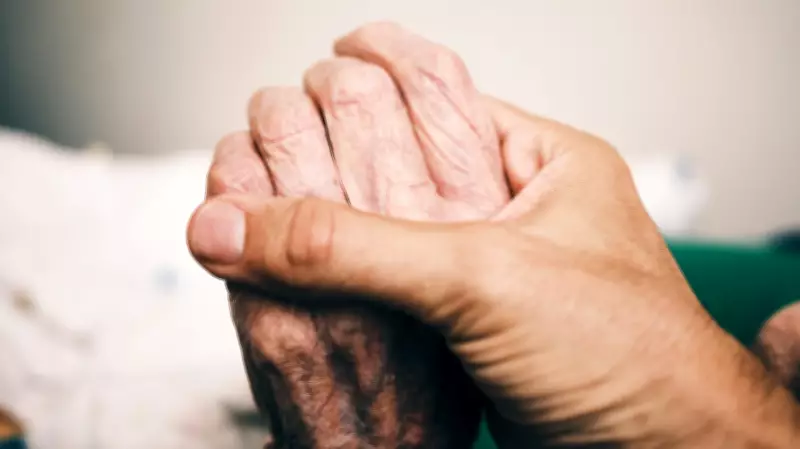
The MAID process was explained thoroughly for the umpteenth and final time. Then Mrs. MacNeil was asked one last question: Are you certain you want to go through with this? There is no turning back. Yes, she responded clearly. She was prepared and content with her decision. I sat down beside her and held her hand. I looked into her clear, focused eyes and whispered into her ear, I have a gift for you, but it is not a physical gift. I think you will recognize this... I began singing Farewell to Nova Scotia, a traditional song from our province.
The sun was setting in the west, the birds were singing on every tree, all nature seemed inclined for rest, but still there was no rest for me. So farewell to Nova Scotia, the seabound coast, let your mountains dark and dreary be, for when I am far away on the briny ocean tossed, will you ever heave a sigh or a wish for me?
A radiant smile slowly appeared on Mrs. MacNeil's face, and she kept her eyes on me the entire time I sang. I felt this was perhaps the most befitting farewell gift I could have given her. The medications were slowly introduced into her IV. She closed her eyes, and with that lovely smile still on her lips, she went gently into that good night. The room was quiet as everyone processed the sublime event. I had to reach for a tissue to wipe the tears welling up in my eyes. Although it felt odd, it also felt right.
Reflections on Autonomy and Dignity
Many believe it is wrong for healthcare professionals to play God by deciding who lives and who dies. However, one could argue that such circumstances transcend notions of wrong and right. It is about acknowledging an individual's autonomy and their decision about what is appropriate for themselves. What is right or wrong depends on perspective, and when it comes to a person's health and body, the most important perspective is that of the individual facing their own mortality. It is a sacred perspective.
Mrs. MacNeil was in tune with what was happening to her body and what would happen. She made an autonomous decision of sound mind. She knew what she wanted and what she did not want. Furthermore, she experienced the enormous satisfaction of regaining control of her body, which was full of aggressive and unappeasable afflictions. This experience made me wonder about my own eventual exit from this world. Would I rage against the dying of the light? For how long? I would hope to be kept comfortable. If that were not possible, would I decide to take the reins of my departure into my own hands? I am certainly more comfortable with that idea after watching Mrs. MacNeil die.
As a result of my first experience witnessing MAID, I received not only a wooden seagull from a special lady but also another precious gift: a firsthand understanding of a good death. Mrs. MacNeil had a dignified end to her long life, surrounded by loved ones. It was her decision. And it was a beautiful final farewell.
Some names and details have been changed to protect privacy.