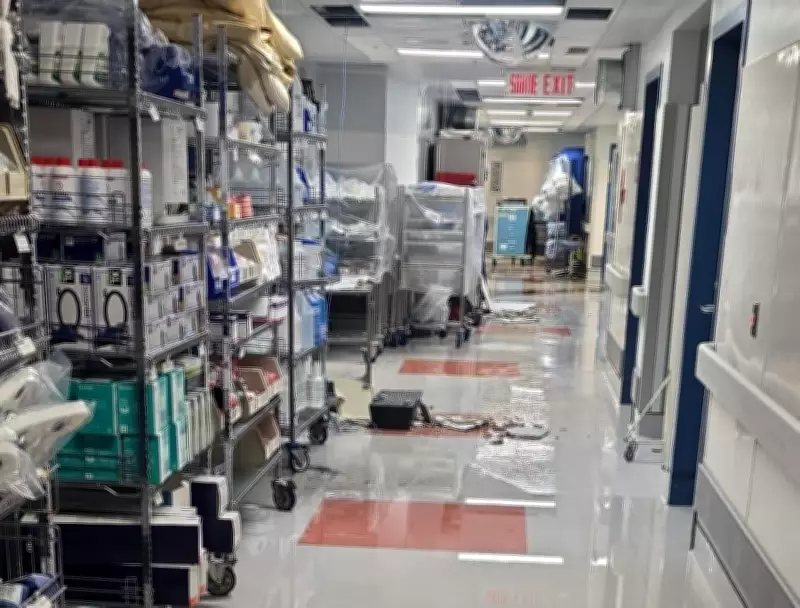
Flooding Incident Forces Closure of Operating Rooms at Montreal's Lakeshore General Hospital
A major flooding event has severely impacted the Lakeshore General Hospital located in Pointe-Claire on Montreal's West Island. The incident, which occurred on Friday, February 27, 2026, has resulted in the flooding of multiple operating rooms, leading to their immediate closure and significant disruption to surgical services.
Immediate Impact on Hospital Operations
The flooding has created substantial operational challenges for the healthcare facility, forcing the cancellation or postponement of scheduled surgeries. Hospital administrators are working diligently to assess the extent of the damage and implement emergency protocols to maintain patient care standards while addressing the infrastructure issues.
Emergency response teams have been deployed to contain the water damage and begin restoration efforts. The hospital has activated contingency plans to redirect patients requiring urgent surgical procedures to other medical facilities in the Montreal area, though this has created additional strain on the regional healthcare network.

Patient Care and Safety Concerns
Patient safety remains the primary concern for hospital officials, who are ensuring that all necessary precautions are being taken to prevent any compromise in medical services. The flooding incident has particularly affected the surgical wing, which houses critical equipment and sterile environments essential for complex medical procedures.
Hospital representatives have stated that they are prioritizing the assessment of electrical systems and medical equipment that may have been compromised by water exposure. The timeline for full restoration of surgical services remains uncertain as damage evaluation continues.
Community and Healthcare System Implications
The flooding at Lakeshore General Hospital represents a significant challenge for Montreal's West Island healthcare infrastructure. As one of the region's key medical facilities, the temporary loss of operating room capacity affects not only immediate patient care but also the broader healthcare delivery system that serves the community.
This incident highlights the vulnerability of critical healthcare infrastructure to unexpected events and the importance of robust emergency preparedness protocols. Hospital administrators are coordinating with provincial health authorities to ensure minimal disruption to essential medical services during the restoration period.